Karnataka ADGP Under Scanner: Family Firms, Govt Contracts & A Trail Of Unanswered Questions
The allegations of conflict of interest against Karnataka IPS officer M. Chandrashekhar have now moved beyond a seemingly political complaint and into a widening government paper trail with repeated notices, reminders an
Ni Madhuparna Das··34K nabasa
Karnataka ADGP Under Scanner: Family Firms, Govt Contracts & A Trail Of Unanswered Questions
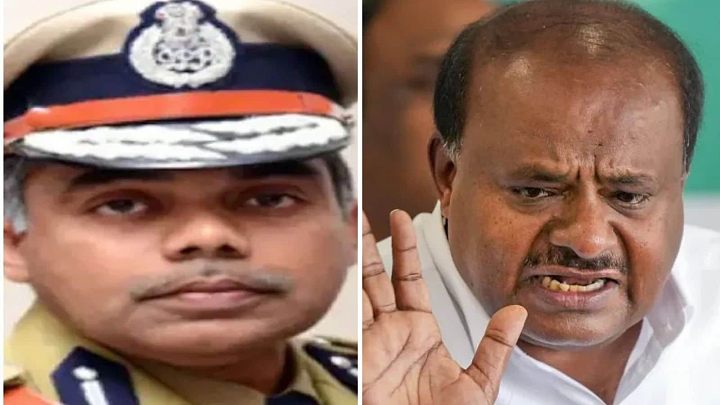
The allegations of conflict of interest against Karnataka IPS officer M. Chandrashekhar have now moved beyond a seemingly political complaint and into a widening government paper trail with repeated notices, reminders and demands for documentary explanations putting the spotlight on his alleged failure to disclose family business interests and government-linked contracts.
The latest government communication, dated October 3, shows that the matter is still live. CNN-News18 has accessed all the documents related to the paper trail.
The state home department is learnt to have asked ADGP M. Chandrashekhar to furnish a comprehensive, point-by-point explanation, backed by documents and evidence, within seven days. The direction comes after the government said a report ordered earlier on complaints against him had not been received.
The development is significant because the controversy has steadily expanded since June, from a complaint concerning his wife’s directorship in a private company and its dealings with a government corporation to allegations involving multiple family-linked companies and government contracts.
The first formal trigger was a June 6 complaint by six Karnataka Legislative Council members to the Chief Minister. The members belong to JD(S). The complaint alleged that Chandrashekhar’s wife, Preethi Seliha, was a director of Edvantage Point Technologies and that the company had undertaken work from Karnataka State Electronics Development Corporation Ltd (KEONICS).
News18 reached out to Chandrashekhar through calls and texts. “I have responded to all government notices earlier, however, I am not aware of the October 3 notice,” he told News 18. He further shared a screenshot of an English daily where he had given his statements on August 28 stating his response to the allegations stands the same. The senior officer linked the allegations by the JD(S) members to his role in the Lokayukta SIT probe against union minister and JD(S) leader H D Kumaraswamy. Calling the allegations “false, unsubstantiated and malicious”, he said, “My family members have their personal and professional lives, and I don’t interfere there. I have furnished details which were required to be submitted according to the AIS rules.”
The Personnel and Administrative Reforms Department subsequently asked Chandrashekhar to explain why the wife’s directorship and the company’s government work had allegedly not been disclosed as required under Rules 4(2)(a) and 13(3) of the All-India Services (Conduct) Rules, 1968. Crucially, the July 2 communication sought an explanation, it did not pronounce the officer guilty of any misconduct or establish that the contracts were illegally awarded.
The documentary trail, however, throws up a more substantial financial link.
Records included in the file show Edvantage Point as a KEONICS pre-qualified business associate. Three KEONICS work orders listed in the documents worth Rs 73.05 lakh, Rs 73.62 lakh and Rs 73.62 lakh, total approximately Rs 2.20 crore. Separate GST and company documents identify Preethi Seliha as a director, while an affidavit connected to the KEONICS documentation was signed by her in that capacity.
Then came a second complaint.
On July 10, MLAs and former MLAs approached the Chief Secretary with allegations specifically targeting Edvantage Point’s government work, including software and management-related systems in residential schools and colleges. The government issued another communication to Chandrashekhar, asking whether he had disclosed the family’s business interests, obtained the required permission and had any official role in matters involving the company.
By July 20-21, the government’s questions had become broader, which included did family-linked companies receive government contracts? Were the business interests disclosed under Rule 13(3)? Was prior permission obtained under Rule 4(2)(a)? And did Chandrashekhar have any official involvement in matters concerning those companies?
The government’s record then shows another escalation. A reminder dated August 7 stated that no explanation had been received and asked Chandrashekhar to respond immediately. The government said appropriate action would follow after receiving his explanation.
But the controversy does not begin with the family-company allegations.
A separate government file shows DPAR had been pursuing complaints against Chandrashekhar since October 2024, including allegations of corruption, misconduct and extortion. Between October 2024 and February 2026, multiple communications were issued seeking a report from the Home Department. A Chief Secretary’s letter followed in March 2026, yet a May 26 DPAR reminder recorded that the report was still pending.
That makes the October development particularly telling.
What began as complaints has now produced a prolonged administrative trail – repeated demands for reports, separate complaints concerning family businesses, explanation notices, a reminder and finally a fresh seven-day deadline for a detailed, evidence-based response.
The government is yet to communicate a final disciplinary finding against Chandrashekhar in the material examined here.
For now, the central question is no longer merely what the allegations are. It is what the officer’s documentary explanation will be, and whether it will finally close, or further widen, a file that has been moving through Karnataka’s administrative machinery for nearly two years.