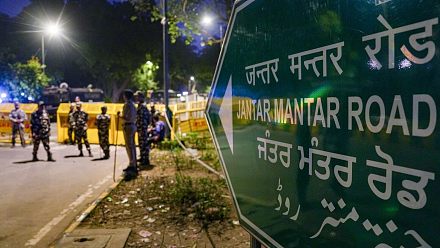
Jantar Mantar No Longer A Designated Protest Venue, Delhi Police Identifies 3 New Sites
Jantar Mantar will no longer be a designated protest venue in Delhi, with the Delhi Police identifying three new locations for demonstrations under revised guidelines issued through a fresh standing order.
Ni Simran Babbar··111K nabasa
Jantar Mantar No Longer A Designated Protest Venue, Delhi Police Identifies 3 New Sites
Jantar Mantar will no longer be a designated protest venue in Delhi, with the Delhi Police identifying three new locations for demonstrations under revised guidelines issued through a fresh standing order.
Under Delhi Police Standing Order No. L&O/48/2026, Ramlila Maidan, Burari Maidan and CBD Ground in East Delhi have been designated as protest sites. The decision has been taken on the recommendations of a committee constituted by the Ministry of Home Affairs (MHA).
The latest order partially modifies an earlier standing order dated April 28, 2022, which governed designated protest locations in the national capital. The Delhi Police said separate standard operating procedures (SOPs) and detailed guidelines for organising protests at the three newly designated venues will be issued subsequently.
ALSO READ | From Boat Club To Jantar Mantar: How Delhi’s Protest Map Changed Over The Decades
The change in protest venues comes as the Opposition steps up its campaign against alleged electoral irregularities and the SIR exercise.
No Longer A Designated Protest Venue
The change marks a shift in Delhi’s designated protest arrangements, with Jantar Mantar no longer included as an authorised venue under the revised order.
Jantar Mantar has long been associated with demonstrations by political parties, civil society groups, activists and other organisations seeking to draw attention to their demands. Its location in central Delhi has made it a prominent site for protests on a range of political and public-interest issues.
The revised order identifies three alternative venues across the city: Ramlila Maidan, Burari Maidan and CBD Ground in East Delhi.
The new standing order represents a partial modification of the guidelines issued on April 28, 2022. It follows recommendations made by an MHA committee and revises the list of designated protest venues.
The three locations identified are:
Ramlila Maidan: A prominent ground in central Delhi that has hosted large political rallies and public demonstrations.
ALSO READ | CJP Protest: Delhi Police Says Lathi Charge Was ‘Last Resort’. What Led To The Jantar Mantar Clash?
Burari Maidan: A designated location in north Delhi.
CBD Ground, East Delhi: A protest venue identified in the eastern part of the capital.
The police are expected to issue separate SOPs and detailed rules governing demonstrations at these sites.
The CJP Angle
The Cockroach Janta Party had also sought permission to demonstrate at Jantar Mantar over its demands concerning the Election Commission and alleged irregularities in the voter-list revision process.
On Monday, CJP activists approached the Parliament Street Police Station to request official permission for a protest at Jantar Mantar. The group issued a 24-hour ultimatum, asking the Delhi Police to specify a date and time for the proposed demonstration.
The move comes after the police denied permission for CJP’s planned October 10 protest at Jantar Mantar, citing the failure to apply within the stipulated timeframe.
With the INDIA bloc’s Supreme Court march and CJP’s request for permission unfolding against this backdrop, the change in Delhi’s designated protest sites has added a fresh dimension to the debate over demonstrations and access to public spaces in the national capital.
Supreme Court Had Asked Centre To Find Alternative Protest Venue
The Delhi Police’s decision to designate three new protest sites comes days after the Supreme Court asked the Centre and Delhi authorities to identify an alternative venue for demonstrations in the national capital, with better facilities for protesters.
A bench headed by Chief Justice of India Surya Kant, also comprising Justices Joymalya Bagchi and V Mohana, had called for a rethink of the decades-old arrangement of holding demonstrations at Jantar Mantar.
During a hearing on October 9, the court said a suitable alternative space should be identified where protesters could be provided basic amenities, including drinking water, toilets, medical facilities and other necessary infrastructure.
The bench also stressed that a protest venue should allow people to exercise their democratic rights without compromising public safety, access to emergency services or the interests of other residents.
“Why don’t you find an alternative space where you can also provide better facilities?” the bench asked Solicitor General Tushar Mehta, who appeared for the Centre and Delhi Police. Mehta said he would convey the court’s observations to the appropriate authorities.