Incumbent On Iran To Stop Attacks On Commercial Ships In Strait Of Hormuz, Rubio Tells Network18
US Secretary of State Marco Rubio has said the onus is on Iran to stop attacks on commercial vessels in the Strait of Hormuz, accusing Tehran of targeting civilian shipping and attempting to kill sailors who have nothing
Ni Apoorva Misra··178K nabasa
Incumbent On Iran To Stop Attacks On Commercial Ships In Strait Of Hormuz, Rubio Tells Network18
US Secretary of State Marco Rubio has said the onus is on Iran to stop attacks on commercial vessels in the Strait of Hormuz, accusing Tehran of targeting civilian shipping and attempting to kill sailors who have nothing to do with the war.
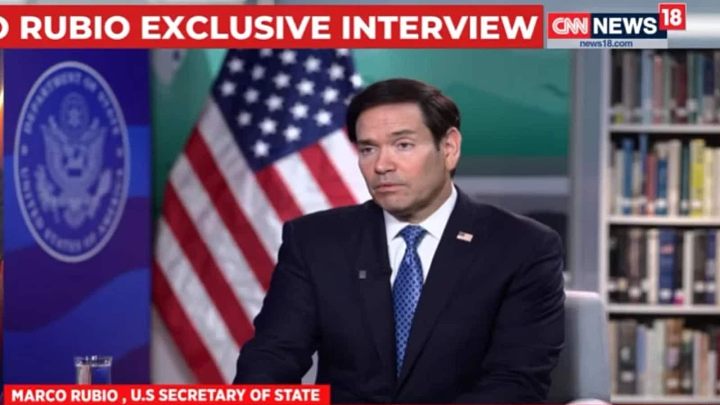
In an exclusive interview with Network18 Group Editor-in-Chief Rahul Joshi on Tuesday, Rubio said the United States would continue defending shipping in the strategic waterway while putting “extraordinary economic pressure” on Iran, alleging that Tehran uses its resources to sponsor terrorism and develop missiles and drones to target commercial vessels.
“So, it’s something that we’re worried about, but I think it’s incumbent on Iran to stop doing it. In the meantime, we’re going to continue putting extraordinary economic pressure on them because we know that every dollar that they get access to, every resource they get access to, they don’t use it to better the lives of their people, or better their country. They use it to sponsor terrorism. They use it to make missiles and drones to try to sink commercial vessels,” Rubio said.
ALSO READ | Marco Rubio Eyes India Ties Reset Ahead Of US Midterms, Reaches Out To Indians Via Network18
The US secretary of state accused Iran of adopting tactics similar to those used by Nazi Germany’s submarines during World War II, saying the international community should condemn attacks on commercial ships.
“Unfortunately, Iran is doing something and that’s really what people should be talking about… that we have a nation state that is openly, openly saying that we are targeting commercial vessels, we are trying to kill sailors who have nothing to do with war. We are trying to sink commercial ships. You haven’t seen that since the Second World War. They are doing Nazi U-Boat tactics. And that’s what the world should be rallying around and condemning,” he said.
‘OVERWHELMING MAJORITY OF DRONES AND MISSILES DESTROYED’
Asked about the evolving situation in the Strait of Hormuz, where commercial vessels continue to come under attack, Rubio maintained that the flow of shipping and energy through the waterway remained comparable to pre-war levels.
“The Straits are, if you look at any given time in the Straits, the amount of traffic and oil and energy flowing through them 80 to 100 per cent equal to what it was before the conflict,” he said.
Rubio said the United States was defending shipping every night and that most of the drones and missiles launched at vessels were being intercepted. However, he acknowledged that some attacks had succeeded, damaging ships and causing casualties.
ALSO READ | ‘Commercial Shipping In Strait Of Hormuz At 80-100% Of Pre-War Levels’: Marco Rubio Tells CNN-News18
“Every single night the United States defends shipping, the overwhelming majority of these drones and missiles that they are launching at ships are being destroyed. Every now and then, unfortunately, one will get through and strike the ship. Luckily, for the most part, most of the ships are able to continue in transit, but every now and then you do see an engine room hit and every now and then you see loss of life. Many Indian sailors have lost their lives in these strikes because it’s such a large number of Indian sailors out there,” he said.
The remarks are significant for India, which has a large number of seafarers working on commercial vessels and relies heavily on energy shipments moving through the Gulf region. Attacks on shipping in the Strait of Hormuz have raised concerns over the safety of crews and the movement of oil and other energy supplies.
RUBIO SAYS DEAL WITH IRAN IS DIFFICULT
Asked whether the conflict was heading towards further military escalation or a possible agreement, particularly in light of President Donald Trump’s remarks that the war could be over after the US midterm elections, Rubio said reaching a deal with Tehran remained difficult.
“Well, it’s tough to make a deal with the Iranian regime. Unfortunately, they don’t know how to make a deal and they are controlled by radical Shia clerics, and I don’t mean Shia clerics, I mean radical Shia clerics who are driven by theology, very difficult to make a deal with them,” he said.
Rubio’s comments suggest that Washington intends to maintain economic pressure on Tehran while continuing its efforts to protect commercial shipping. He argued that Iran’s use of resources to support militant groups and develop weapons was a central concern for the United States.
The US secretary of state reiterated that the responsibility for ending the attacks lay with Iran, even as Washington continued to defend vessels transiting the strategic waterway.