Goodbye 'Truck Shakedowns', Hello 3-Day Refunds: The 10 Biggest Reliefs In GST 2.0
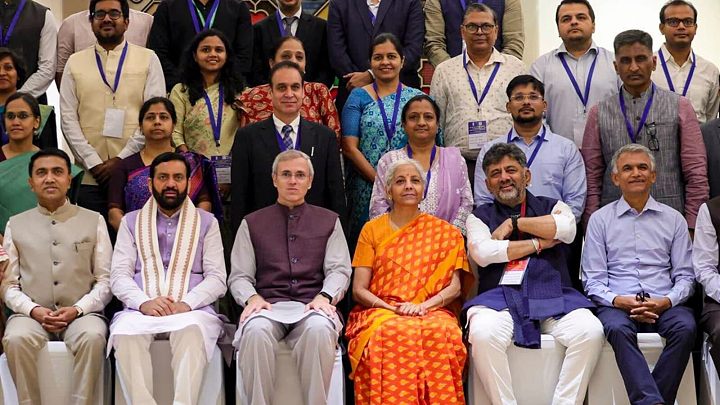
Following the 57th GST Council meeting in New Delhi on October 8, Union Finance Minister Nirmala Sitharaman announced a decisive shift towards “GST 2.0”. With tax rate structures now fully settled and generating robust r
Ni Pathikrit Sen Gupta··74K nabasa
Goodbye 'Truck Shakedowns', Hello 3-Day Refunds: The 10 Biggest Reliefs In GST 2.0
Following the 57th GST Council meeting in New Delhi on October 8, Union Finance Minister Nirmala Sitharaman announced a decisive shift towards “GST 2.0”. With tax rate structures now fully settled and generating robust revenues, the Council has turned its complete focus towards eliminating administrative friction, protecting genuine taxpayers, and improving ease of doing business across the country.
Here are the 10 most critical decisions and policy changes unveiled by the Finance Minister:
1. Total Scrapping of Arrest Powers and Decriminalisation
In a landmark move to curb tax harassment, the GST Council has completely removed the power of arrest from GST law. Furthermore, the monetary threshold for criminal prosecution has been quadrupled from Rs 1 crore to Rs 5 crore. Minimum mandatory punishments have been abolished, leaving penalties entirely to judicial discretion, while the general penalty for minor technical infractions has been cut from Rs 25,000 to Rs 10,000.
2. Big Relief for Small E-Commerce Sellers
Small sellers will no longer need physical offices in every state to sell across India on digital platforms. Merchants with monthly tax liability below Rs 2.5 lakh can now declare an e-commerce operator’s regional warehouse as their principal place of business. This single decision opens up nationwide pan-India markets to nearly 9.5 lakh small sellers without adding administrative overhead.
3. Protection and Relief for Genuine Buyers
Addressing a long-standing grievance, the Council established a dedicated Committee of Officers to safeguard honest buyers facing Input Tax Credit (ITC) denial due to supplier default. If a buyer holds a valid invoice, has received the goods, and paid the supplier in full, their credit will be protected. The committee will submit its binding framework within three months.
4. Major Unlocking of Capital: ITC on Machinery & Capital Goods
Businesses subject to inverted duty structures will now be eligible to claim cash refunds on input services starting 1st November 2026. Additionally, the exclusion of capital goods from refunds has been lifted; tax paid on plant and machinery can now be recovered over a 60-month operational lifecycle starting 1st April 2027, releasing vast working capital for FMCG, manufacturing, and pharma sectors.
5. End to Arbitrary Highway Interceptions
Transit inspections are being strictly overhauled. Transit goods can no longer be stopped routinely or checked in every state along a route. Moving forward, conveyances may only be inspected at the origin state or the destination state, and physical checks can only occur based on pre-authorised intelligence approved by an officer of Joint Commissioner rank or higher.
6. Accelerated Automated Refunds
Refund timelines are being cut drastically. The time limit for issuing an official acknowledgement drops from 15 days to 10 days, failing which the system automatically acknowledges the claim. High-tech automated risk assessments will now clear and sanction 90% of low-risk refund claims within three working days, while excess cash ledger refunds will become 100% automated with zero human officer intervention.
7. Expanded Input Tax Credit on Ordinary Business Spending
The Council has expanded ITC eligibility to cover essential business expenses previously blocked under strict tax rules. Businesses can now claim full credit on health and life insurance premiums paid for employees, telecommunication towers, external pipelines laid outside factory premises, free promotional samples, and expired stocks required by law to be destroyed.
8. Simplified Annual Filing for MSMEs
An optional, highly simplified scheme was approved in principle for small consumer-facing taxpayers with annual turnovers up to Rs 5 crore. Eligible small businesses will pay tax on a quarterly basis but will only need to file a tax return once a year, reducing compliance friction for over 16 lakh small enterprises.
9. Boost for IT and Service Exports
To put Indian service exporters on an equal global footing, Indian firms operating through overseas branches will now seamlessly receive export benefits without regulatory hurdles. Furthermore, back-office processing, testing, and research conducted in India on foreign-owned goods will count as an official export of service, even if the physical goods do not leave Indian shores.
10. Lock-in on Annual Rate Reviews
Signalling complete rate stability, no tax rates were altered during the meeting. The Finance Minister announced that future rate adjustments will no longer happen on a piecemeal basis; rate rationalisations will occur strictly once a year during a single dedicated Council meeting, giving corporate India complete predictability for long-term financial budgeting.