Do Packaged Foods Make Children Crave Junk More? US Study Confirms A Link
If you think your child is more inclined towards that packet of chips, chocolate or pack of sugary drink, it’s their brain making them crave more. This is what a new study published in the medical journal JAMA Network Op
Ni Himani Chandna··84K nabasa
Do Packaged Foods Make Children Crave Junk More? US Study Confirms A Link
If you think your child is more inclined towards that packet of chips, chocolate or pack of sugary drink, it’s their brain making them crave more. This is what a new study published in the medical journal JAMA Network Open has found.
The study has provided the most direct evidence yet that ultra-processed food products (UPFs) alter children’s brain function in ways that drive weight gain. Children who consume more ultra-processed foods show a stronger response in “a brain region involved in motivation and reward” when shown pictures of tempting foods, according to a new US study. The researchers also found that this brain response was associated with greater increases in body mass index (BMI) and body-fat percentage over the following year.
The study, published on October 23, examined 46 children of healthy weight, with an average age of 8.7 years. The findings suggest that the brain’s response to food cues may be one factor linking ultra-processed food intake with changes in body fat during childhood. However, the study does not establish that these foods cause changes in the brain or lead to weight gain.
According to Dr Arun Gupta, convenor of Nutrition Advocacy in Public Interest (NAPI), “This study moves the debate from obesity to addiction.”
He added: “UPFs are not just making children fat, and they are changing the way their brains respond to food. Children who eat more UPFs develop heightened reward responses in the dorsal striatum, the part of the brain that drives habit and automatic eating.”
Sharing his advice to wean children off junk food, Gupta said: “No advertisement shall be published, which promotes directly or indirectly production, sale or consumption of cigarettes, tobacco products, wine, alcohol, liquor, High Fat Sugar and Salt (HFSS) Foods and other intoxicants.”
Dr Anoop Misra, executive chairman and director, diabetes and endocrinology at Fortis C-DOC Hospital, New Delhi, said the study raises an important concern.
“This is particularly relevant to India, where increasing consumption of packaged snacks, sugary beverages and convenience foods is accompanied by rising childhood obesity. These changes may begin even in children of normal weight, setting the stage for future metabolic diseases.”
He added: “Although this small study does not establish causality, it reinforces the need for stronger school food policies, restrictions on unhealthy food marketing and promotion of traditional, minimally processed diets. Preventing childhood obesity requires changing the food environment around children, not merely asking them to eat less or exercise more.”
What Did The Study Do?
Researchers from the University of Southern California and Kaiser Permanente Southern California assessed the children’s diets, brain responses and body composition.
Ultra-processed foods include many packaged snacks, sugary drinks and other industrially formulated products. The researchers describe them as calorie-dense, nutrient-poor foods that are heavily marketed to children.
To assess diet, trained staff asked children and their parents to recall everything the children had eaten over the previous 24 hours on two occasions. On average, these foods accounted for 67.7 per cent of the children’s daily calorie intake.
The children then underwent functional magnetic resonance imaging (fMRI) scans. Before the scan, they consumed a measured glucose drink to standardise their level of fullness.
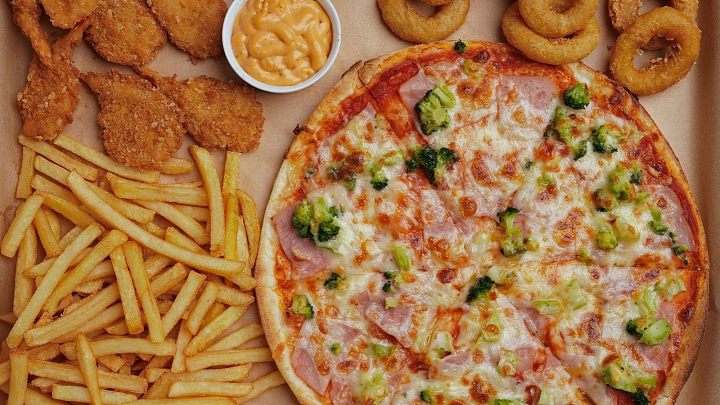
While in the scanner, they viewed photographs of appealing foods, including cookies and French fries, interspersed with pictures of ordinary objects such as pencils and benches. The researchers measured the brain’s response to these images, focusing on two areas of the striatum, which is involved in motivation, reward and learning. “Food cues showed highly palatable food items such as cookies or French fries, while non-food cues showed neutral objects such as a pencil or a bench.”
The team measured the children’s body composition again approximately one year later.
What The Researchers Found
Children who obtained a greater proportion of their calories from ultra-processed foods had a stronger response in the “dorsal striatum” when viewing food pictures. “These findings suggest that reward-related brain responses may contribute to the association between UPF intake and adiposity gain during childhood.”
A stronger response in this region was associated with larger increases in BMI and body-fat percentage over the following year. Higher ultra-processed food intake was also associated with a greater increase in waist circumference.
The association between ultra-processed food intake and changes in BMI and body fat became weaker after researchers accounted for the brain’s response to food cues. The estimated association with BMI gain fell by 31 per cent, while the association with body-fat gain fell by 44 per cent.
The researchers said these findings suggest that reward-related brain responses may be involved in the relationship between ultra-processed food consumption and increased body fat in childhood.
Why The Findings Matter
The findings offer a possible explanation for the relationship between children’s diets and changes in body composition. The brain’s response to food-related cues may be relevant alongside other factors that influence eating behaviour and weight.
The researchers note that ultra-processed foods are often formulated to be highly palatable and rewarding. Repeated exposure to such foods could potentially be associated with changes in how the brain responds to food cues.