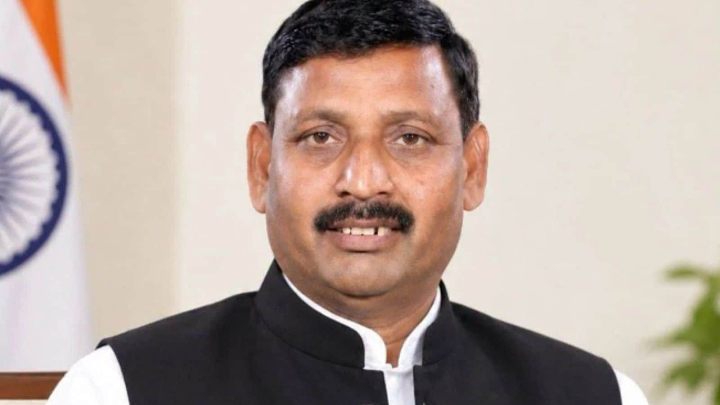
Dharmendra Kashyap's SP Switch: Can Akhilesh Yadav Turn BJP Rebel's Exit Into A Rohilkhand Advantage?
Can the Samajwadi Party turn a former Bharatiya Janata Party (BJP) MP’s discontent into an electoral advantage in Rohilkhand ahead of the 2027 Uttar Pradesh assembly elections? Former Aonla MP Dharmendra Kashyap’s move t
Ni Oliver Fredrick··77K nabasa
Dharmendra Kashyap's SP Switch: Can Akhilesh Yadav Turn BJP Rebel's Exit Into A Rohilkhand Advantage?
Can the Samajwadi Party turn a former Bharatiya Janata Party (BJP) MP’s discontent into an electoral advantage in Rohilkhand ahead of the 2027 Uttar Pradesh assembly elections? Former Aonla MP Dharmendra Kashyap’s move to the SP has opened a new political front in Bareilly, where caste equations, local organisational networks and candidate selection could shape the contest.
Kashyap met SP chief Akhilesh Yadav in Lucknow on October 11 after quitting the BJP. His daughter, Kirti Kashyap, was also present. The meeting signals the SP’s attempt to strengthen its PDA (Pichhda, Dalit, Alpsankhyak) coalition by bringing in leaders with electoral experience and established local connections.
Party insiders say Kashyap is expected to formally join the SP at a larger programme, with October 27 being cited as the likely date. His daughter could also be considered for a ticket in the 2027 assembly elections, although the party has not formally announced her candidature.
The development is significant not merely because the BJP has lost a former parliamentarian, but because Kashyap has a political history across parties and an electoral background in the Bareilly region. The bigger question is whether he can transfer that experience and support base to the SP.
Kashyap won the Aonla Lok Sabha seat for the BJP in 2014 and 2019. In the 2024 Lok Sabha elections, however, he lost to SP candidate Neeraj Maurya by 15,969 votes. His electoral record gives the SP a potential local campaigner familiar with the constituency’s political networks, although his previous victories do not automatically translate into votes for his new party.
His political journey also makes the switch noteworthy. He previously represented the BSP and the SP before joining the BJP in 2013. He won the Bithri Chainpur assembly seat on a BSP ticket in 2002 and on an SP ticket in 2007. His return to the SP is therefore a political realignment rather than an entry into an unfamiliar organisation.
Kashyap’s Political Footprint In Rohilkhand
Kashyap’s influence is rooted primarily in the Aonla-Bareilly belt rather than across the whole of Rohilkhand. His two consecutive Lok Sabha victories from Aonla in 2014 and 2019 established his electoral presence in a constituency comprising five assembly segments: Aonla, Bithri Chainpur, Faridpur, Shekhupur and Dataganj. In 2019, he secured approximately 5.37 lakh votes, or 51.07 per cent of the total, before losing to the SP’s Neeraj Maurya by 15,969 votes in 2024.
His political relevance for the SP therefore lies in his constituency-level networks and experience in mobilising local voters, including sections of the backward communities. However, his electoral record alone does not establish that he commands influence across Bareilly, Badaun, Pilibhit and Shahjahanpur, or that his supporters will automatically follow him to the SP. The extent to which his move affects the wider Rohilkhand political equation will become clearer from his ability to rebuild local support under his new party.
The OBC Calculation In Rohilkhand
Kashyap’s entry could help the SP strengthen its outreach among sections of the Other Backward Classes in the Bareilly region. His political identity and electoral experience offer the party an additional local face as it seeks to consolidate its PDA coalition.
“Dharmendra Kashyap’s entry can help the Samajwadi Party strengthen its political outreach among backward communities in the Bareilly region. However, the real test will be whether he can bring a support base with him or whether his influence remains confined to his personal political network,” said Dr Shashikant Pandey, political analyst and head of the department of political science at Dr Bhimrao Ambedkar University, Lucknow.
The electoral impact will depend on whether Kashyap retains a personal following after leaving the BJP, whether local SP workers accept his leadership, and whether the party can convert his entry into support across constituencies beyond Aonla.
Daughter’s Ticket Could Be Next Flashpoint
The possibility of Kirti Kashyap contesting the 2027 assembly election from Bithri Chainpur adds another dimension to the switch. The constituency has emerged as a possible electoral destination for the family, although the SP has not formally announced her candidature.
“If the SP considers Kirti Kashyap for a ticket, it will have to balance the potential electoral advantage of bringing an established political family into its fold with the aspirations of its existing local leaders. Candidate selection will be a test of the party’s ability to manage internal competition,” Pandey said.
The move could give the SP an opportunity to build a new local political face ahead of the election. However, it could also create friction with existing ticket aspirants who have spent months building their standing within the party.
For Akhilesh Yadav, the challenge will be to balance the political value of Kashyap’s entry against the expectations of the party’s established cadre. If Kirti is nominated, the leadership will need to ensure that the decision strengthens the local organisation rather than deepens internal competition.
What It Means For BJP
For the BJP, the immediate setback is the departure of a leader who represented Aonla in Parliament twice. The political message could be amplified if Kashyap’s grievances find resonance among other local leaders or sections of the party’s backward-community support base.
“The BJP may face a political messaging challenge because the exit of a former MP allows the opposition to raise questions about internal recognition and representation. But one leader’s departure should not be interpreted as a shift in the voting preferences of an entire community. The electoral impact will depend on the support he can mobilise on the ground,” Pandey said.
However, the scale of the damage should not be overstated. Kashyap lost the 2024 Lok Sabha election, and the BJP’s electoral machinery remains a separate factor in the region. His departure alone cannot establish that the party’s wider OBC support is weakening.
The BJP’s response, its handling of local dissent and the ability of its remaining leaders to retain their organisational networks will determine whether the episode remains an individual defection or becomes part of a larger political trend.
Kashyap’s move gives the SP a new political contact in Rohilkhand at a time when both parties are preparing for the 2027 assembly elections. Yet the real test will not be the optics of his meeting with Akhilesh Yadav or the announcement of a formal joining ceremony. It will be whether the SP can translate his political experience into votes, expand its local coalition and manage the competing ambitions of its own leaders.
If Kashyap brings a measurable support base with him, the move could alter political calculations in and around Bareilly. If that support remains limited to his personal political circle, the impact may be more symbolic than electoral.