‘Complete Catch-22 Situation’: Bombay HC Questions Voter Deletion Under SIR
The Bombay High Court on Monday flagged a “complete Catch-22 situation” for voters who have changed their residences, questioning how they can update their electoral details when their applications for address modificati
Ni Prisha Vibhavari··123K nabasa
‘Complete Catch-22 Situation’: Bombay HC Questions Voter Deletion Under SIR
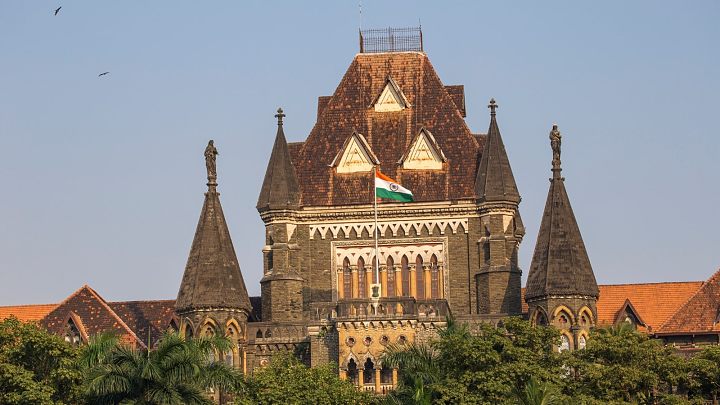
The Bombay High Court on Monday flagged a “complete Catch-22 situation” for voters who have changed their residences, questioning how they can update their electoral details when their applications for address modification are rejected during the Special Intensive Revision (SIR) process.
A division bench of Justices Valmiki Menezes and Amit Jamsandekar was hearing a batch of petitions challenging the Election Commission of India’s automated rejection of Form 8 applications submitted by voters in Goa seeking to change their addresses.
The petitions argue that deleting voters from draft electoral rolls without individual notice violates statutory provisions as well as constitutional safeguards.
The Bench noted that voters who have shifted residences are effectively left without a legitimate route to retain or update their registration.
While Form 8 is meant for changing an address, voters whose applications are rejected are being directed towards Form 6, which is used for fresh enrolment and requires a declaration that the applicant is not already registered elsewhere.
“The Form 6, it is a false declaration. He gives you Form 8; you say I cannot touch your Form 8; you must give the enumeration. He says, I do not want to give the enumeration, I am giving you Form 8. But section 21 says you have to hear him before removing his name, not from the draft, from the original roll,” the Court said.
The Bench also questioned whether the SIR exercise was intended to determine the presence of voters on electoral rolls or to establish their citizenship.
“The entire SIR procedure was on the basis that it had to find out whether an elector is actually an Indian citizen or not. The basis of the SIR was not to see whether the voter is there or not. It is to find out whether he is an Indian citizen or not,” the court said.
Advocate Gauresh Agni, appearing for the ECI, submitted that the exercise was also aimed at identifying illegal immigrants. “There were illegal immigrants also,” he said.
The Bench questioned whether directing voters to submit Form 6 or Form 8 would actually address that objective, while referring to the Supreme Court’s judgment on the Bihar SIR.
“So, will this subserve the purpose by a Form 6 or a Form 8? Judgment [of the Supreme Court on Bihar SIR nowhere says that the manner of doing this is going to be by Form 6. Law is either by the legislature or, if it is delegated, or a rule-making power,” the court stated.
The Court also raised concerns over the constitutional implications of the exercise, particularly if eligible citizens end up being excluded from the electoral rolls.
“If, by this process, citizens are excluded, then how do we read this mandate?” it added.
The Bench stressed that the ECI’s constitutional responsibility includes ensuring that eligible citizens are not deprived of their right to vote.
ECI Defends Deletion From Draft Rolls
The ECI, meanwhile, argued that an intensive revision under Section 25(2) of the Representation of the People Act, 1950, involves preparing electoral rolls afresh. According to the poll body, voters who do not receive or submit enumeration forms would consequently not figure in the draft rolls.
“Whoever is not given the enumeration form, the name has to go off the draft roll, and if you are not in the draft roll, there is no entry which can be transferred to another place,” Agni argued.
On the question of individual notice, the ECI said notices had also been displayed publicly because authorities may not have updated information about voters who had moved.
“There is a notice put up even on the notice board because the voters’ fresh details may not be available with us before removal. There were instances where people had shifted; there were no details of where they had shifted available,” Agni clarified.
The Bench, however, questioned the ECI’s reliance on the draft roll at this stage of the exercise.
“Draft roll will not come into picture until the SIR is complete. Here the SIR is not complete. You are in the process.”
The case comes days after the same Bench, on October 1, raised concerns over the ECI’s automated software-based rejection of Form 8 applications submitted by voters seeking to update their addresses.
The Court had questioned whether automatically rejecting such applications could undermine the larger objective of maintaining an inclusive and accurate electoral roll.