Blast From The Past: Mulayam Singh's Decade-Old Warning That Akhilesh Yadav Ignores At His Own Peril
The Congress party’s insistence on contesting over 100 seats in the upcoming Uttar Pradesh Assembly elections has a familiar backstory. The party’s belief that its revival in states where it lacks a strong organisational
Ni Parimal Peeyush··96K nabasa
Blast From The Past: Mulayam Singh's Decade-Old Warning That Akhilesh Yadav Ignores At His Own Peril
The Congress party’s insistence on contesting over 100 seats in the upcoming Uttar Pradesh Assembly elections has a familiar backstory. The party’s belief that its revival in states where it lacks a strong organisational base depends on extracting a larger share of seats from regional allies has been a recurring source of friction within the INDIA bloc since its formation ahead of the 2024 Lok Sabha elections.
It was this very approach that saw then West Bengal Chief Minister Mamata Banerjee walk out of the alliance, triggered friendly contests among Maha Vikas Aghadi constituents in Maharashtra, and now threatens to complicate seat-sharing negotiations with the Samajwadi Party, scheduled to begin on Tuesday.
Ahead of the talks, SP president Akhilesh Yadav revealed that the Congress — which has been demanding to be treated as an equal partner in Uttar Pradesh — has submitted a list of 181 seats it wants to contest. Uttar Pradesh, which is scheduled to go to polls in February-March 2027, has 403 Assembly constituencies. In 2022, the Congress contested 399 seats on its own, winning just two and securing a vote share of 2.33%.
Asked in a media interview last week whether the Congress had sought 180 seats as part of its alliance with the SP, Akhilesh replied, “Add one more”, suggesting that the party had sought 181 seats. The disclosure, however, did not go down well with the Congress.
“On the basis of our organisational strength, the confidence people have shown in us and our performance, we have put forward our demand for certain seats. Discussions have begun, and we are confident that the final arrangement will be honourable,” UP Congress in-charge Rajendra Pal Gautam had earlier told the media.
The Congress’s demand leaves Akhilesh with a difficult choice of whether to accommodate its ambitions in the hope of preserving the alliance or abandon the idea of a seat-sharing arrangement and enter the Assembly contest on its own, as the party did in 2022.
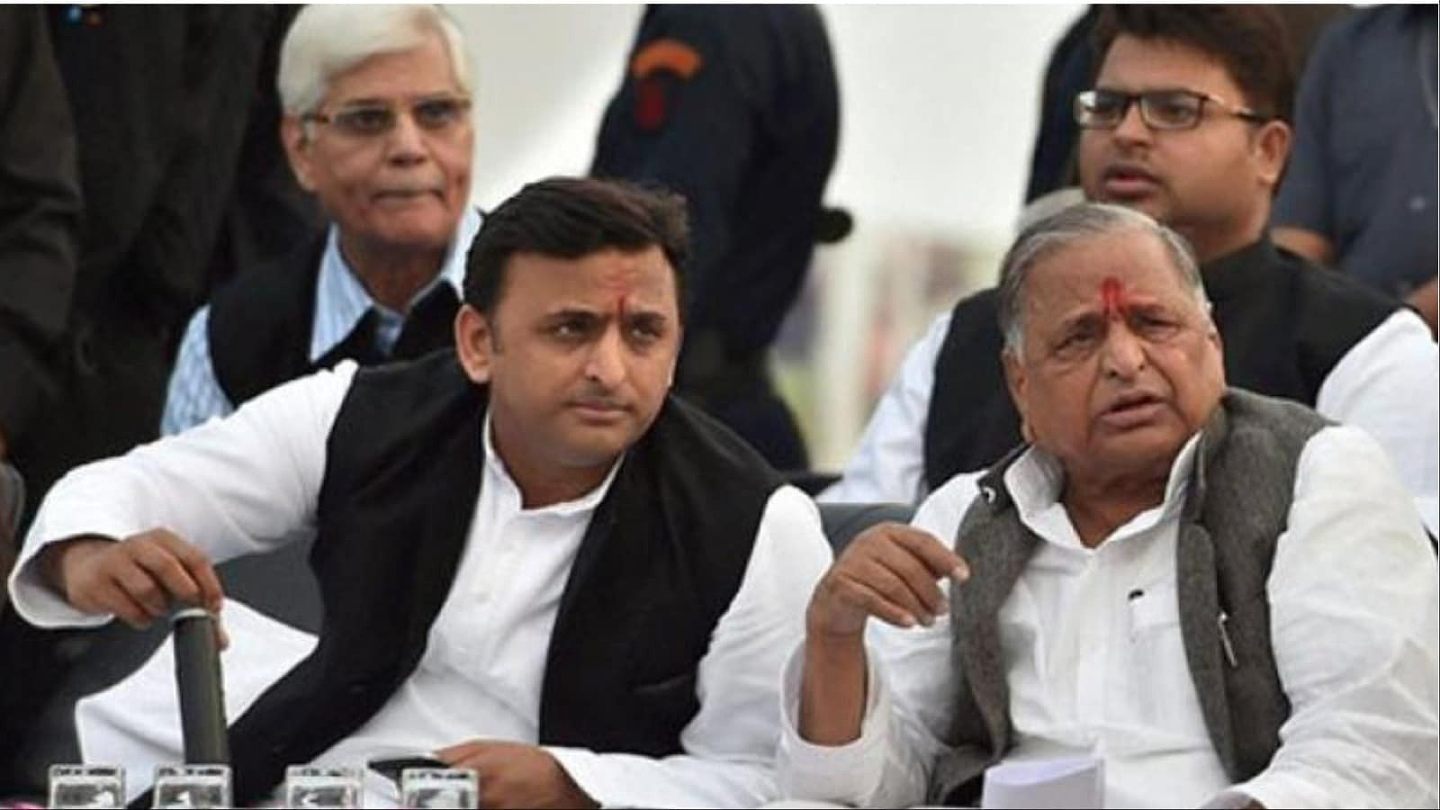
A section of the Samajwadi Party would prefer the latter, it is reliably learnt. Their argument draws on a warning that SP founder and former Uttar Pradesh Chief Minister Mulayam Singh Yadav had given his son a decade ago.
Mulayam had openly opposed the SP-Congress alliance on the very day Akhilesh and Congress leader Rahul Gandhi held a joint roadshow in Lucknow ahead of the UP Assembly elections in 2017.
“I am totally against the alliance between the Samajwadi Party and the Congress and will not campaign for this tie-up in the elections,” Mulayam had said, pointing out that the SP had won a majority on its own in 2012 without needing any allies.
He also warned that conceding more than 100 seats to the Congress would hurt the prospects of local SP workers. He did, however, partially relent in February 2017, campaigning for candidates in select constituencies and famously saying, “He is my son after all.”
The election results that followed appeared to vindicate Mulayam’s apprehensions. The BJP swept to power with 312 seats, up from 47 in 2012, while the SP, which had won 224 seats in the previous election, was reduced to 47. The SP-Congress alliance had failed to prevent a decisive BJP victory.
Mulayam subsequently blamed Akhilesh for ignoring his advice. “Alliance with the Congress is responsible for the present poor state of the party. I had advised Akhilesh not to go ahead with it, but he did,” he said.
“Congress left no stone unturned to ruin my life. It lodged cases against me and Akhilesh forged an alliance with it,” he added.
Mulayam’s underlying argument was that a stronger Congress in Uttar Pradesh would ultimately come at the Samajwadi Party’s expense. By giving the national party space to rebuild its organisation and regain political ground, the SP risked nurturing a rival in a state where it was already one of the principal political forces.
Nearly a decade later, that warning has acquired renewed relevance as the two parties prepare to negotiate their respective stakes in the 2027 Assembly elections.
The Congress is drawing confidence from its performance in the 2024 Lok Sabha elections, when Akhilesh left 17 seats for the party as part of the INDIA bloc arrangement. The Congress won six of them, giving it a renewed foothold in Uttar Pradesh. For the party, an alliance remains central to any revival strategy, and the demand for a larger share of Assembly seats is an attempt to convert its Lok Sabha gains into a more durable political presence.
The SP, however, has its own electoral arithmetic to consider. The question for Akhilesh is not merely how many seats the Congress should be given, but whether helping it regain political ground could eventually create a stronger challenger to the SP in its own principal political arena.
That is the dilemma Mulayam had warned his son about in 2017. Akhilesh chose to ignore him then. Will he pay heed now?