BJP’s 8 New Rajya Sabha Faces in UP Signal 2027 Strategy
The BJP’s decision to field eight new faces for the upcoming Rajya Sabha elections in Uttar Pradesh is more than a routine reshuffle in the Upper House. With the state heading towards the 2027 Assembly elections, the par
Ni Oliver Fredrick··183K nabasa
BJP’s 8 New Rajya Sabha Faces in UP Signal 2027 Strategy
The BJP’s decision to field eight new faces for the upcoming Rajya Sabha elections in Uttar Pradesh is more than a routine reshuffle in the Upper House. With the state heading towards the 2027 Assembly elections, the party’s list appears to combine social engineering, organisational representation and regional calculations, while simultaneously opening the possibility of a larger reshuffle in the party’s political and ministerial structure.
The BJP on Monday announced Dharampal Singh, Radhakant Ojha, Prakash Pal, Vidyasagar Sonkar, Gopi Krishna Pandey, former MP Priyanka Singh Rawat, Ram Pratap Singh Chauhan and Shruti Gangwar as its eight candidates for the October 16 Rajya Sabha election.
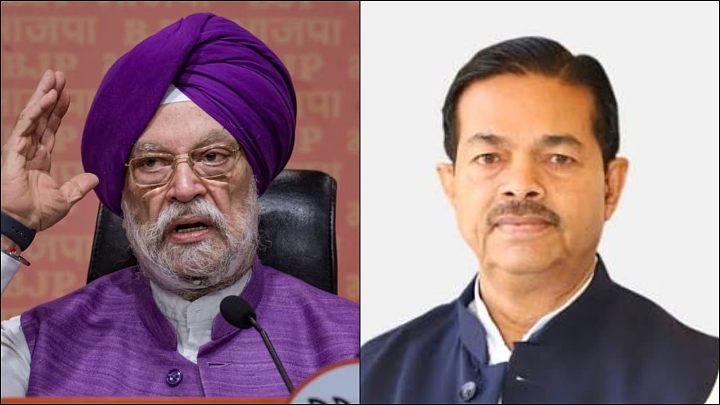
The most significant aspect of the list is what it does not contain. Union ministers Hardeep Singh Puri and BL Verma, whose Rajya Sabha terms are ending, have not been renominated. The move is particularly significant because both were among the sitting BJP members whose seats are up for election from Uttar Pradesh.
The BJP currently holds eight of the 10 Rajya Sabha seats going to polls from Uttar Pradesh, while the Samajwadi Party and Bahujan Samaj Party hold one each. The BJP-led NDA has the numbers to retain most of its existing strength, although the arithmetic for securing all eight seats requires support beyond the BJP’s own legislators.
The choice of candidates indicates that the BJP is looking beyond parliamentary representation and trying to strengthen its social and organisational footprint ahead of 2027.
Among the eight nominees, three are from the OBC communities, two are Dalits and three belong to the general category, according to details emerging from the candidate list. The OBC representation includes Lodh, Pal and Kurmi faces, while the general-category candidates include Brahmin and Rajput representatives.
Dharampal Singh, a five-time BJP MLA from Aonla and a minister in the Yogi Adityanath government, represents the Lodh community. His elevation is significant because the Lodh vote has traditionally been an important part of the BJP’s OBC support base in several parts of western and central Uttar Pradesh.
Prakash Pal, the BJP OBC Morcha state president, provides another organisationally important OBC face. His inclusion suggests that the party is rewarding leaders who have worked directly on expanding its OBC outreach.
Shruti Gangwar’s candidature carries a different political message. She is the daughter of former Union minister and eight-time Bareilly MP Santosh Gangwar, who is currently the Governor of Jharkhand. Shruti has herself been active in BJP politics in the Bareilly region. Her nomination could therefore be read as an attempt to retain the political influence of an established family in the Rohilkhand region while bringing a younger face into the party’s Upper House representation.
The list also includes two women — Shruti Gangwar and former Barabanki MP Priyanka Singh Rawat. Rawat, who represented Barabanki in the Lok Sabha in 2014, subsequently remained active in the party organisation and is currently a BJP state vice-president. Her return to electoral prominence after being denied a Lok Sabha ticket in 2019 is politically noteworthy.
The timing of the decision is perhaps the most important factor in understanding the list.
The Rajya Sabha elections are being held just months before the expected Uttar Pradesh Assembly elections. The BJP therefore has little reason to treat the exercise merely as a mechanism to fill vacancies in Parliament.
Political analyst Dr Shashikant Pandey, Head of the Department of Political Science at Dr Bhimrao Ambedkar University, Lucknow, said the list indicates that the BJP is trying to use the Rajya Sabha nominations to reinforce its social coalition ahead of the Assembly polls.
“The BJP’s list should be seen in the context of 2027 rather than only the Rajya Sabha numbers. The party has combined OBC representation, Dalit faces, women and organisational leaders. This suggests that the BJP is trying to refresh its social coalition at a time when the Opposition is attempting to consolidate non-Yadav OBCs, Dalits and other marginalised groups. The message is that the party wants to carry its organisational network and social engineering directly into the 2027 campaign.”
Another striking feature is the prominence given to leaders with strong organisational or state-level backgrounds.
Ram Pratap Singh Chauhan is a BJP state general secretary, while Prakash Pal heads the party’s OBC Morcha in Uttar Pradesh. Gopi Krishna Pandey has been associated with the BJP’s Kisan Morcha and organisational responsibilities. Vidyasagar Sonkar has also held key organisational positions and has been associated with the party’s state unit.
Radhakant Ojha, a senior advocate associated with the Allahabad High Court and former president of the High Court Bar Association, brings a different profile to the list.
This suggests that the BJP is not simply replacing retiring MPs with equivalent political figures. Instead, it is using the Rajya Sabha to bring organisational workers, community representatives and state-level political faces into Parliament.
What does the exclusion of Hardeep Puri and BL Verma mean?
The omission of Hardeep Puri is arguably the biggest surprise in the list.
Puri is a senior Union minister and his Rajya Sabha term from Uttar Pradesh is ending. His exclusion does not automatically mean that he will leave the Union Council of Ministers, but it does create speculation about the BJP’s next organisational and ministerial arrangement.
BL Verma, meanwhile, is a prominent OBC face and Union minister. His replacement by a combination of state-level OBC and organisational leaders suggests that the BJP is prioritising a different mix for its Uttar Pradesh representation.
Dr Pandey said the exclusions should not immediately be interpreted as a rejection of either leader.
“Not being renominated to the Rajya Sabha should not automatically be interpreted as political sidelining. In the BJP’s organisational structure, leaders can be repositioned depending on the larger electoral and governmental requirement. The more important signal is that the party has used these vacancies to bring in leaders who can have a direct organisational or social impact in Uttar Pradesh.”
There are 10 Rajya Sabha seats up for election in Uttar Pradesh and each winning candidate requires 37 first-preference votes. The state Assembly currently has 396 members after seven vacancies caused by the deaths of MLAs. The BJP has 255 MLAs, while its NDA allies — Apna Dal (S), RLD, SBSP and Nishad Party — have another 33.
The BJP-led alliance therefore has a strong numerical position, although its effective strength for securing all eight seats depends on additional support.
The SP has fielded Ram Gopal Yadav and Dhanraj Parimal Nathwani. The contest, therefore, is not simply about whether the BJP can send its nominees to the Rajya Sabha; it is also about how both parties use the election to test their alliances and cross-party support ahead of 2027 .
The BJP’s candidate selection also comes at a time when caste representation has become one of the central themes of Uttar Pradesh politics.
The SP has been attempting to expand beyond its traditional Yadav-Muslim base through a broader PDA — backward, Dalit and minority — strategy. The BJP, in response, has increasingly focused on maintaining its non-Yadav OBC and Dalit support while retaining its upper-caste base.
The new Rajya Sabha list fits into that strategy. Lodh, Pal and Kurmi representation gives the BJP multiple OBC touchpoints, while Priyanka Singh Rawat and Vidyasagar Sonkar provide Dalit representation. The inclusion of two women adds another layer to the social messaging.
For the BJP, the challenge will now be to convert representation into electoral mobilisation.
Pandey said, “The real test will be whether these nominations translate into ground-level mobilisation. Rajya Sabha representation by itself does not change electoral equations. But when such appointments are combined with organisational responsibilities, regional outreach and community representation, they can become part of a larger election strategy.”
The BJP’s latest list, therefore, appears less like a routine change of Rajya Sabha faces and more like an early political signal for Uttar Pradesh’s 2027 battle — one that puts social balance, organisational loyalty and state-level political utility ahead of the continuation of established national faces.