850 Fast Track Courts For Child Abuse, Rape Cases: Centre's Big Push For Speedy Justice
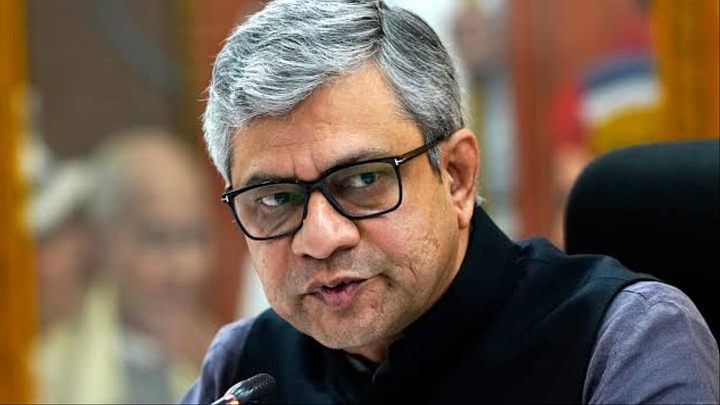
The Union Cabinet has approved a major push towards expediting justice in cases of child sexual abuse and rape, with Union Minister Ashwini Vaishnaw announcing that 850 fast-track courts will be set up for such cases. Th
Ni Vani Mehrotra··68K nabasa
850 Fast Track Courts For Child Abuse, Rape Cases: Centre's Big Push For Speedy Justice
The Union Cabinet has approved a major push towards expediting justice in cases of child sexual abuse and rape, with Union Minister Ashwini Vaishnaw announcing that 850 fast-track courts will be set up for such cases. The announcement was made during a Cabinet briefing in New Delhi on Wednesday, November 4, following a meeting chaired by Prime Minister Narendra Modi.
Highlighting the government’s decision, Vaishnaw said the move was among the key decisions taken at the Cabinet meeting. The proposed courts are aimed at ensuring faster trials and disposal of cases involving sexual offences, particularly those concerning women and children.
The announcement comes amid continuing concerns over the pendency of cases involving rape and offences under the Protection of Children from Sexual Offences (POCSO) Act.
Fast-track courts are intended to provide a dedicated judicial mechanism to expedite proceedings in such sensitive cases and reduce delays in the delivery of justice.
FAST-TRACK COURTS FOR RAPE, CHILD SEXUAL ABUSE CASES
The Centre’s latest announcement builds on its existing initiative to establish Fast Track Special Courts (FTSCs), including exclusive POCSO courts, across the country.
The centrally sponsored scheme was launched in October 2019 to facilitate the time-bound trial and disposal of pending rape cases and offences under the POCSO Act, 2012.
The initiative followed the Criminal Law (Amendment) Act, 2018, and directions from the Supreme Court for expeditious disposal of cases involving sexual offences.
According to the Ministry of Law and Justice, 775 Fast Track Special Courts, including 398 exclusive POCSO courts, were functional across 29 states and Union Territories as of April 30, 2026. These courts are specifically intended to deal with cases involving rape and child sexual abuse.
The government had previously extended the scheme, which was temporarily continued until September 30, 2026. The existing initiative has played a role in addressing the backlog of cases, although pendency and delays in judicial proceedings remain significant challenges.
CABINET ALSO CLEARS 92 GWH GRID-SCALE ENERGY STORAGE SCHEME
Apart from the decision concerning fast-track courts, the Cabinet approved a 92 GWh grid-scale energy storage scheme to strengthen India’s clean energy infrastructure.
Briefing reporters, Vaishnaw said India had earned global recognition for its progress in the clean energy sector and was setting new standards through its initiatives.
“Today, a 92 GWh energy storage scheme has been approved. This is going to be a grid-scale energy storage scheme,” the minister said.
He added that the scheme would be implemented in collaboration with state governments, with attention being paid to ensuring its distribution across the country. The initiative is expected to strengthen the infrastructure required to store renewable energy and support its integration into the electricity grid.
SCHEME FOR PROCESSING OF CRITICAL MINERALS APPROVED
The Union Cabinet also approved a scheme for the processing of critical minerals under India’s Critical Minerals Mission.
Explaining the decision, Vaishnaw said the initiative would focus on processing raw materials obtained through mining as well as recycling and converting them into forms suitable for manufacturing.
The move is aimed at strengthening domestic processing capabilities and supporting India’s manufacturing ecosystem by developing the value chain for critical minerals.
OVER Rs 4,000 CRORE FOR DATABASE DEVELOPMENT
Another important decision announced by Vaishnaw concerned database development across sectors.
The minister said a scheme involving an allocation of more than Rs 4,000 crore had received Cabinet approval under the chairmanship of the Prime Minister.
He said the government had consistently emphasised the importance of developing reliable databases for its various schemes and programmes.
“Attention will be directed toward areas such as skill development, surveys, and assessments,” Vaishnaw said, outlining the broad areas that would receive attention under the initiative.
CABINET APPROVES SECOND ENGAGEMENT FOR AGNIVEERS
Separately, Chief of Defence Staff General Subramani briefed reporters on a major decision concerning Agniveers and the armed forces.
He said the Cabinet had approved a second engagement period of two years for Agniveers who are not selected for permanent absorption after their initial four-year tenure.
Under the existing Agnipath recruitment framework, 25 per cent of Agniveers are eligible for permanent enrolment in the armed forces, subject to selection criteria. The remaining 75 per cent are released after completing their four-year engagement.
Explaining the latest decision, the CDS said the government had continuously evaluated the performance of Agniveers since the scheme was introduced in 2022 and had received positive feedback.
He said the additional two-year engagement would provide the remaining Agniveers with another opportunity to serve in the armed forces. They would also receive higher remuneration and additional Seva Nidhi benefits during this period.
The CDS further said all Agniveers would be offered an opportunity to become regular soldiers, subject to the prescribed eligibility and selection criteria.