2027 UP Polls: Can Owaisi-Azad’s ‘Anti-BJP’ Third Front Crack SP’s 40% PDA Vote Bank?
Ahead of the 2027 Uttar Pradesh Assembly elections, AIMIM’s Asaduddin Owaisi has joined hands with Chandra Shekhar Azad’s Azad Samaj Party (Kanshi Ram), an alliance that many say could pose a direct challenge to the Sama
Ni Manjiri Joshi··91K nabasa
2027 UP Polls: Can Owaisi-Azad’s ‘Anti-BJP’ Third Front Crack SP’s 40% PDA Vote Bank?
Ahead of the 2027 Uttar Pradesh Assembly elections, AIMIM’s Asaduddin Owaisi has joined hands with Chandra Shekhar Azad’s Azad Samaj Party (Kanshi Ram), an alliance that many say could pose a direct challenge to the Samajwadi Party’s (SP) PDA (Pichhda, Dalit, Alpsankhyak) vote bank.
Will Owaisi-Azad’s Samajik Parivartan Morcha (SPM) target the approximately 40 per cent Dalit-Muslim demographic in Uttar Pradesh? Will it help the Bharatiya Janata Party (BJP)? News18 explains.
OWAISI-AZAD ALLIANCE: ‘AIM TO DEFEAT BJP’
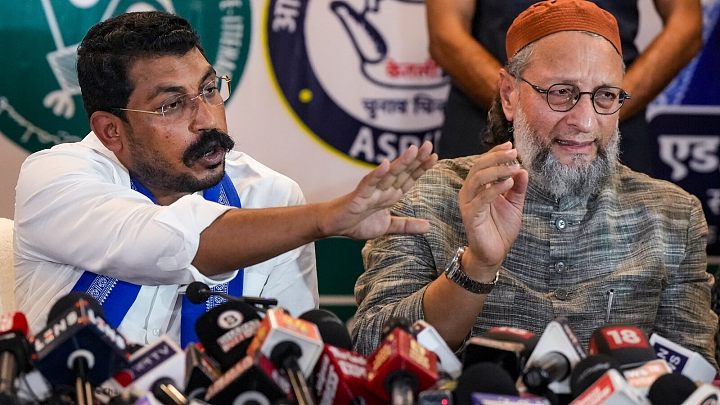
All India Majlis-e-Ittehadul Muslimeen (AIMIM) chief Owaisi and Azad announced their alliance on Thursday, with Nagina MP Chandra Shekhar Azad as the Chief Ministerial face. Both leaders stated that they plan to contest all 403 Assembly seats in the state.
Owaisi and Azad described the front as a platform for social transformation representing the marginalised, backward, and oppressed communities, with the aim to prevent the BJP from securing a third consecutive term in Uttar Pradesh.
While launching the front outside the existing opposition framework, both leaders extended an invitation to other opposition forces, including INDIA bloc parties such as the SP and Congress, to join them in defeating the BJP.
A new political front is taking shape in Uttar Pradesh ahead of the 2027 Assembly elections, with AIMIM chief Asaduddin Owaisi and Azad Samaj Party-Kanshiram president Chandrashekhar Azad joining hands to form the ‘Samajik Parivartan Morcha’. Announcing the alliance, Owaisi said the front would be a strong force to stop the BJP from returning to power in the state for a third consecutive term.
Dalits constitute roughly 21 per cent and Muslims make up about 19 per cent of Uttar Pradesh’s population, together accounting for approximately 40 per cent.
Around 41 Assembly constituencies have a combined Dalit-Muslim electorate exceeding 50 per cent.
At least 143 Assembly seats have a significant Muslim presence — 70 seats with a 20–30 per cent share and 73 seats where Muslims account for more than 30 per cent of the electorate — particularly in the Rohilkhand and Upper Doab regions.
OWAISI-AZAD ALLIANCE: WILL IT EAT INTO SP’S PDA VOTES?
Muslims have overwhelmingly backed the SP, which has emerged as the principal challenger to the BJP, in recent polls. A third front with a Muslim face could make Akhilesh Yadav vulnerable, say experts.
Under the proposed arrangement, AIMIM may contest 40-45 seats with substantial Muslim populations while the Azad Samaj Party may contest most remaining seats, directly overlapping with SP’s target bases.
Even a limited shift in Muslim or Dalit votes toward the SPM across closely contested seats could divide the anti-BJP opposition vote and inadvertently benefit the BJP, say analysts.
Analysts say the alliance’s actual impact will depend on whether Owaisi and Azad can build a credible grassroots organisation and mobilise voters beyond their core bases rather than merely splitting opposition votes.
OWAISI-AZAD ALLIANCE: WILL IT HELP BJP GAIN VOTES?
A major pillar of the SP’s electoral strategy is consolidated Muslim support. As AIMIM directly appeals to Muslim voters by offering an independent political platform, even a partial shift of Muslim votes away from the SP-Congress alliance toward the SPM could lower the victory threshold needed by BJP candidates in multi-cornered contests.
Azad’s outreach among Dalits competes directly with the SP’s efforts to expand its PDA (Pichhda, Dalit, Alpsankhyak) coalition, as well as the Bahujan Samaj Party’s (BSP) traditional base. Further division of Dalit votes among the SP, BSP, and SPM could prevent opposition parties from consolidating their support against the BJP.
हमारे गठबंधन की कामयाबी पूरे उत्तर प्रदेश की जनता की कामयाबी होगी।
आगामी उत्तर प्रदेश विधानसभा चुनाव को लेकर Lucknow में आज़ाद समाज पार्टी के अध्यक्ष जनाब @BhimArmyChief साहब के साथ मेरी Press Conference…
#Owaisi_AzadTieUp4UP
https://t.co/zmYSWhpkAs
— Asaduddin Owaisi (@asadowaisi) November 12, 2026
The SPM’s plan to contest all 403 Assembly seats creates a third front that could cut into opposition vote shares across the state. In constituencies decided by narrow margins, a small percentage of votes drawn away from the primary opposition challenger can swing the seat in favour of the BJP.
While Owaisi and Azad have invited the SP and Congress to join their front, mutual suspicion and disagreements over seat-sharing and leadership, such as naming Azad as the Chief Ministerial candidate, could create friction between non-BJP parties instead of helping them form a cohesive alliance.
OWAISI-AZAD ALLIANCE: HOW PARTIES REACTED
Azad, however, rejected descriptions of the coalition as a vote-splitting third front, calling instead for opposition parties to unite under their platform.
SP president Akhilesh Yadav welcomed the new front while asserting that PDA remains the “real force” and cautioning against becoming a “puppet”. Yadav argued that the new alliance could actually hurt the BJP by drawing away 2-3 per cent of voters who previously supported the ruling party, while maintaining that core PDA voters will remain with the Samajwadi Party.