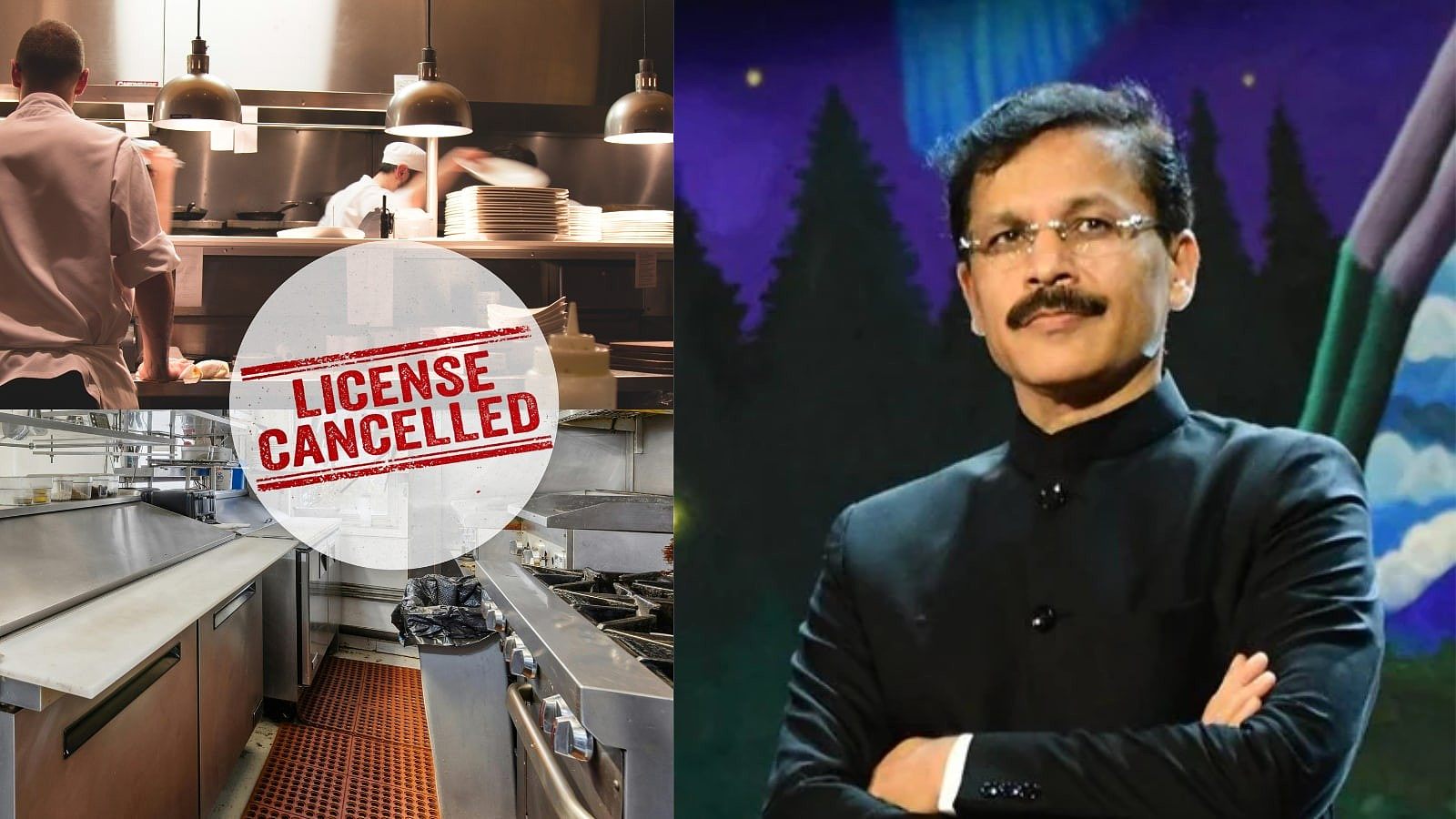
Your Favourite Eatery May Taste Great, But Is Its Kitchen Safe? Maharashtra FDA Chief Reveals When Can A Restaurant Lose Its Food License
You have probably said it before, “I’ve been eating there for years. Nothing has ever happened.” But taste alone does not make food safe. Your favourite restaurant might be a famous one, where the food tastes just amazin
Ni Tanya Dutt··28K nabasa
Your Favourite Eatery May Taste Great, But Is Its Kitchen Safe? Maharashtra FDA Chief Reveals When Can A Restaurant Lose Its Food License
You have probably said it before, “I’ve been eating there for years. Nothing has ever happened.” But taste alone does not make food safe. Your favourite restaurant might be a famous one, where the food tastes just amazing and perhaps your parents ate there too. So, when food safety authorities take action against such a place, the immediate reaction is often disbelief.
But Maharashtra Food and Drug Administration Chief Tukaram Mundhe believes this is where diners need to change the question. Instead of asking only whether the food tastes good, perhaps ask: How is it being made? What is happening inside the kitchen?
Referring to the recent temporary closure of one of Mumbai’s most famous ice cream parlours, K Rustom’s, Mundhe revealed, a place that has been serving customers since 1953. The outlet was shut for weeks after inspectors found serious hygiene and process failures. “The standards were not being implemented there,” he said. “It is not just about hygiene. Hygiene is being highlighted much more, and that is necessary, but that is not the only or most important part. All the processes, most of the processes, were not being followed.”
Image: File photo
During inspections, officers found multiple violations. Food handlers’ clothes were being washed and dried in the same area where food was prepared. Rats were moving around the premises. Expired ingredients were stored for use. The cold chain required for safe handling of ice cream was not maintained. These were not minor lapses. They pointed to a breakdown in basic food safety systems.
Does Great Taste Mean A Restaurant Follows All Safety Standards?
“People are judging it based on the taste. That is the problem,” Mundhe said. He explained that customers need to look beyond flavour and ask what ingredients are being used, how food is prepared and whether hygienic practices are actually being followed.
During the inspection, Mundhe said authorities found multiple violations, including poor food-handling practices and rodents in the premises. According to him, food handlers’ clothes were being washed and dried in the same area where food was being prepared.
The incident also underlines an uncomfortable truth: a famous name, a long history or a loyal customer base does not guarantee that food safety standards are being followed.
Under India’s food safety framework, food businesses applying for licences are required to comply with hygienic and sanitary practices under Schedule 4 of the Food Safety and Standards regulations. These cover food safety management systems, good hygiene and sanitary practices, among other requirements.
When Can A Restaurant’s Food Licence Be Suspended Or Cancelled?
Contrary to popular belief, a restaurant does not necessarily lose its licence after one minor issue is spotted. The law provides a process for dealing with non-compliance.
Under the Food Safety and Standards Act, a restaurant’s licence can be suspended or cancelled when inspections reveal non-compliance that poses a risk to public health. Serious issues such as pest infestation, use of expired raw materials, failure to maintain required temperatures, unhygienic handling practices, and lack of trained staff or proper protective equipment can all trigger action. In cases where the risk is immediate, regulators can act swiftly in the interest of public health.
Under Section 32 of the Food Safety and Standards Act, a designated officer can issue an improvement notice if there are reasonable grounds to believe that a food business is not complying with applicable regulations. The notice specifies the failures and the corrective measures required.
If the business fails to comply, its licence may be suspended. If it still does not comply, the licence may be cancelled after the operator is given an opportunity to show cause. Authorities can also suspend a licence immediately in the interest of public health.
So, what this really means is that serious or continued non-compliance can put a restaurant’s licence at risk, especially when public health is involved.
Mundhe has been frank about the shared responsibility. He acknowledged that regulators, food safety officers and citizens all share the duty of ensuring safe food. “All three failed,” he said of the earlier situation. “More so, from my side and from the FSO’s side, both of us failed the people.” The current drive, he added, is an attempt to correct that failure. Once businesses understand that violations will not be tolerated, compliance improves.
Red Flags Diners Can Look For At Restaurants
Mundhe said consumers have started asking more questions, and that shift matters.
“Tell me, what standards are you using? What raw materials are you using? Are your food handlers trained?” These, he said, are some of the questions people can start asking.
He also encouraged ordinary customers to start asking basic questions.
Is there a supervisor for every 25 food handlers?
Is a technical person available?
Are health check-ups being done?
Are staff wearing proper clothing, headgear and protective equipment?
Food safety checks can also look at whether food handlers are medically fit, maintain personal hygiene and have appropriate protective equipment such as aprons, gloves or headgear where required. FSSAI hygiene audit criteria also examine whether food handlers have been trained to handle food safely.
If customers only reward taste, popularity and nostalgia, unsafe practices can remain invisible for years. But when diners start asking whether an establishment is following basic food safety norms, businesses may feel greater pressure to improve.
These may seem like small details, but Mundhe believes they form the foundation of safe food.