World Ozone Day: Meet The Couple Who Chose To Build A Life That Gives Back More Than It Takes
The dream of leaving city life behind for a quieter existence on a farm, growing your own food, waking up to birds instead of alarms, knowing where your meals come from, spending more time outdoors and having a little mo
Ni Labani Mahanandy··7K nabasa
World Ozone Day: Meet The Couple Who Chose To Build A Life That Gives Back More Than It Takes
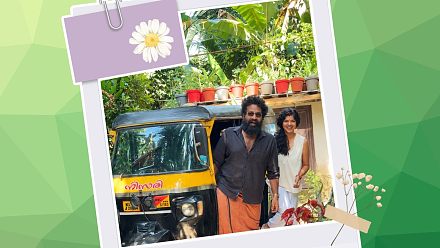
The dream of leaving city life behind for a quieter existence on a farm, growing your own food, waking up to birds instead of alarms, knowing where your meals come from, spending more time outdoors and having a little more space to simply breathe, has crossed the minds of many. For most, it remains a lovely idea. For Kavya and Sangeeth, it became the life they decided to build.
There was a time when the couple had corporate jobs and the familiar comforts of urban living. And then, somewhere along the way, they began asking themselves a deceptively simple question: How much do we really need to live well?
The answer took them away from the corporate hustle and towards a life built around the land. Today, their home follows a simple philosophy, grow what you can, make the most of what you have and leave as little behind as possible. On World Ozone Day, we take a closer look at the life Kavya and Sangeeth have slowly built, one thoughtful choice at a time.
It Started With A Different Idea Of The Good Life
View this post on Instagram
A post shared by Sangeeth & Kavya (@lifeonroads__)
For Kavya and Sangeeth, the idea went beyond simply wanting an escape from the city.
“Our home is a result of years of research and development in different avenues of self sustainability we have seen in our journey through different parts of our country and we have tried to recreate those which works best for our conditions and can contribute best towards our goal of being sensibly sustainable,” they say.
Instead of trying to recreate someone else’s version of sustainable living, they took what they had seen and worked out what made sense for their own land and circumstances.
“So the whole idea was to create what we need to sustain as much as possible, and to use whatever we produce to the maximum extend and reduce wastage to the minimum,” they explain.
Much Of What They Eat Grows At Home
Step onto their farm and the line between garden and kitchen begins to disappear. Rice grows in the fields, vegetables are picked from the garden and the spices that usually arrive in packets are growing around them. Pepper, nutmeg and cinnamon are cultivated on the property, serving the household and, in some cases, bringing in an income. Even the coconut trees have a job to do, with their coconuts used to make the oil they cook with.
Walk a little further and there are fruit trees bearing mango, jackfruit, rambutan and ice apple. Greens such as spinach, moringa and cowpea grow alongside root crops, adding to what the land can provide.
Then there are the animals. The cows and chickens supply milk and eggs, while fish are raised in a small freshwater pond. A mushroom cultivation unit has recently joined the farm, and bee boxes sit among the greenery. The bees are primarily there to keep the ecosystem healthy, with natural honey coming as an added bonus.
Put it all together and much of their daily meal has a surprisingly short journey from soil to plate.
“Apart from salt, sugar, and red chilli, most of the spices are home grown so i would say atleast 80% of our daily food is completely home grown,” they say.
The Waste Does Not Stop At The Bin
If their food begins in the garden, their idea of waste begins in the kitchen. For Kavya and Sangeeth, what is left behind after a meal is rarely the end of the story. More often, it becomes something else.
One of the first systems they introduced was a biogas plant, and ten years on, it remains one of the parts of their home they value most.
“Biogas system was one of our earliest additions and it has proved to be one of the best investments we made,” they say.
The process is simple in principle. Kitchen waste and cow dung go into an underground reactor, where they generate biogas. That gas then travels straight into the kitchen, where it works much like the LPG connection most homes are used to.
“The gas generated is directly connected to the kitchen so we can use it like a normal LPG connection,” they explain.
The bigger reward, however, is what it has taken off their dependence on LPG. “In our case, 90% of cooking is covered with the biogas and we only have to depend on LPG very rarely,” they say.
And even then, the story does not end at the stove. The slurry left behind by the biogas process makes its way back into the vegetable garden as fertiliser.
That circularity is central to the way they think about their home.
“Minimising waste we generate has always been a priority in all our efforts,” they say.
Citrus peels get another life too. Instead of going into the bin, they are turned into bioenzyme cleaners used around the house. Surplus fruit, including mangoes and jackfruit, is dried so it can be enjoyed later rather than being discarded.
The Sun Powers Their Home
The same thoughtfulness extends to how they use electricity. Their home and agricultural land run on a conventional rooftop solar system. On a typical day, the system produces more electricity than they need, allowing the surplus to be sent to the government electricity grid at a fixed rate.
They also have battery storage for household use.
“We are solely dependent on solar for household and agricultural electricity needs and except for heavy rainy days, we don’t have to buy power from the grid, which happens for a maximum of 2 weeks in an year,” they say.
The battery becomes particularly valuable when the power goes out.
“Solar power system has helped us immensely in being self reliant, especially when we have power cuts, we have a battery storage that keeps the lights on during such times.”
Water is approached with the same attention to efficiency. Natural wells on the property are their main source, while drip and sprinkler systems help minimise wastage. They are also working on a rainwater harvesting system.
View this post on Instagram
A post shared by Sangeeth & Kavya (@lifeonroads__)
Story Of Walking Away From Corporate Life
Leaving corporate jobs to build a farmhouse meant stepping away from a familiar definition of success. They put their savings into a dream that many people around them did not immediately understand. Farming, they say, was not always seen as a profession with the same dignity as a white-collar job.
“Like moving away from corporate life to build a farm house is something that received a lot of criticism, mainly because farming is not seen as dignified as a white collar job,” they say while adding, “But we don’t feel a need to justify our choices.”.
What mattered to them was how the decision felt. They said, “We felt this is the right path for us from the day we felt the peace of mind of moving away from the hustle of corporate life. It is a fun journey.”
For all that Kavya and Sangeeth have already built, the farm is still a work in progress. Their next ambition is a small windmill.
“It’s another crazy dream of ours, we have always loved the way it look,” they say. They are still figuring out how to make it work on a smaller scale and hope to get there in the near future.
Some things succeed. Others fail. They learn, adapt and try again.
View this post on Instagram
A post shared by Sangeeth & Kavya (@lifeonroads__)
Kavya and Sangeeth are not suggesting that everyone to embrace their way of life. “We didn’t plan any of this to question anybody’s way of life or preach what we have is the best,” they say.
What they would like people to experience is something much less complicated: “the peace of mind you get from spending time close to nature, working with soil and understanding the little ecosystem we are a part of.”
For people living in cities and apartments, their suggestions are surprisingly accessible.
Start with one vegetable. Try composting in a small bin. Make your own cleaners. Find ways to reuse the plastic waste you already generate. Carry a water bottle or cloth napkin rather than reaching for a single-use alternative.
“I am not sure how qualified we are to give advice but we believe there is no such thing that is too small to make a difference,” they say.
The idea is not to overhaul your life overnight. It is to start noticing what you consume, what you discard and what could perhaps be used again.