Do You Use Naphthalene Balls In Your Cupboard Or Bathroom? Doctor Explains The Hidden Health Risks
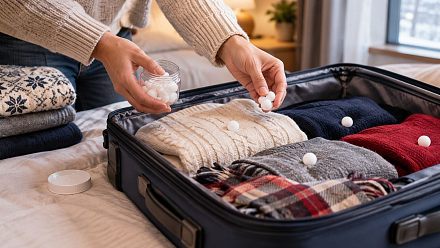
Putting naphthalene balls while storing your winter wear is an annual ritual in almost all homes in India. While these tiny white balls are commonly used to protect clothes from moths, they are also sometimes placed in b
Ni Mallika Bhagat··13K nabasa
Do You Use Naphthalene Balls In Your Cupboard Or Bathroom? Doctor Explains The Hidden Health Risks
Putting naphthalene balls while storing your winter wear is an annual ritual in almost all homes in India. While these tiny white balls are commonly used to protect clothes from moths, they are also sometimes placed in bathrooms and other parts of the house. However, not many people know that the chemical inside them is a pesticide and can be toxic through inhalation, ingestion and skin absorption.
Dr Pankaj Khatana, Sr. Consultant, Internal Medicine, Marengo Asia Hospitals, Gurugram, explains what happens when naphthalene enters the body and why its use needs caution.
What exactly is naphthalene and why are naphthalene balls toxic?
“Naphthalene is a chemical compound used in mothballs. It is volatile, which means it can change from a solid to a gas at room temperature. Vapor is toxic by inhalation, ingestion and skin absorption.” According to Khatana, exposure can affect the blood as well as other organs. “Exposures can cause damage to red blood cells, which can cause them to break down, leading potentially to anemia. Significant exposure may also affect the liver, kidneys and nervous system.” He adds that mothballs should not be treated like ordinary household fresheners. “The chemical is poisonous, so mothballs should never be used as a regular household air freshener or placed where young children can get at them or swallow them.”
Why can you smell naphthalene even when the ball hasn’t melted?
If you’ve ever opened a cupboard and immediately noticed the strong smell of naphthalene, there is a simple reason. “The smell is caused because naphthalene does not have to melt before it can enter into the air. At ordinary temperatures its molecules slowly leave the solid and pass directly into the surrounding air by sublimation.”
This process continues even when the ball appears unchanged. “Even when a ball looks absolutely unchanged inside a cupboard, this continues. If vapor is present, a noticeable odor means that some vapor is there, but smell alone cannot tell how much exposure is occurring.” A closed cupboard can allow vapours to build up, particularly when ventilation is poor. “Opening the cupboard and letting in fresh air reduces the buildup but does not remove the chemical itself,” the expert adds.
Is breathing naphthalene fumes harmful?
Khatana says repeated exposure is not considered safe, particularly in enclosed spaces. “Repeated inhalation of vapors of naphthalene is not considered safe even over long periods of time, especially in enclosed areas.”
Chronic exposure can cause symptoms including headaches, nausea, dizziness, irritation and weakness. Higher exposure can affect red blood cells. “It can cause headaches, nausea, dizziness, eye and nose irritation and weakness if you are exposed to it chronically and may damage red blood cells and lead to anemia if you are exposed to a lot of it.” The risk is influenced by concentration, duration and ventilation.
“Intentional placement of mothballs in living areas results in avoidable exposure and should not be promoted, although occasional short-term exposure is generally less problematic than continuous exposure.”
Should you use naphthalene balls in bedrooms or children’s rooms?
Khatana’s advice makes it easy for us to make a decision: “Avoid using naphthalene balls in bedrooms, children’s rooms and poorly ventilated bathrooms.” These are spaces where people may spend extended periods, increasing the opportunity for exposure. “If windows are left closed, these areas can trap vapors and increase inhalation exposure. Bedrooms are used for long periods of time, children may be in contact with floors, cupboards and stored items.”
He also cautions against using mothballs as general household products. “Mothballs are designed for specific enclosed storage conditions, not as general room fresheners, toilet deodorizers or pest repellents.”
Do You Use Naphthalene Balls In Your Cupboard Or Bathroom? Here’s What A Doctor Wants You To Know
Why are children more vulnerable?
Children can be particularly vulnerable because of their size, behaviour and tendency to explore objects around them. “Children are smaller, breathe more air per body size and may hang out near the floors as well as stored items.”
There is also a risk of accidental ingestion. “A sweet, marble and other object can be mistaken for a mothball and swallowed. Even one ball swallowed can cause serious poisoning.” The doctor recommends keeping mothballs away from children and avoiding food-type containers for storage. “Prevention is the best cure keep mothballs out of reach, never store them in food-type containers and do not use them in places where children live or sleep, where exposure can be prolonged.”
What about pets?
Naphthalene can pose a serious risk to household pets as well. “Naphthalene is poisonous to pets, especially if they chew or eat mothballs.” He explains that your pets, including dogs and cats, can develop several symptoms after exposure. “Following exposure, dogs and cats may develop vomiting, abdominal pain, weakness, anemia, neurological signs and organ damage.”
Because pets may explore objects with their mouths, leaving mothballs on floors can be particularly dangerous. “Mothballs are a serious hazard to animals when left on the floor as animals are small and explore objects with their mouths.” Khatana recommends keeping them away from pets and seeking veterinary help immediately if ingestion is suspected.
Should you use naphthalene balls inside the home at all?
For routine household use, Khatana sees little reason to recommend them. “There is generally little reason to recommend naphthalene balls inside the home for routine household use.” He explains that their intended purpose is more specific. “They are pesticides for the purpose of protecting stored materials from moths under specific conditions of storage when labeled.”
He specifically advises against using them around rooms and toilets. “They should never be thrown around rooms as well as put in toilets and used to repel insects or animals.”
How can you protect clothes from moths without using naphthalene?
There are simple preventive measures that can reduce the need for chemical products. “To prevent moths, make sure clothes are clean and dry before storing as body oils, sweat and food residues can attract moths.”
He recommends sealed storage and regular checks. “Store your clothing in sealed containers or garment bags and keep your cupboards dry and uncluttered. Check the fabrics regularly and air or wash them after long storage.” His broader advice is to focus on basic storage and cleanliness rather than routinely exposing clothes to toxic chemicals. “And the best household practice is not to routinely expose stored clothes to toxic chemicals but to practice simple, practical and consistent cleanliness, dryness, sealed storage and early detection.”
Does washing clothes remove naphthalene after storage?
Washing can help, but it shouldn’t be treated as a complete solution. “Washing after the naphthalene storage may remove some of the residues on the fabric but it does not guarantee that all traces are gone.”
If clothing still has a strong chemical smell, Khatana recommends airing it out. Importantly, the cupboard or storage area may also need attention. “Storage containers and cupboards can contain vapour or residues. So just washing the clothes is not enough.” He recommends cleaning and ventilating the storage space before normal use after prolonged exposure.