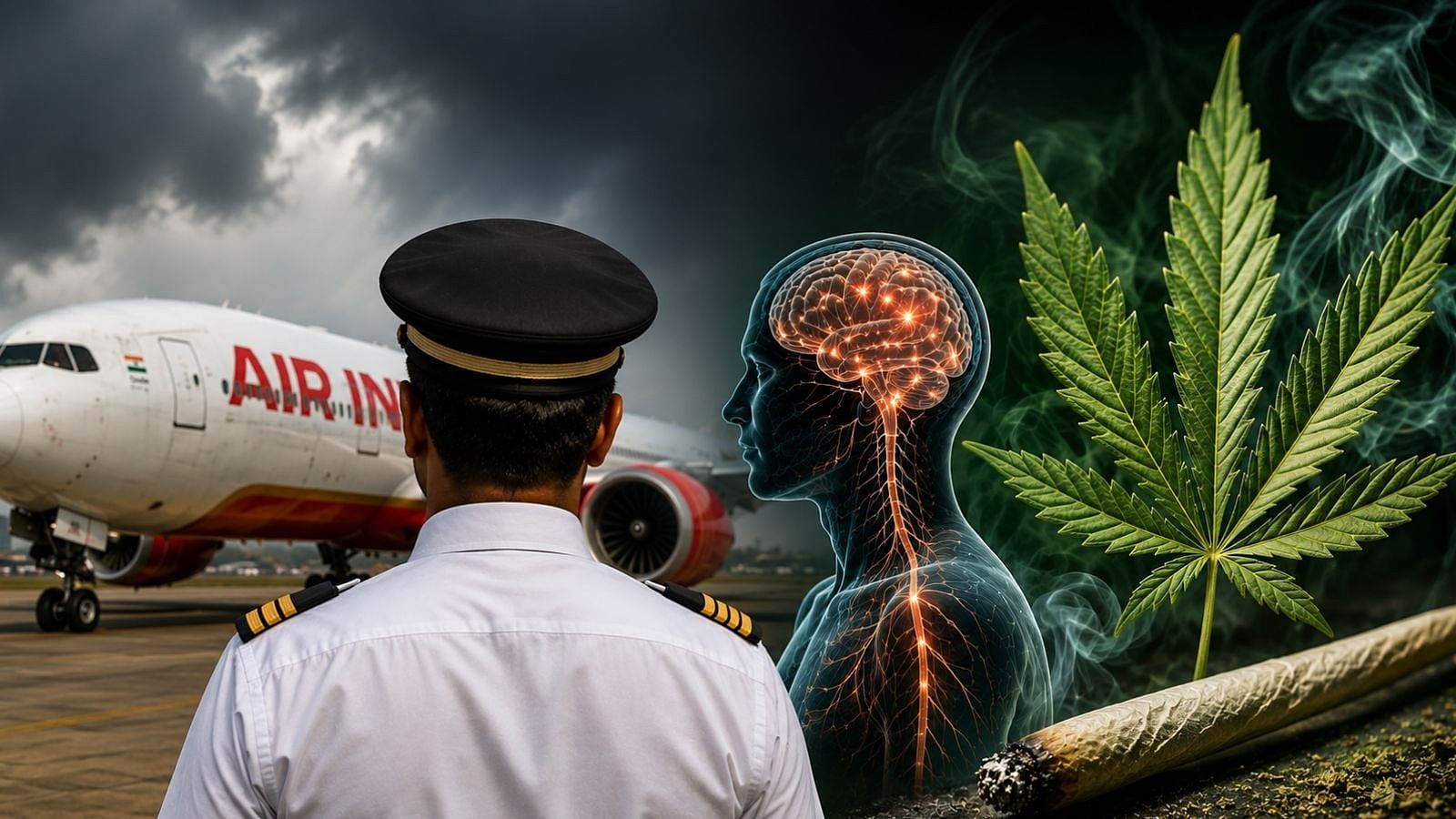
Air India Pilot Tests Positive For Marijuana After Mid-Air Incident: Expert Explains What 'Weed' Actually Does To Your Body
It took a 300-foot drop in altitude over the skies for marijuana to make headlines again. The pilot-in-command of an Air India flight from Phuket to Delhi allegedly tested positive for marijuana in a confirmatory lab tes
Ni Mallika Bhagat··15K nabasa
Air India Pilot Tests Positive For Marijuana After Mid-Air Incident: Expert Explains What 'Weed' Actually Does To Your Body
It took a 300-foot drop in altitude over the skies for marijuana to make headlines again. The pilot-in-command of an Air India flight from Phuket to Delhi allegedly tested positive for marijuana in a confirmatory lab test, after the aircraft experienced a sudden loss of altitude that left 24 people injured. Investigators are still piecing together what happened in the cockpit that day, where technical faults, turbulence, human error are all on the table. But the drug test result alone has put marijuana and the assumptions people carry about it, back under the microscope.
For a substance so often waved off as “just weed” (often called natural, mild, harmless compared to alcohol or harder drugs) marijuana’s actual effects on the body are more complicated, and more immediate, than most people realise.
What Happens When You Consume Marijuana
The first thing marijuana affects isn’t mood. It’s function. “Immediately after use, marijuana can impair attention, memory, judgment, coordination and reaction time,” says Dr. Prateek Kumar, MBBS & DNB, Internal Medicine, Maccure Hospital, Delhi. “These effects increase the risk of road traffic accidents, workplace injuries and poor decision-making.”
That’s the case whether the person using it is behind the wheel of a car, operating machinery, or, as the Air India case has put in sharp focus, in a cockpit. The impairment isn’t always visible from the outside. It doesn’t always look like intoxication. But the cognitive machinery required for split-second decisions is measurably slower. The pilot-in-command of the Air India Phuket-Delhi flight that suddenly lost altitude last week was not able to stand straight and needed assistance in submitting urine sample for the dope test, according to a report published by NDTV.
There’s a psychological dimension too. “Some people may also experience anxiety, panic attacks, paranoia or temporary psychotic symptoms, especially with high-potency products,” Dr. Kumar notes. As cannabis products have grown more potent over the years, this risk has only become more relevant; the marijuana of a decade ago is not the marijuana available today.
Airbus and France’s BEA will assist the AAIB investigation into the Air India AI2379 flight incident. (Video screengrabs/Social Media)
What Happens When You Smoke ‘Weed’ Regularly
A single instance of impairment is one thing. What concerns doctors more is what happens when marijuana becomes a habit rather than an occasional choice.
“Consistent marijuana use affects the brain’s endocannabinoid system, which plays an important role in learning, memory, mood, motivation and emotional regulation,” Dr. Kumar explains. “Regular exposure to THC may alter the functioning of brain regions involved in attention, planning and memory.”
This isn’t confined to the brain, either. Marijuana that’s smoked carries its own set of respiratory consequences. “Beyond the brain, smoking marijuana exposes the lungs to harmful irritants that can lead to chronic cough, bronchitis and airway inflammation,” he says.
Why Age Matters More Than People Assume
Not all marijuana users face the same level of risk, and age turns out to be one of the biggest variables. “Young people are particularly vulnerable because the brain continues to mature until approximately 25 years of age,” says Dr. Kumar. “Early and frequent marijuana use has been associated with a higher risk of dependence and may increase the likelihood of developing or worsening certain mental health conditions in susceptible individuals.”
However, marijuana doesn’t affect everyone identically, and Dr. Kumar is careful to draw that distinction. “Not every person who uses marijuana will experience these outcomes, and the level of risk depends on factors such as age at first use, frequency, THC potency, genetics and co-existing mental health conditions.”
Much of the risk, according to Dr. Kumar, comes down to a single assumption baked into how people think about the drug. “The misconception that ‘natural’ automatically means ‘safe’ can lead people to underestimate the potential harms of regular marijuana use.”
Marijuana’s image has been softened over years of shifting cultural attitudes, legalisation debates elsewhere in the world (especially in Thailand, and India’s own confusing rules for bhaang and CBD), and its packaging as a wellness product in some markets has also contributed to its wider acceptance in society.
However, Dr. Kumar is clear about where the line is. “Individuals experiencing memory problems, declining academic or work performance, mood changes or difficulty controlling cannabis use should seek medical advice.”