Pahalgam Mention At BRICS: Is China-Pakistan’s ‘Iron-Clad’ Bond Under Pressure?
China and Pakistan have long described their relationship as an “all-weather” or “iron-clad” friendship. Beijing has been Islamabad’s biggest strategic backer, while Pakistan has provided China with a crucial partner in
লেখক Apoorva Misra··123K বার পড়া
Pahalgam Mention At BRICS: Is China-Pakistan’s ‘Iron-Clad’ Bond Under Pressure?
China and Pakistan have long described their relationship as an “all-weather” or “iron-clad” friendship. Beijing has been Islamabad’s biggest strategic backer, while Pakistan has provided China with a crucial partner in South Asia and a route into the Arabian Sea through projects such as the China-Pakistan Economic Corridor (CPEC).
But at the BRICS Summit in New Delhi, one moment stood out: China sat at the table as the grouping strongly condemned the 2025 Pahalgam terror attack and called for “zero tolerance” towards terrorism.
The New Delhi Declaration condemned the April 22, 2025 attack, in which 26 people were killed, and specifically called for action against the cross-border movement of terrorists, terror financing and safe havens. It also said those involved in terrorism and those supporting them must be held accountable.
ALSO READ | Opinion | The China-Pakistan Fallout
The declaration did not name Pakistan. Nor did it endorse India’s military response, Operation Sindoor. But the fact that China, Pakistan’s closest major ally, signed on to the language is politically significant.
So, is something changing in the China-Pakistan relationship?
Why Is China’s Presence Significant?
The Pahalgam reference is not entirely unprecedented. BRICS foreign ministers had also condemned the attack in May, with the statement being particularly significant for Delhi because China, “Pakistan’s benefactor and ally”, was part of the grouping.
But the New Delhi Declaration takes place against a wider backdrop.
India and China are themselves attempting to stabilise ties after years of tensions following the 2020 Galwan clash. President Xi Jinping’s presence in New Delhi, alongside the declaration’s condemnation of Pahalgam, creates a striking diplomatic picture: China was simultaneously engaging India at the highest level and signing onto language that directly addresses one of India’s central security concerns.
ALSO READ | New Delhi Declaration Unveiled: BRICS Unites On Pahalgam Terror Attack, UNSC Expansion & India-Led Digital Infra
That does not mean Beijing has abandoned Islamabad. It does, however, raise a question about how far China is willing to automatically shield Pakistan when its own economic and security interests are involved.
The Bigger Problem For Beijing
One of the clearest sources of friction between Beijing and Islamabad has little to do with India. It is, in fact, the safety of Chinese citizens.
Chinese workers and projects linked to CPEC have repeatedly been targeted by militant groups, particularly in Balochistan, testing Beijing’s patience.
A 2025 analysis by the Stimson Center noted that China’s frustration had become more visible, with Beijing moving from behind-the-scenes pressure to increasingly public demands that Pakistan improve security. It also pointed to temporary project suspensions following attacks on Chinese nationals.
The issue has remained alive in 2026. China continues to press Pakistan over security while pushing ahead with CPEC 2.0. In June, Chinese Ambassador Jiang Zaidong met Balochistan Chief Minister Sarfraz Bugti and said Beijing wanted to accelerate CPEC 2.0 and deepen security cooperation. Pakistan, for its part, assured China that it would improve security for Chinese personnel and projects.
In other words, the relationship is not collapsing. But one of its most important pillars, CPEC, increasingly comes with a security problem.
The Economic Question Mark
Another potential fault line has emerged around Chinese investment.
News18 had recently reported that China’s State Grid Corporation pulled back from a proposed acquisition involving a Pakistani power-distribution company. The development came amid concerns over Pakistan’s energy-sector finances, payment liabilities and the security environment facing Chinese businesses.
That matters because CPEC was built around the promise of large-scale Chinese infrastructure and energy investment.
China has already put substantial money into Pakistan’s power sector. The official CPEC project list includes major coal, hydropower, solar and wind projects, as well as transmission infrastructure. But Beijing appears increasingly interested in commercial viability, repayment and security, rather than simply financing projects because they serve a strategic relationship.
That distinction could become important for Pakistan, which badly needs Chinese capital but has struggled with debt, energy-sector arrears and security risks.
Is China Distancing Itself From Pakistan?
Not yet. In fact, there is plenty of evidence pointing in the opposite direction.
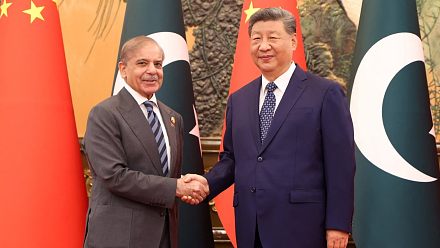
During Pakistan Prime Minister Shehbaz Sharif’s May 2026 visit to China, Xi Jinping met him and both sides agreed on a new broad consensus to deepen their “all-weather strategic cooperative partnership”.
China and Pakistan also agreed to strengthen CPEC and develop Gwadar as a regional connectivity hub. Beijing reiterated support for CPEC 2.0 and Pakistan pledged to improve security for Chinese workers and investments.
As recently as August, Pakistan’s CPEC secretariat was describing discussions with a high-level Chinese Communist Party delegation on giving China-Pakistan cooperation a new political and institutional foundation under CPEC 2.0.
So, the picture is not one of Beijing walking away from Islamabad. It is more accurately one of China becoming more demanding of Pakistan.
What About Pakistan’s BRICS Bid?
This is another area where the China-Pakistan equation gets interesting.
Pakistan formally applied for BRICS membership in 2023 and sought support from China and Russia. But BRICS expansion requires consensus among members, meaning India’s opposition remains a major obstacle. Islamabad continues to seek a place at the BRICS table, but India’s position makes its entry difficult.
ALSO READ | Pakistan Applied For BRICS Membership. Years Later, It’s Still Waiting
For Pakistan, BRICS membership would offer much more than prestige. It could provide greater access to emerging-economy institutions, diplomatic visibility and an additional platform to engage major powers.
Yet China has not been able to, or maybe chosen to, overcome India’s opposition on Pakistan’s behalf.
Beijing’s strategy appears increasingly to be protecting its core relationship with Pakistan while simultaneously managing its much more consequential relationship with India.
The India Factor
This is perhaps the most important context behind the Pahalgam reference.
China has enormous strategic stakes in Pakistan. CPEC runs through Pakistan-occupied Kashmir, Gwadar provides access towards the Arabian Sea, and Islamabad remains an important counterweight to India.
But China also has an enormous economic relationship with India and wants stability on the China-India border and broader ties with New Delhi.
With PM Modi and Xi now working on a reset, Beijing has stronger reasons to avoid being seen as automatically taking Pakistan’s side on every issue involving India.
The Pahalgam language at BRICS therefore fits into a broader pattern: China can remain Pakistan’s strategic partner without necessarily endorsing every Pakistani position.
So, Are China-Pakistan Ties Really Under Strain?
The answer is yes, but with an important caveat.
There are visible strains, particularly over repeated attacks on Chinese citizens and CPEC projects, Pakistan’s ability to provide security, the financial viability of Chinese investments, delays and uncertainty around CPEC projects, Beijing’s growing focus on commercial returns, and China’s simultaneous effort to stabilise ties with India.
But none of these currently amounts to a strategic rupture.
China still sees Pakistan as an important geopolitical partner. Pakistan still depends heavily on Chinese economic, diplomatic and military support. And Beijing continues to back CPEC 2.0.
What appears to be changing is the nature of the bargain.
The old formula was simple: Pakistan offered China strategic access and geopolitical alignment; China offered Pakistan investment, diplomatic support and strategic cover. Today, Beijing appears to be asking for more in return: security for its people, protection for its investments, economic reforms and greater certainty around projects.
That is why the Pahalgam reference at BRICS matters.
It does not prove that China has “dumped” Pakistan. It shows something subtler—Pakistan may no longer be able to assume that China will automatically oppose India whenever the two South Asian rivals clash. For New Delhi, that could be the more important shift.