Why Indian Restaurants Are Going Small On Plates And Big On Variety
India’s restaurant scene has never been this crowded (or this exciting, if you’re the glass half-full kind of diner). If you eat out with the religiosity that we do, you’d know how diners are constantly looking for the n
লেখক Mallika Bhagat··11K বার পড়া
Why Indian Restaurants Are Going Small On Plates And Big On Variety
India’s restaurant scene has never been this crowded (or this exciting, if you’re the glass half-full kind of diner). If you eat out with the religiosity that we do, you’d know how diners are constantly looking for the next ‘IT’ place to try. You may go somewhere for dinner one weekend, return another time just for cocktails, and move on to a new opening the next.
In a dining culture where there is always something else to taste, always a nightcap to have, it gets harder to settle on one large main course. That’s asking for too much commitment. But why fill up on one dish when you can try four or five?
That is one reason small plates are finding their way onto more restaurant menus in India. They offer more variety without the commitment of a large portion, encourage sharing and give diners the chance to taste more of what a kitchen has to offer. For chefs, they also create room to experiment with seasonal ingredients, new techniques and dishes that may not make sense as a full-sized main.
Tanveer Kwatra, founder of Delhi’s Grammie also saw how guests who came in for a starter and a main were leaving full, but having barely scratched the surface of what his kitchen could do. So he built the menu around eating more, not eating bigger.
Tanveer Kwatra, founder of Delhi’s Grammie also saw how guests who came in for a starter and a main were leaving full, but having barely scratched the surface of what his kitchen could do. So he built the menu around eating more, not eating bigger.
“Small plates have picked up in India because the diner has turned more discerning and more experimental. People want to eat five things in an evening rather than commit to one. That instinct isn’t new elsewhere. In Spain a whole evening is built around tapas, where you move from one bar to the next and eat two or three things at each. The Japanese izakaya runs on the same idea, small dishes arriving steadily alongside a drink.”
No Ingredient Has Anywhere To Hide
Grammie is a wafu restaurant, which has a kitchen built on merging Japanese and Western technique, and Kwatra has found that this particular style of cooking reveals itself best in small portions. “Being a wafu restaurant, we apply this technique of amalgamating two cuisines, and that kind of cooking is judged best in a small portion, where the ingredient has nowhere to hide.”
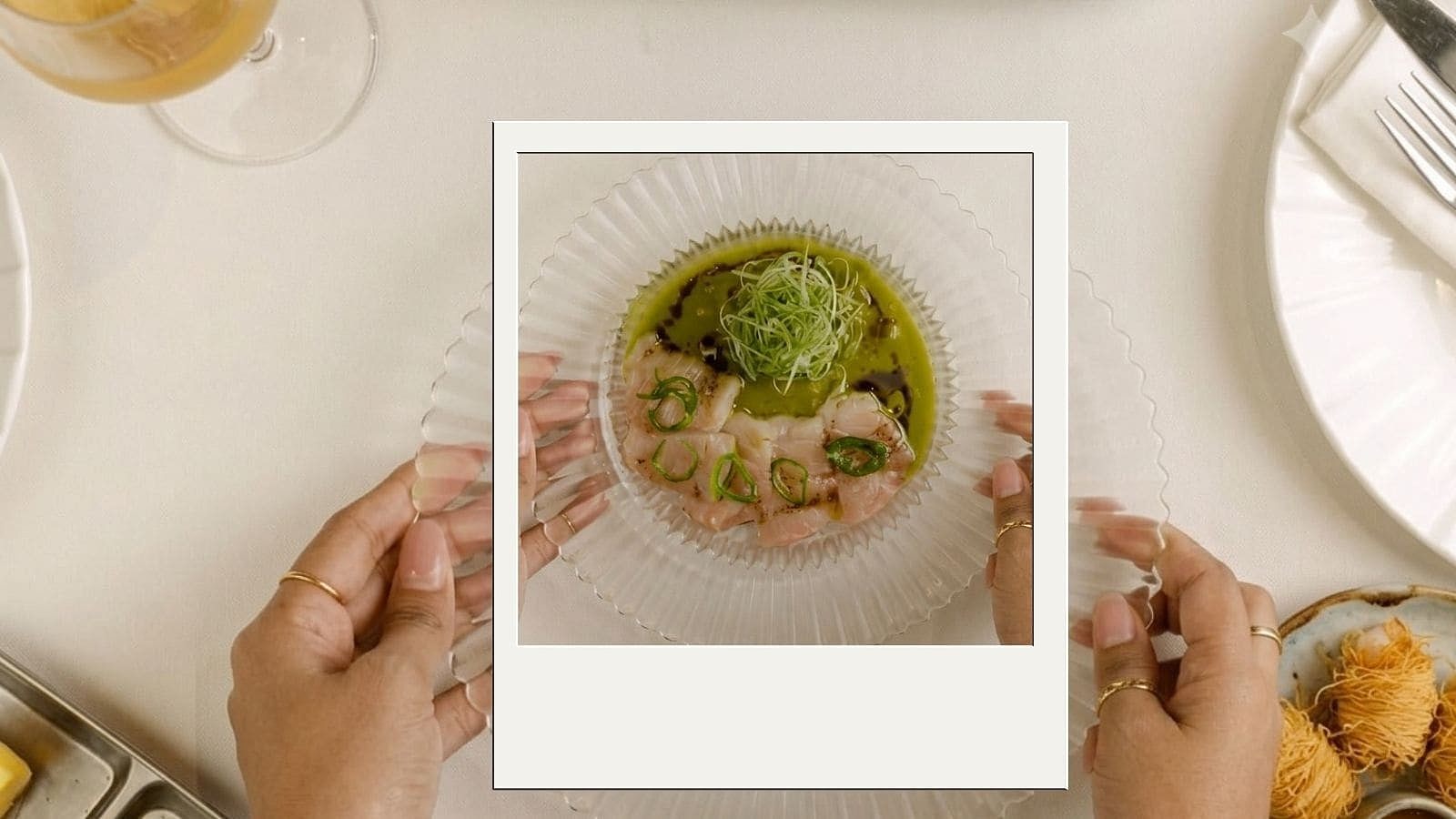
It shows in what guests keep ordering. On the cold side, the Avocado and Enoki Carpaccio, the Chilled Sweetcorn Mousse and Granola Mix, and the Crudo of Hamachi and Arangiri have built a genuine following. On the hot side, it’s the Baked Brie, the Fire Roasted Asparagus and the Charred Harissa Chicken that guests return for.
Grammie is a wafu restaurant, which has a kitchen built on merging Japanese and Western technique, and Kwatra has found that this particular style of cooking reveals itself best in small portions.
The format also solves a problem most restaurants struggle with: waste.
“Wastage drops because a small plate uses a smaller quantity and turns over faster, and if a supply falls short we can quietly pull one dish and put up another. You cannot do that with a signature main course,” he says.
There is a business side to the decision too, as Kwatra explains. “A table of two that would have ordered a starter and one main will happily order four or five small plates, so the spend goes up. But the real gain is that they leave having tasted much more of what we actually do as a wafu kitchen.”
Indian ‘Thali’ Was Always A Tasting Menu
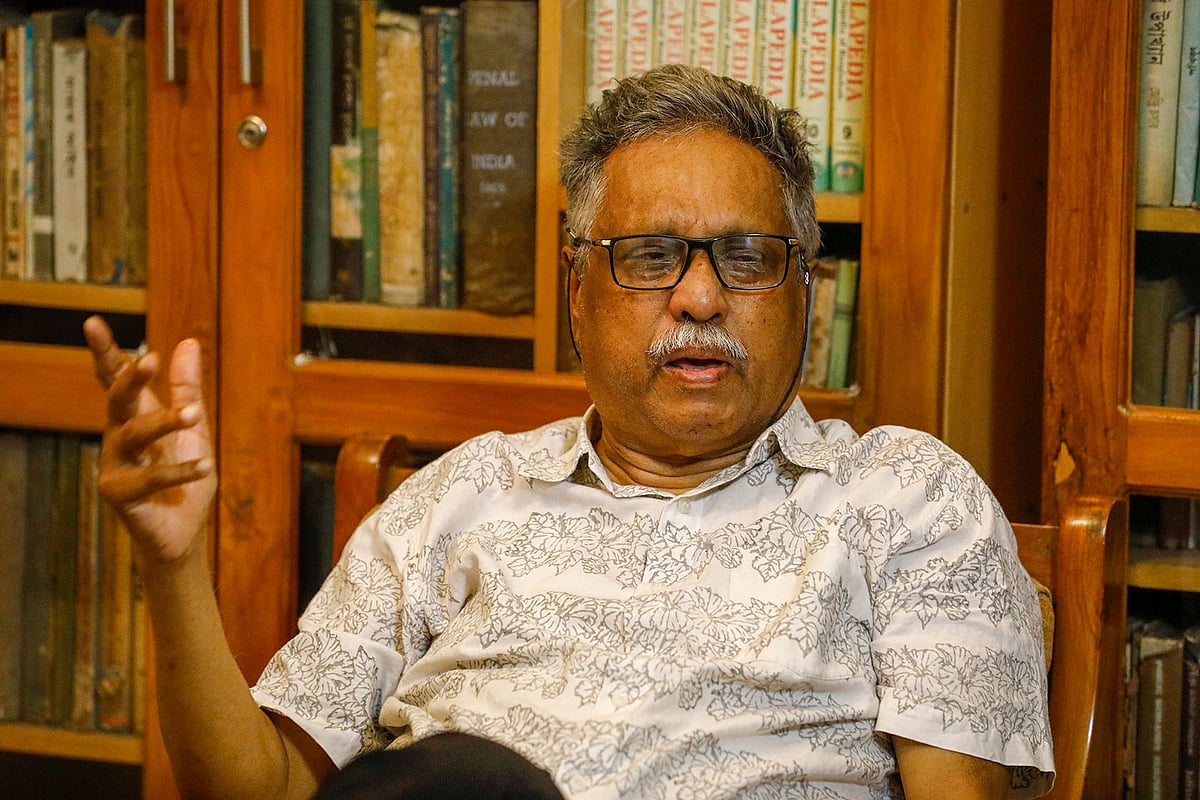
Chef Vaibhav Bhargava, who currently serves as Consultant Chef for new-age Asian concept restaurants like Zuki Asian, Call Me Ten & She’s Here, has had plenty of time to experiment with the concept of ‘small plates’ but sees this ‘trend’ as Indian going back to an instinct it already had.
“I wouldn’t call it a rediscovery as much as a reinterpretation. The Indian table has never really been built around the idea of one person ordering one dish and eating it from beginning to end. A traditional meal is almost an exercise in contrasts — something rich, something acidic, something crunchy, something cooling, a pickle, a chutney, a dal, a vegetable preparation. You taste across the table. You share. You build your own combination with every bite.”
What’s changed, according to him, is the level of presentation and curation. “What contemporary restaurants are doing is translating that behaviour into a more curated format — small plates, tasting menus, sharing menus and chef-led experiences. The interesting change is that the chef is now designing the conversation between the dishes.”
Chef Vaibhav Bhargava, who currently serves as Consultant Chef for new-age Asian concept restaurants like Zuki Asian, Call Me Ten & She’s Here, has had plenty of time to experiment with the concept of ‘small plates’
This gives us another perspective. We don’t have to borrow from other regions or nations; India always had the sharing culture and now diners want more experiences packaged together.
“We don’t have to borrow the Western idea of small plates and simply make Indian food smaller. We already have a sophisticated sharing culture. The opportunity is to understand its underlying logic and reinterpret it for today’s diner. For me, the future is not necessarily about portion size. It is about plurality of experience — giving the diner several flavours, textures and ideas within one meal without making the experience feel excessive,” Bhargava adds.
For him, the shrinking menu ends up giving chefs more control, and also helps in running what he thinks is an efficient restaurant. “A large menu gives the diner choice, but it also creates a tremendous amount of operational complexity — more SKUs, more mise en place, more inventory, more training and more opportunities for inconsistency. A tighter menu allows a chef to put more thought, technique and precision behind every dish.”
Seasonality Adds To The Table
Indian restaurants are also coming into play in Indian restaurants, and for good measure. Rather than forcing an ingredient to fit a fixed menu, a smaller, rotating format lets the ingredient dictate the menu.
“If the produce is exceptional for six weeks, why should I pretend that it will be equally good for the next twelve months? A chef should be responding to that difference… What contemporary kitchens can do is bring that intelligence into a more modern framework.”
But just because a menu is ‘seasonal’ doesn’t mean it is good. According to Bhargava, a good chef still has to understand the ingredient, source it properly and know when to leave it alone. The best thing to do, he says, is to “not overwork it.”
The Kitchen As A Live Experiment
At Yazu Goa and Yazu Bangalore, Cluster Chef Tenzin Khetsok considers ‘small plates as a testing ground with diners, who he says have the ‘deciding vote’.
“We wanted to create a more interactive dining experience rather than simply expanding the menu. Small plates allow guests to explore different flavours, textures and Asian influences in one meal. It also encourages sharing, discovery and a more social way of dining. For us, it is about giving guests more variety without making the menu feel overwhelming.”
A rotating format, he says, gives the kitchen room to try things it might never risk on a fixed menu. “It gives the kitchen the freedom to experiment with new ingredients, techniques and flavour combinations. Guest response then helps us understand which creations genuinely connect with diners before we consider making them permanent. It creates a space where creativity can be driven by both the chef’s ideas and the guest’s response.”
So what earns a dish a permanent spot?
“We prefer to evolve the menu regularly while giving each dish enough time to find its audience. Guest feedback, repeat orders, seasonality and the overall balance of the menu all play a role. Ultimately, the dishes guests remember and come back for are the ones that stay. The idea is to keep the menu fresh while retaining dishes that have built a genuine connection with our guests.”
What Diners Are Actually Asking For
Bhargava’s read on the diner is worth ending on, because it explains why this format has legs beyond a single season. Indian diners haven’t stopped wanting familiar dishes but familiarity is no longer the only thing bringing them back.
“There is a growing segment of diners who want to know, ‘What’s different this time?’ Indian diners are becoming more comfortable with the idea that a restaurant can be a moving culinary narrative rather than a fixed menu. Diners will accept a menu changing. What they won’t accept is a restaurant changing without purpose. A signature gives people a reason to return. Change gives them a reason to come back again.”