Ram Charan's Health Update After Wrist Surgery: How Long Does Recovery Take And Why 8 Weeks Are Critical?
Telugu superstar Ram Charan has successfully undergone surgery on his right wrist at Ganga Hospital in Coimbatore. The injury, sustained during the filming of an intense wrestling sequence for Peddi, had reportedly worse
লেখক Lifestyle Desk··8K বার পড়া
Ram Charan's Health Update After Wrist Surgery: How Long Does Recovery Take And Why 8 Weeks Are Critical?
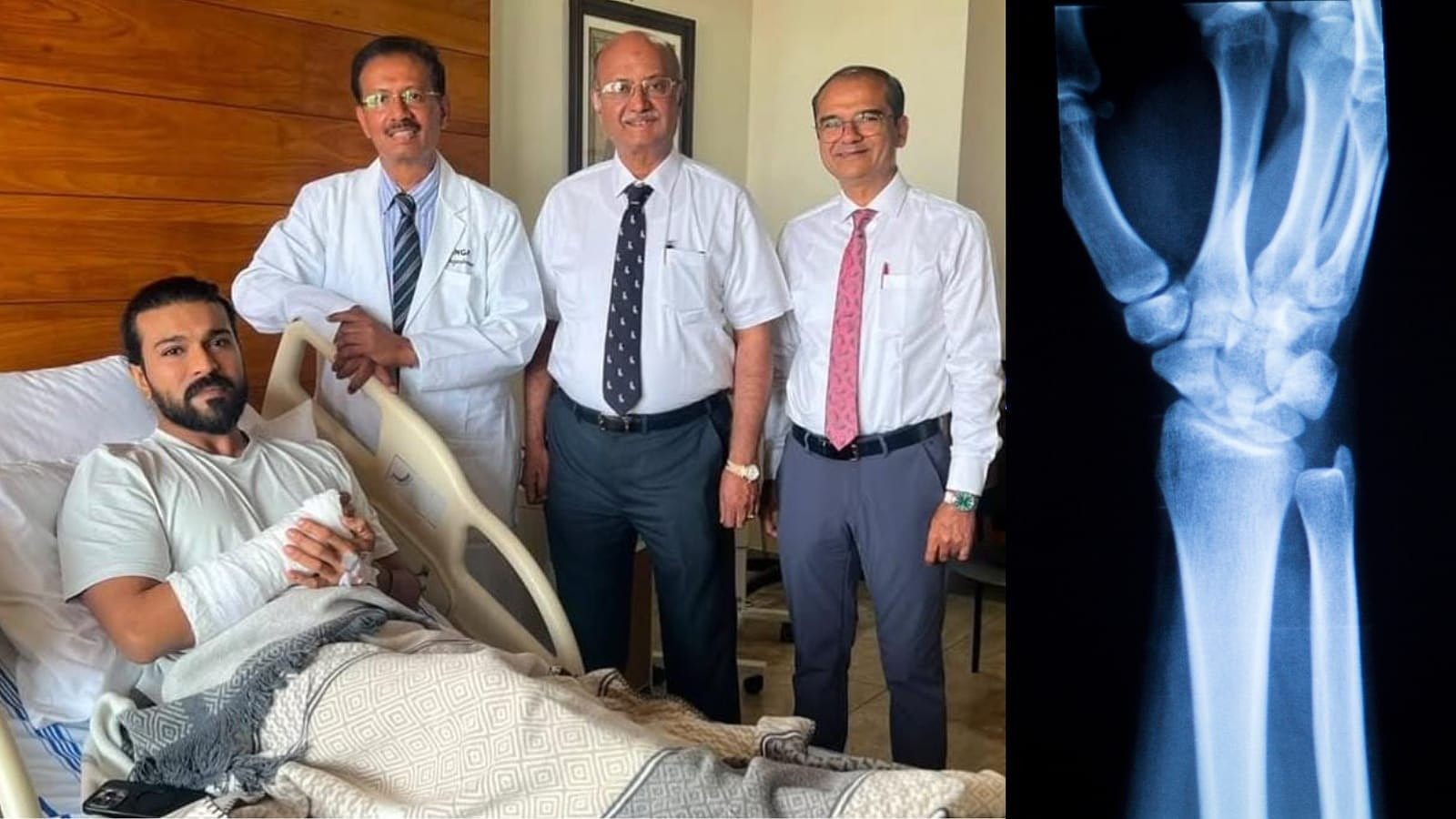
Telugu superstar Ram Charan has successfully undergone surgery on his right wrist at Ganga Hospital in Coimbatore. The injury, sustained during the filming of an intense wrestling sequence for Peddi, had reportedly worsened over time. Following the procedure, doctors advised the actor to take eight weeks of complete rest, followed by physiotherapy and structured rehabilitation before returning to work.
The procedure, performed on Sunday, was led by renowned orthopaedic surgeon Dr S. Rajasekaran, with internationally acclaimed hand and wrist specialist Dr Alejandro Badia flown in from Miami to join the team. Doctors reported the outcome as successful, and the medical team expressed satisfaction with the results.
The actor, currently recovering at the hospital with family members including father Chiranjeevi, mother Surekha, and wife Upasana Konidela by his side, has been advised eight weeks of rest before resuming professional commitments. A smiling photograph of Ram Charan with the medical team has been widely shared, sparking fan wishes under the hashtag #GetWellSoonRamCharan.
Do Wrist Injuries Always Require Surgery?
The wrist is one of the most complex joints in the human body, consisting of eight small bones along with multiple ligaments, tendons, muscles, and nerves that provide strength and flexibility.
When an injury becomes severe or fails to heal with rest and physiotherapy, surgery may be needed to repair torn ligaments or tendons, stabilise fractures with plates or screws, correct cartilage damage, restore joint movement and grip strength, and prevent long-term complications such as arthritis or chronic pain.
Common causes include sports injuries, falls, repetitive strain, and trauma from physically demanding activities—precisely the kind of high-intensity work involved in action sequences.
However, surgery may become necessary if there is:
A displaced or unstable fracture
Torn ligaments causing wrist instability
Tendon injuries
Joint damage affecting movement
Persistent pain or loss of function despite conservative treatment
According to reports, Ram Charan’s injury was significant enough to require specialist surgical intervention led by renowned orthopaedic experts, including hand and wrist surgeon Dr Alejandro Badia.
Representational Image: Canva
How Long Does Recovery From Wrist Surgery Usually Take?
Recovery depends on the type of injury, the surgical procedure performed, age, overall health and how closely rehabilitation instructions are followed.
In general:
The first 1 to 2 weeks focus on reducing pain, swelling, and stiffness, with the wrist protected by a splint or cast.
Weeks 2 to 6 introduce gentle movement exercises under the guidance of a physiotherapist or hand therapist.
Between 6 and 12 weeks, strengthening exercises begin, and most patients see improved function.
Full recovery often takes 3 to 6 months, though complex cases may require longer rehabilitation.
An eight-week break, like the one recommended for Ram Charan, is commonly advised before gradually returning to professional activities, especially when the wrist is essential for strenuous physical performance.
Why Is Rehabilitation Crucial After Joint Surgery?
Rest alone is not enough. After surgery, the wrist can become stiff due to prolonged immobilisation. Physiotherapy helps patients:
Restore flexibility
Improve grip strength
Reduce swelling
Prevent joint stiffness
Regain normal hand function
Lower the risk of long-term disability
Rehabilitation is usually personalised and progresses from gentle range-of-motion exercises to strengthening activities once healing is confirmed.
Doctors commonly recommend following the surgeon’s instructions closely, wearing prescribed splints or braces, controlling swelling through elevation and cold therapy when advised, maintaining a protein-rich diet with adequate calcium and vitamin D, avoiding heavy lifting until cleared, attending all physiotherapy sessions, quitting smoking to support tissue healing, and waiting for medical clearance before strenuous activity.