Navratri Colours 2026: Day-Wise List From October 11 To October 19
Navratri Colours 2026 Day-Wise List: Sharad Navratri, one of the most widely celebrated Hindu festivals, will begin on October 11 and conclude on October 19, 2026, with Vijayadashami or Dussehra falling on October 20. Du
লেখক Nibandh Vinod··22K বার পড়া
Navratri Colours 2026: Day-Wise List From October 11 To October 19
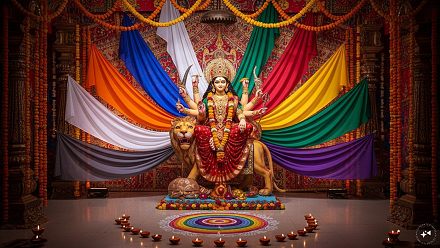
Navratri Colours 2026 Day-Wise List: Sharad Navratri, one of the most widely celebrated Hindu festivals, will begin on October 11 and conclude on October 19, 2026, with Vijayadashami or Dussehra falling on October 20. During the nine-day festival, devotees worship the nine forms of Goddess Durga, collectively known as Navdurga.
Each day is associated with a specific colour, and wearing that colour has become a popular Navratri tradition, particularly during Garba and Dandiya celebrations. From orange and white to red, royal blue, yellow, green, grey, purple and peacock green, the nine colours add a vibrant festive touch to the celebrations.
If you are planning your Navratri outfits, puja preparations or festive events, here is the complete Navratri 2026 colour list, along with the date, day, tithi and Goddess worshipped on each day.
Navratri Colours 2026: Day-Wise List
Navratri will be celebrated from October 11 till October 19.
Navratri 2026 Day 1 — October 11: Orange
Goddess: Maa Shailputri
Tithi: Pratipada
Colour: Orange
Navratri begins with the worship of Maa Shailputri, the first form of Navdurga. She is traditionally depicted riding a bull and carrying a trident and lotus.
Orange is associated with warmth, energy and enthusiasm. Devotees can incorporate the colour into their traditional attire, dupattas, sarees, kurtas or accessories.
The first day also marks Ghatasthapana, the ritual that formally begins Navratri observances.
Read More: Durga Puja 2026 Calendar: Dates, Schedule, Sandhi Puja Time And Significance
Navratri 2026 Day 2 — October 12: White
Goddess: Maa Brahmacharini
Tithi: Dwitiya
Colour: White
The second day is dedicated to Maa Brahmacharini, the second manifestation of Goddess Durga. She represents devotion, penance and spiritual discipline.
White is traditionally associated with purity, peace and calm. White ethnic wear, sarees, kurtas and festive accessories can be incorporated into the day’s celebrations.
Navratri 2026 Day 3 — October 13: Red
Goddess: Maa Chandraghanta
Tithi: Tritiya
Colour: Red
The third day honours Maa Chandraghanta, known for the crescent moon adorning her forehead. She is associated with courage, strength and protection.
Red is one of the most prominent colours associated with Devi worship and is frequently seen in chunris and festive offerings.
Read More: When Is Dussehra 2026: Date, Time, Significance And Vijayadashami Muhurat
Navratri 2026 Day 4 — October 14: Royal Blue
Goddess: Maa Kushmanda
Tithi: Chaturthi
Colour: Royal Blue
The fourth day is dedicated to Maa Kushmanda, the fourth form of Navdurga.
Royal blue brings a rich and vibrant look to Navratri celebrations. Devotees can choose royal-blue sarees, lehengas, kurtas or accessories for the day’s festivities.
Navratri 2026 Day 5 — October 15: Yellow
Goddess: Maa Skandamata
Tithi: Panchami
Colour: Yellow
On the fifth day, devotees worship Maa Skandamata, the mother of Lord Kartikeya, also known as Skanda.
Yellow is associated with brightness, optimism and joy, making it a popular choice for festive clothing. Yellow sarees, salwar suits, kurtas and traditional jewellery can complement the day’s theme.
Navratri 2026 Day 6 — October 16: Green
Goddess: Maa Katyayani
Tithi: Shashti
Colour: Green
The sixth day honours Maa Katyayani, a powerful form of Goddess Durga.
Green represents nature, growth and freshness. It is also a particularly popular colour for festive dressing during Navratri.
Navratri 2026 Day 7 — October 17: Grey
Goddess: Maa Kalaratri
Tithi: Saptami
Colour: Grey
The seventh day is dedicated to Maa Kalaratri, traditionally regarded as the fierce form of Navdurga.
Grey is the designated colour for Day 7 in the 2026 sequence. While it is more understated than some of the brighter Navratri shades, grey can be styled with colourful jewellery, embroidery and festive accessories.
Navratri 2026 Day 8 — October 18: Purple
Goddess: Maa Mahagauri
Tithi: Ashtami
Colour: Purple
The eighth day is associated with Maa Mahagauri, the eighth form of Navdurga.
Purple adds a rich and festive tone to Navratri celebrations.
Read More: Mahalaya 2026: When And Where To Listen To Mahishasura Mardini Live
Navratri 2026 Day 9 — October 19: Peacock Green
Goddess: Maa Siddhidatri
Tithi: Navami
Colour: Peacock Green
The ninth and final day is dedicated to Maa Siddhidatri, the ninth form of Navdurga.
For 2026, the colour listed for October 19 is Peacock Green, a blue-green shade inspired by the colours of a peacock’s feathers.
The day marks the culmination of the nine-day Navratri colour cycle, after which Vijayadashami/Dussehra is observed on October 20.
What Is the Significance of Navratri Colours?
The practice of wearing a particular colour on each day of Navratri is a popular cultural tradition rather than a universal scriptural requirement. The sequence is commonly linked to the weekday on which Navratri begins, with the colours following a recurring cycle.
The tradition has become especially visible in Maharashtra and Gujarat, where people often coordinate their clothes, accessories and festive celebrations around the colour of the day. The colour also serves as a convenient guide for those planning Navratri outfits, office celebrations, Garba nights, Dandiya events and festive gatherings.