Navratri 2026 Calendar: Shardiya Navratri, one of the most important Hindu festivals dedicated to Goddess Durga and her nine forms, will begin on Sunday, October 11, 2026. The nine-day festival will culminate with Maha N
Navratri 2026 Calendar: Shardiya Navratri, one of the most important Hindu festivals dedicated to Goddess Durga and her nine forms, will begin on Sunday, October 11, 2026. The nine-day festival will culminate with Maha Navami on October 19, followed by Vijayadashami or Dussehra on October 20.
The 2026 Navratri calendar has a notable tithi configuration: Maha Ashtami and Maha Navami are observed on October 19, as Ashtami Tithi continues until 10:51 AM and Navami begins at 10:51 AM on the same day. Sandhi Puja, which marks the transition between Ashtami and Navami, is scheduled from 10:27 AM to 11:15 AM in several part of India.
Read More: When Is Mahalaya 2026? Date, City-wise Timings, Significance And Rituals
Navratri 2026: Ghatasthapana Date and Time
Ghatasthapana, also known as Kalash Sthapana, marks the beginning of Navratri worship. It involves establishing the sacred kalash and invoking Goddess Shakti at the start of the festival.
Ghatasthapana Muhurat: 6:19 AM to 10:12 AM
Duration: 3 hours 52 minutes
Abhijit Muhurat: 11:44 AM to 12:31 PM
Duration: 46 minutes
Pratipada Tithi: October 10 at 9:19 PM to October 11 at 9:30 PM
Ghatasthapana should ideally be performed during the prescribed muhurat while Pratipada Tithi is prevailing.
Shardiya Navratri 2026: 9-Day Calendar
The nine days of Navratri are traditionally associated with the nine forms of Goddess Durga, collectively known as Navdurga.
Navratri will be celebrated from October 11 till October 19.
According to Drik Panchang, Ashtami Tithi begins at 8:27 AM on October 18 and ends at 10:51 AM on October 19, after which Navami Tithi begins. Maha Navami will be celebrated on October 19, with Navami Tithi continuing until 12:50 PM on October 20.
Read More: Navratri 2026: When Is Shardiya Navratri Starting? Date, Timings, Puja Vidhi And Wishes
Maha Ashtami and Maha Navami on October 19
Both Maha Ashtami and Maha Navami will be celebrated on October 19.
Ashtami begins on October 18 and continues into October 19.
Navami begins at 10:51 AM on October 19.
The transition between the two tithis forms the basis for Sandhi Puja, traditionally performed for 48 minutes – the final 24 minutes of Ashtami and the first 24 minutes of Navami.
The Sandhi Puja muhurat is from 10:27 AM to 11:15 AM.
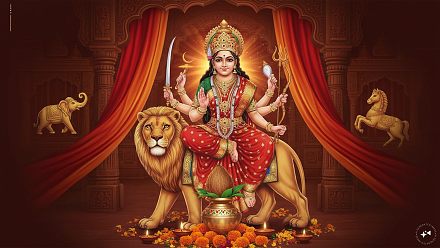
Navratri 2026: Goddess Durga’s Sawari
The traditional concept of Goddess Durga’s Agaman (arrival) and Gaman (departure) is associated with the weekday on which Navratri begins and Vijayadashami falls.
Goddess Durga’s arrival: Elephant
This year, Goddess Durga will arrive in elephant (Gaja).
The elephant is traditionally regarded as an auspicious vahana and is associated in popular religious interpretations with abundance, prosperity, strength and favourable agricultural conditions.
Goddess Durga’s departure: Horse
Vijayadashami falls on Tuesday, October 20, 2026. Under the traditional calculation, Goddess Durga’s departure vehicle is the horse (Ashva).
The horse is traditionally associated with movement, speed and change. Interpretations of the Sawari are part of religious and astrological tradition and should not be presented as scientific predictions about political, economic or social events.
Why is Navratri Celebrated?
Navratri is dedicated to the worship of Goddess Durga and her nine manifestations. The festival is traditionally associated with the victory of Dharma over Adharma and Goddess Durga’s victory over the buffalo demon Mahishasura.
The nine nights also have a spiritual dimension. Devotees often use the period for prayer, meditation, fasting, devotional music and other forms of worship. Fasting practices vary widely, with many devotees following a satvik diet according to family and regional traditions.
The nine forms of Goddess Durga worshipped during Navratri are:
Maa Shailputri
Maa Brahmacharini
Maa Chandraghanta
Maa Kushmanda
Maa Skandamata
Maa Katyayani
Maa Kalaratri
Maa Mahagauri
Maa Siddhidatri
Shardiya Navratri 2026 Bhog List
Offering bhog or prasad is an important part of Navratri celebrations. The following offerings are traditionally associated with the nine forms of Goddess Durga.
Offering bhog or prasad is an important part of Navratri celebrations.
These offerings are traditionally associated with blessings such as health, prosperity, peace, spiritual strength and fulfilment. Such associations are matters of religious belief rather than scientifically established effects.
Navratri Bhog Rules
Devotees preparing bhog generally follow the principles of cleanliness and satvik cooking.
Keep the kitchen and cooking utensils clean.
Take a bath and wear clean clothes before preparing bhog, according to customary practice.
Many vrat traditions avoid onion and garlic.
Devotees observing a fast may use sendha namak (rock salt) instead of ordinary table salt.
Use fresh ingredients and prepare the offering with devotional intent.
Some traditions prefer brass, copper, silver or clay vessels for puja offerings, although vessel practices vary by household and region.
Navratri 2026: Dussehra and Goddess Durga Visarjan
The nine-day Shardiya Navratri observance ends with Maha Navami on October 19. Vijayadashami or Dussehra will be observed on Tuesday, October 20, 2026.
In traditions where Goddess Durga idols are installed for the festival, Durga Visarjan is performed on Vijayadashami according to the local ritual calendar. The festival marks the conclusion of the Navratri period and is associated with the triumph of good over evil.