International Day Of Older Persons 2026: Schemes, Benefits And Rights
International Day of Older Persons is celebrated annually on October 1, highlighting the opportunities and challenges associated with longer lives and an ageing population. For India, the occasion assumes added significa
লেখক Nibandh Vinod··24K বার পড়া
International Day Of Older Persons 2026: Schemes, Benefits And Rights
International Day of Older Persons is celebrated annually on October 1, highlighting the opportunities and challenges associated with longer lives and an ageing population. For India, the occasion assumes added significance as the country’s elderly population is growing rapidly.
Government projections cited by the Ministry of Social Justice and Empowerment show that the population aged 60 years and above is expected to rise from about 10 crore in 2011 to 23 crore by 2036. Its share of the total population is projected to increase from 8.4% to 14.9% during the same period.
Against this backdrop, senior citizens and their families should be aware of the government schemes, healthcare support, pension assistance and legal safeguards available to older persons.
International Day of Older Persons 2026 Theme
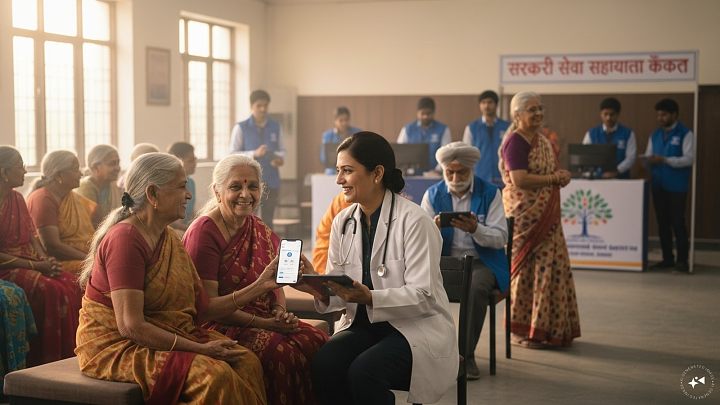
Senior citizens who need information, support or grievance-related assistance can also use Elderline, the National Helpline for Senior Citizens, at 14567. (Image: Shutterstock)
The theme for International Day of Older Persons 2026 is “The Age of Longevity: Rethinking Systems for Longer Lives.” The United Nations and World Health Organization are using the occasion to focus attention on how societies and public systems need to adapt as people live longer.
The focus goes beyond simply increasing life expectancy. It includes questions around healthcare, pensions, employment, housing, social participation, accessibility, lifelong learning and protection from discrimination.
For India, the theme is particularly relevant because the country is undergoing a major demographic transition. A growing elderly population means greater demand for healthcare, social security, accessible infrastructure, caregiving services and mechanisms that protect the dignity and rights of older people.
International Day of Older Persons: History
The United Nations General Assembly designated October 1 as the International Day of Older Persons on December 14, 1990, through Resolution 45/106.
The move followed international efforts to address the needs and rights of ageing populations. One important milestone was the Vienna International Plan of Action on Ageing, adopted at the first World Assembly on Ageing in 1982.
In 1991, the UN General Assembly adopted the United Nations Principles for Older Persons, covering areas such as independence, participation, care, self-fulfilment and dignity.
Another major milestone came in 2002 with the adoption of the Madrid International Plan of Action on Ageing, which addressed the opportunities and challenges associated with population ageing in the 21st century.
The International Day of Older Persons therefore serves as an annual reminder that ageing is not merely a demographic issue but also a matter of social security, healthcare, human rights and inclusion.
Why is International Day of Older Persons significant?
The day draws attention to the contribution of older people to families, communities and economies while highlighting the challenges they may face.
In India, the issue is becoming increasingly important because the number of people aged 60 and above is projected to grow substantially over the coming decade. The government has said the elderly population could reach 23 crore by 2036.
The needs of older persons can range from income and healthcare to housing, assistive devices, social support and protection from neglect or abuse.
The 2026 theme also puts the emphasis on rethinking systems for longer lives. This means creating conditions in which additional years of life can be accompanied by health, independence, dignity and participation.
Government schemes and benefits for senior citizens in India
The Central Government runs several programmes covering social security, healthcare, shelter, assistive devices and support services.
Atal Vayo Abhyuday Yojana (AVYAY)
The Atal Vayo Abhyuday Yojana (AVYAY) is an umbrella scheme of the Ministry of Social Justice and Empowerment for the welfare of senior citizens.
Its broad objectives include improving the quality of life of older persons and supporting areas such as financial security, healthcare and nutrition, shelter, protection of life and property, active ageing, accessibility and age-friendly environments.
Its components include initiatives related to senior citizen homes, state action plans, assistive devices, productive engagement and technology and innovation for elderly care.
The government said in July 2026 that Elderline was operational across 32 States and Union Territories, while 734 senior citizen homes were being supported under AVYAY.
Indira Gandhi National Old Age Pension Scheme (IGNOAPS)
IGNOAPS operates under the National Social Assistance Programme (NSAP) of the Ministry of Rural Development.
According to a recent government report, eligible beneficiaries receive a central assistance component of ₹200 per month for those aged 60–79 years and ₹500 per month for those aged 80 years and above, subject to the applicable eligibility criteria, including the BPL criterion cited by the government. States and Union Territories may provide additional assistance.
The exact amount received by a beneficiary can therefore depend on the applicable state or UT contribution and eligibility conditions.
Ayushman Bharat PM-JAY for senior citizens aged 70+
One of the significant recent healthcare measures is the expansion of Ayushman Bharat–Pradhan Mantri Jan Arogya Yojana (AB-PMJAY) to all senior citizens aged 70 years and above, irrespective of socio-economic status.
The government provides health assurance coverage of up to ₹5 lakh per year under the expansion. Senior citizens already belonging to families covered under AB-PMJAY receive an additional top-up arrangement for themselves, subject to the scheme’s rules.
The government reiterated in 2026 that senior citizens aged 70 years and above are eligible for the ₹5 lakh annual health cover irrespective of their socio-economic status.
National Programme for Health Care of the Elderly (NPHCE)
The National Programme for Health Care of the Elderly (NPHCE) focuses specifically on geriatric healthcare.
The programme provides for preventive, curative and rehabilitative services through government health facilities. Depending on the level of healthcare facility, services can include geriatric consultations, diagnosis and treatment, day-care services, rehabilitation and home-based care.
The programme also provides for dedicated services at primary and community health facilities, district hospitals and specialised geriatric centres.
The government reported in 2026 that the number of districts functional under NPHCE had increased from 595 in 2020-21 to 722 in 2024-25.
Rashtriya Vayoshri Yojana (RVY)
The Rashtriya Vayoshri Yojana provides eligible senior citizens with age-related disabilities or infirmities with assistive living devices.
These can help improve functional independence and address difficulties associated with age-related physical limitations. The scheme operates under the senior citizen welfare framework of the Ministry of Social Justice and Empowerment.
In July 2026, the government said that more than 49.81 lakh assistive devices had been distributed to over 9.23 lakh senior citizens under RVY.
Elderline: National Helpline for Senior Citizens
Senior citizens who need information, support or grievance-related assistance can also use Elderline, the National Helpline for Senior Citizens, at 14567.
The government says the helpline provides grievance redressal services and information about relevant Acts, schemes and programmes of the Central and State Governments.
Availability and service arrangements can vary, so callers should verify the assistance relevant to their particular issue.
What legal rights do senior citizens have in India?
The Maintenance and Welfare of Parents and Senior Citizens Act, 2007 provides a legal framework dealing with the maintenance and welfare of parents and senior citizens.
The law includes provisions relating to maintenance, maintenance tribunals, old-age homes, medical care and protection of life and property.
Right to seek maintenance
The Act provides a legal mechanism through which eligible parents and senior citizens can seek maintenance from children or relatives, subject to the provisions and conditions of the law.
Maintenance applications can be dealt with through Maintenance Tribunals established under the Act.
Protection of life and property
The Act also contains provisions concerning the protection of the life and property of senior citizens.
One provision deals with circumstances in which a transfer of property can be declared void if the transferee fails to provide basic physical needs and amenities to the senior citizen, subject to the conditions specified in the law.
Medical care
The legislation contains provisions concerning medical care for senior citizens. The National Programme for Health Care of the Elderly also refers to Section 20 of the 2007 Act in outlining the government’s framework for medical care for older persons.
Because maintenance and property matters can involve individual facts and state-level procedures, senior citizens should seek appropriate legal advice or contact the relevant government authority when dealing with a specific dispute.
Why awareness matters
Government schemes can provide important support, but eligibility is not uniform across programmes. Age, income, socio-economic status, disability or infirmity, residence and other conditions may apply depending on the scheme. Families should therefore check the latest eligibility rules and application process.
India’s ageing population also means that senior care is increasingly becoming a broader social issue. Government projections indicate that the number of Indians aged 60 and above could reach 23 crore.
The significance of International Day of Older Persons 2026 lies in putting this demographic shift into perspective: longer lives require systems that can support people not only financially and medically, but also socially and legally.
As the world marks the day under the theme “The Age of Longevity: Rethinking Systems for Longer Lives,” the focus is ultimately on ensuring that increased longevity is accompanied by dignity, security, health, participation and respect for older persons.