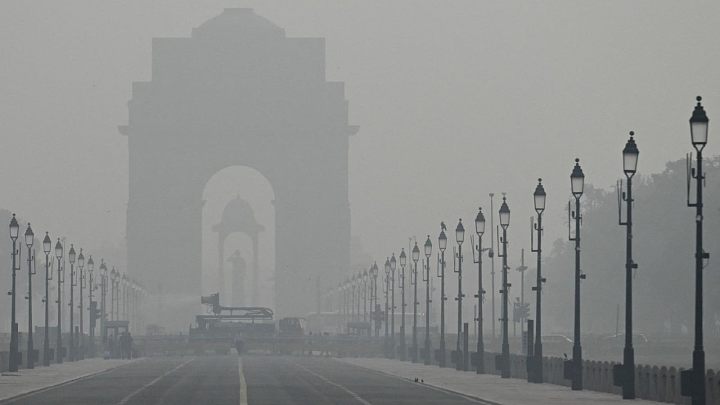
Delhi’s AQI Hits 157 As Smog Returns: Can Just 3 Years Of Air Pollution Do Irreparable Damage To Your Lungs?
Delhi’s smoggy skies are back, and if you have stepped outdoors lately, you may have noticed the haze, the irritation in your throat or that familiar urge to check the AQI before heading out.
লেখক Tanya Dutt··8K বার পড়া
Delhi’s AQI Hits 157 As Smog Returns: Can Just 3 Years Of Air Pollution Do Irreparable Damage To Your Lungs?
Delhi’s smoggy skies are back, and if you have stepped outdoors lately, you may have noticed the haze, the irritation in your throat or that familiar urge to check the AQI before heading out.
With Delhi’s Air Quality Index (AQI) touching 157 as on 13 October, 2026, the bigger concern is not just how polluted the air is today, but what breathing it day after day could mean for your lungs over time.
A study published in Nature has raised concerns about the link between long-term exposure to fine particulate matter (PM2.5) and lung cancer. Research suggests that just three years of exposure to air pollution may be associated with a higher risk of certain types of lung cancer. The findings are especially important because these cancers can also develop in people who have never smoked.
As Delhi residents navigate another period of hazy skies, understanding the difference between short-term symptoms and long-term respiratory risks is essential.
What Does A High AQI Mean For Delhi Residents?
Delhi recorded an AQI of 157 at 2:01 pm on October 13, 2026, with PM2.5 levels at 70 micrograms per cubic metre and PM10 at 136 micrograms per cubic metre. The dashboard uses the US AQI scale, under which 157 falls in the ‘unhealthy’ category. Under India’s Central Pollution Control Board (CPCB) scale, an AQI between 101 and 200 is classified as ‘moderate’.
The distinction matters because AQI readings depend on the scale used, but neither classification means polluted air is harmless. Fine particulate matter, particularly PM2.5, is a concern because these tiny particles can travel deep into the respiratory system.
For people with asthma, chronic lung disease or existing heart conditions, exposure may worsen symptoms. Even otherwise healthy individuals can experience irritation of the eyes, nose and throat, coughing or breathing discomfort, particularly when pollution levels remain elevated.
How Does PM2.5 Affect The Lungs?
PM2.5 refers to fine particulate matter measuring 2.5 micrometres or less in diameter. Because of their small size, these particles can penetrate deep into the lungs, where they may contribute to inflammation and other biological changes.
The 2023 research offered insights into how pollution could promote cancer development. Researchers found evidence that PM2.5 exposure may trigger inflammatory responses in lung tissue, potentially encouraging the growth of cells that already carry cancer-associated mutations.
In other words, air pollution may not always initiate the genetic changes linked to cancer. It may also help create conditions in which existing abnormal cells are more likely to develop into tumours. The team investigated these mechanisms using laboratory models, alongside human population data.
How Quickly Can Pollution Increase The Risk Of Lung Cancer?
A major study published in Nature examined nearly 33,000 people with lung cancer across England, Taiwan, South Korea and additional cohorts from the UK Biobank and Canada. Researchers found a clear link between higher levels of PM2.5, the tiny particles that penetrate deep into the lungs and an increased incidence of EGFR-driven lung cancer, a form that often affects people who have never smoked or smoked only lightly.
In one Canadian group of non-smokers, three years of exposure to high PM2.5 levels was associated with a rise in the risk of developing this type of lung cancer from 40% to 73%. The same association was not seen after 20 years in that cohort, suggesting that the critical window can open relatively early.
Image: AFP
The findings are especially significant because lung cancer is often associated with smoking, but people who have never smoked can also develop the disease. Air pollution is one environmental risk factor that may contribute to lung cancer in non-smokers.
Signs Polluted Air Is Affecting Your Breathing
Short-term exposure to polluted air can cause symptoms such as:
– Persistent coughing or throat irritation.
– Wheezing, chest tightness or shortness of breath.
– Burning or watery eyes.
– Worsening asthma symptoms or other existing respiratory conditions.
These symptoms are not specific to pollution, and their presence does not automatically indicate lung damage or cancer. However, persistent or worsening breathing difficulties should not be ignored. Seek urgent medical attention for severe breathlessness, significant chest pain or difficulty breathing.
Lung cancer can also develop without obvious early symptoms, so the absence of coughing or breathlessness does not rule it out. Anyone experiencing persistent respiratory symptoms should consult a healthcare professional rather than attempting to diagnose the cause themselves.
How Can You Protect Your Lungs When Air Quality Deteriorates?
While individuals cannot control city-wide pollution levels, a few precautions may help reduce exposure during periods of poor air quality.
Check local AQI readings: Monitor air quality before planning outdoor activities, particularly in the morning or evening when conditions may change.
Limit strenuous outdoor exercise: Consider moving intense workouts indoors when pollution levels are elevated.
Use a well-fitted N95 or equivalent respirator: It can reduce exposure to fine particles when worn correctly, although it does not eliminate all risks from polluted air.
Keep indoor air cleaner: Close windows when outdoor pollution is high, if indoor conditions allow, and consider an appropriately sized air purifier with a HEPA filter.
Avoid additional indoor pollutants: Tobacco smoke, incense and fumes from cooking can add to indoor pollution exposure. Ensure adequate ventilation when outdoor air quality permits.
An AQI of 157 falls in the “unhealthy” category. At these levels, everyone may begin to experience health effects, and sensitive groups are advised to limit outdoor exertion.