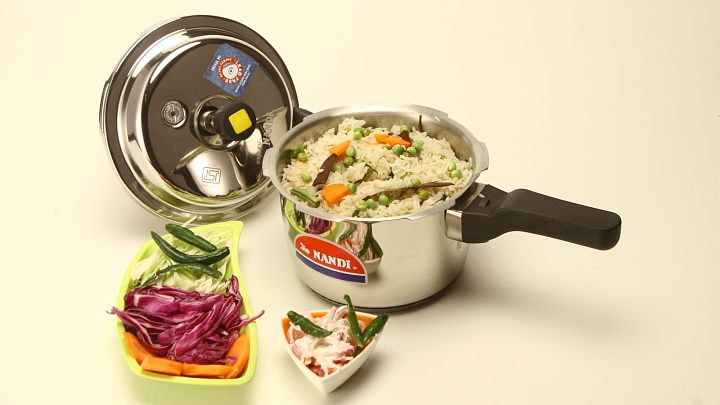
Aluminium vs Stainless Steel Pressure Cooker: Which Is Safer For Daily Cooking?
Choosing between an aluminium and stainless steel pressure cooker involves more than comparing price and appearance. Material durability, cooking habits, maintenance, food compatibility and long-term use all matter when
লেখক Consumer Trends Desk··30K বার পড়া
Aluminium vs Stainless Steel Pressure Cooker: Which Is Safer For Daily Cooking?
Choosing between an aluminium and stainless steel pressure cooker involves more than comparing price and appearance. Material durability, cooking habits, maintenance, food compatibility and long-term use all matter when selecting a pressure cooker for everyday Indian cooking. Aluminium cookers are lightweight, heat up quickly and are generally more affordable, while stainless steel models offer greater durability and resistance to corrosion and staining.
For daily cooking, stainless steel is generally the better choice for users who prioritise durability, easier maintenance and long-term use. Aluminium pressure cookers remain a practical option for buyers looking for a lightweight and economical cooker that heats quickly.
Verdict: Which one should you choose?
Choose an aluminium pressure cooker if:
You want a lightweight pressure cooker. You are shopping on a tighter budget. You want quick heat distribution. You prefer an easy-to-handle cooker. You mainly cook everyday staples such as rice, dal and vegetables.
Choose a stainless steel pressure cooker if:
You want better durability. You plan to use the cooker every day for several years. You want better resistance to corrosion and staining. You cook acidic foods regularly. You prefer a premium, easier-to-maintain finish.
A stainless steel pressure cooker is generally the better long-term choice for daily cooking because of its durability, corrosion resistance and versatility. An aluminium pressure cooker can still be a good option for buyers who prioritise affordability, lighter weight and fast heating.
Top picks
Quick comparison
How does an aluminium pressure cooker work?
Aluminium pressure cookers use a lightweight metal body that conducts heat efficiently. Once the lid is locked and pressure builds inside the cooker, food cooks at a higher temperature than it would in an open pot, reducing cooking time.
One of the biggest advantages of aluminium is its low weight. This makes the cooker easier to move, wash and handle, particularly when it is filled with food and water.
Aluminium pressure cookers are also generally more affordable than stainless steel alternatives, making them popular for basic everyday cooking.
Where aluminium pressure cookers perform best?
Everyday Indian cooking
Rice and dal
Quick heating
Lightweight handling
Budget purchases
Regular home use
Where aluminium pressure cookers struggle?
Resistance to scratches and dents
Corrosion resistance
Long-term appearance
Cooking certain acidic foods frequently
Maintaining a polished finish
An aluminium cooker can provide reliable everyday performance when it is handled and maintained properly, but its surface generally requires more care than stainless steel.
How does a stainless steel pressure cooker work?
Stainless steel pressure cookers use a steel body designed to withstand repeated heating, pressure cycles and everyday kitchen use. Stainless steel is heavier than aluminium but generally provides greater resistance to corrosion, staining and physical wear.
Many stainless steel pressure cookers also feature a thicker or multi-layered base designed to improve heat distribution. This can help reduce hot spots while cooking and make the cooker suitable for a wider range of foods.
The combination of durability and resistance to corrosion makes stainless steel particularly attractive for households that use a pressure cooker every day.
Where stainless steel pressure cookers perform best?
Daily cooking
Long-term use
Cooking acidic foods
Resistance to stains
Durability
Easy maintenance
Where stainless steel pressure cookers struggle?
Higher purchase price
Greater weight
Slower heating compared with aluminium
Can develop visible marks from regular use
For households looking for one pressure cooker to use regularly for several years, stainless steel is generally the more durable option.
Which is safer for daily cooking?
Both aluminium and stainless steel pressure cookers can be used safely for daily cooking when they are manufactured to applicable safety standards and used correctly.
The material itself is only one part of pressure-cooker safety. The quality of the lid, pressure-release mechanism, gasket, safety valve and overall construction also matters. Users should follow the manufacturer’s instructions and replace worn components when required.
For daily cooking, stainless steel has an advantage in terms of durability and resistance to corrosion and surface wear. This makes it a preferred choice for users who want a cooker that can withstand frequent use over a long period.
Safety comparison
Aluminium: Safe for everyday use when properly manufactured and maintained Stainless steel: Safe for everyday use, with greater durability and corrosion resistance
Therefore, the better material should not be judged on the assumption that aluminium pressure cookers are inherently unsafe. Proper construction, maintenance and usage are more important.
Which heats faster?
Aluminium has an advantage when it comes to heat conduction.
An aluminium pressure cooker generally heats up quickly and distributes heat efficiently, which can help bring water and food up to cooking temperature faster.
Stainless steel itself is not as thermally conductive as aluminium. However, many stainless steel pressure cookers use a layered or encapsulated base that combines stainless steel with a more conductive metal to improve heat distribution.
Heating comparison
Aluminium pressure cooker: Faster heat transfer Stainless steel pressure cooker: Good heat distribution with a suitable multi-layered base
For users who want rapid heating, aluminium can be attractive. For daily cooking, however, the difference may be less important than the cooker’s overall construction.
Which is more durable?
Stainless steel generally wins in durability.
It is more resistant to dents, corrosion and surface deterioration and can maintain its appearance better with regular care. This makes stainless steel pressure cookers particularly suitable for households where the cooker is used frequently.
Aluminium is lighter but comparatively softer. It can develop dents or scratches more easily, especially if handled roughly or cleaned with abrasive materials.
If you plan to use the same pressure cooker every day for many years, stainless steel is generally the better investment.
Which is easier to maintain?
Stainless steel generally requires less careful handling to maintain its appearance.
It is resistant to staining and corrosion and can usually be cleaned without the surface deteriorating as quickly as aluminium. Aluminium can develop discolouration and may be more susceptible to marks and scratches.
However, both materials should be cleaned according to the manufacturer’s instructions. Abrasive cleaning products and harsh scrubbing can damage the finish of either type.
Which is better for cooking acidic foods?
Stainless steel is generally the better choice for cooking acidic foods such as tomato-based gravies and dishes containing tamarind or other acidic ingredients.
Its corrosion resistance makes it better suited to frequent exposure to acidic ingredients. Aluminium can also be used for cooking, but prolonged or repeated contact with acidic foods may affect the surface over time.
For households that regularly prepare curries, gravies and other acidic dishes, stainless steel provides greater peace of mind and durability.
Which is lighter and easier to handle?
Aluminium pressure cookers are significantly lighter than comparable stainless steel models.
This can be useful when the cooker needs to be moved frequently or when lifting a filled cooker is difficult. A smaller aluminium cooker can also be more convenient for quick everyday tasks.
Stainless steel is heavier, but the additional weight is partly a result of its sturdier construction and thicker bases used in many models.
For users who prioritise ease of handling, aluminium has the clear advantage.
Which offers better value?
Aluminium pressure cookers generally provide better upfront value because they are less expensive and deliver efficient heating at a relatively low cost.
Stainless steel models cost more, but their greater durability and resistance to corrosion can make them better value over the long term.
If you need an inexpensive cooker for basic everyday meals, aluminium can be a sensible purchase. If you are buying a pressure cooker specifically for years of daily use, spending more on stainless steel can be worthwhile.
Which should you buy overall?
If affordability, lightweight handling and fast heating are your main priorities, an aluminium pressure cooker is a practical choice. It can handle everyday cooking while keeping the initial purchase cost relatively low.
If your priority is long-term daily use, durability and resistance to corrosion and staining, a stainless steel pressure cooker is the better investment. It is particularly suitable for households that cook frequently and want a pressure cooker that can withstand years of regular use.
For most households looking for a pressure cooker specifically for daily cooking, stainless steel is the better overall choice, while aluminium remains a good budget-friendly alternative.
Common cooking scenarios
FAQs
Which is safer, aluminium or stainless steel pressure cooker?
Both can be safe for daily cooking when they are properly manufactured, maintained and used according to the manufacturer’s instructions. Stainless steel has an advantage in durability and corrosion resistance.
Is aluminium pressure cooker safe for daily cooking?
Yes. A properly manufactured aluminium pressure cooker can be used for daily cooking. Users should follow the manufacturer’s instructions and regularly inspect the gasket, safety valve and other components.
Which pressure cooker lasts longer?
Stainless steel pressure cookers generally have better durability and resistance to corrosion, dents and surface wear, making them better suited to long-term use.
Which heats faster, aluminium or stainless steel?
Aluminium generally heats faster because it conducts heat more efficiently. Stainless steel models can compensate with multi-layered or conductive bases designed to improve heat distribution.
Which is better for acidic foods?
Stainless steel is generally preferable for frequent cooking of acidic foods because it offers better resistance to corrosion and staining.
Are stainless steel pressure cookers heavier?
Yes. Stainless steel is generally heavier than aluminium, which can make aluminium models easier to handle.
Which pressure cooker is better for daily Indian cooking?
Stainless steel is generally the better choice for daily Indian cooking because of its durability, corrosion resistance and suitability for frequent use. Aluminium is a good alternative when budget and lightweight handling are more important.
Which should I buy overall?
Choose aluminium if you want a lightweight and affordable pressure cooker with fast heating. Choose stainless steel if durability, corrosion resistance and long-term daily use are your priorities.
Disclaimer: The product descriptions mentioned in the article are solely based on the primary and secondary research conducted by our experts. To keep you ahead of the curve with these latest products, News18 utilises affiliate links. This means if you decide to shop through our recommendations, we may earn a small referral commission at no extra cost to you. Please be advised that News18 is not responsible for any claims under the Consumer Protection Act, 2019, or other applicable laws regarding the final performance, quality, or safety of these products.