'Hamas-Sympathisers': Netanyahu Attacks Arab Parties Over Record 19 Seats, Warns Against Coalition
Israeli Prime Minister Benjamin Netanyahu has stepped up his attack on Arab-Israeli political parties after they secured a record 19 seats in the country’s parliamentary elections, accusing them of sympathising with Hama
مصنف Vani Mehrotra··54K بار پڑھا
'Hamas-Sympathisers': Netanyahu Attacks Arab Parties Over Record 19 Seats, Warns Against Coalition
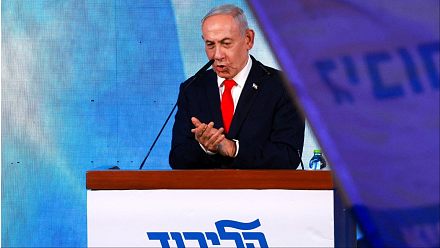
Israeli Prime Minister Benjamin Netanyahu has stepped up his attack on Arab-Israeli political parties after they secured a record 19 seats in the country’s parliamentary elections, accusing them of sympathising with Hamas and warning against the formation of a government dependent on their support.
In remarks reported by Al Jazeera, Netanyahu targeted Arab-led parties amid growing speculation that his main political rival, Gadi Eisenkot, could join hands with the Arab bloc to form an alternative government, potentially ending Netanyahu’s time in office.
The October 27 elections left Israel facing a political deadlock, with neither the ruling coalition nor the opposition securing the 61 seats required for a majority in the 120-member Knesset, or parliament.
The three Arab-led parties secured a historic 19 seats, giving the opposition a possible route to forming a government if they agree to cooperate.
Netanyahu has questioned the legitimacy of the electoral outcome and intensified his criticism of Arab-Israeli lawmakers, arguing that a government reliant on their support would pose a threat to Israel’s security and identity.
In a video message, the Israeli Prime Minister also alleged foreign interference in the elections, saying, “There are serious suspicions that foreign states have spent considerable sums to influence the outcome of the elections in Israel.”
The remarks came as Netanyahu and his Likud party continued to push allegations that foreign money had been used to influence the electoral outcome, particularly through Arab-led political groups.
NETANYAHU TARGETS ARAB PARTIES AS OPPOSITION EYES COALITION
The election results have placed Arab-Israeli parties at the centre of Israel’s post-election political negotiations.
Netanyahu’s bloc secured 53 seats, while the main opposition alliance led by Eisenkot won 48. The Arab-led parties, including Ra’am and the Joint List, together secured 19 seats.
An alliance between Eisenkot’s opposition camp and the Arab parties could provide the numbers needed to form a government. However, such cooperation remains politically contentious, given the longstanding opposition among several Israeli political groups to relying on Arab parties for parliamentary support.
Netanyahu and his far-right allies have sought to portray such a possible arrangement as a threat to the country.
The Prime Minister has accused Arab-Israeli politicians of being sympathetic to Hamas, while questioning whether a government dependent on their support could adequately protect Israel.
Al Jazeera had earlier reported that Netanyahu accused Palestinian-Israeli voters of “stealing” the election after their parties made unprecedented gains. He also criticised the possibility of the opposition joining forces with the Arab-led parties to remove him from power.
The controversy has also triggered a confrontation between Netanyahu’s camp and Arab-Israeli political leaders, who have accused the outgoing government of attempting to delegitimise the community’s electoral participation.
ARAB BLOC DENOUNCES ‘POLITICAL PERSECUTION’ OVER FOREIGN FUNDING PROBE
The political confrontation escalated further on Wednesday after the Joint List, an alliance of three Arab-Israeli parties, accused Netanyahu’s government of political persecution following reports that one of its senior lawmakers, Ayman Odeh, was being investigated over alleged foreign funding.
Odeh, an outgoing lawmaker and former leader of the Joint List, was reportedly under investigation by Israel’s internal security agency, Shin Bet, over allegations that he had received hundreds of thousands of shekels, approximately $100,000, from an unspecified foreign entity.
The allegations were reported by several Israeli media outlets, which cited unnamed officials. The investigation is part of a probe into suspected foreign interference in the October 27 elections, an issue Netanyahu’s Likud party has repeatedly raised.
The Joint List strongly rejected the targeting of Odeh, saying, “The targeting of Ayman Odeh is political persecution, and we will not allow the Arab public’s vote to be delegitimised.”
It further accused Netanyahu of refusing to accept the electoral verdict, saying, “Netanyahu is clinging to power and refusing to acknowledge the will of Arab citizens who voted overwhelmingly against his government.”
The allegations have also put Netanyahu’s government at odds with Attorney General Gali Baharav-Miara.