Neurosurgeon Explains Indian Pilot Smit Machchhar’s Head Injury: ‘What’s Scary Isn’t The Fracture’
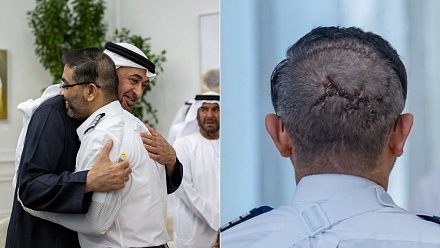
The long line of staples at the back of Indian pilot Captain Smit Machchhar’s head, visible when he went to receive his UAE’s First Class Order of Zayed II award, has drawn attention online, but a neurosurgeon says the m
مصنف Mallika Bhagat··94K بار پڑھا
Neurosurgeon Explains Indian Pilot Smit Machchhar’s Head Injury: ‘What’s Scary Isn’t The Fracture’
The long line of staples at the back of Indian pilot Captain Smit Machchhar’s head, visible when he went to receive his UAE’s First Class Order of Zayed II award, has drawn attention online, but a neurosurgeon says the most frightening aspect of his injury may be what lies beneath the damaged skull.
Captain Machchhar suffered a serious head injury after he was allegedly attacked with a cockpit crash axe by his co-pilot aboard flydubai flight FZ1073 on September 30. The Dubai-to-Tel Aviv flight, carrying 174 passengers and crew, made an emergency landing in Tabuk, Saudi Arabia, after the incident. Despite his injuries, Machchhar managed to help open the cockpit door, allowing others to intervene.
He underwent emergency surgery in Saudi Arabia before being transferred to the UAE for further treatment. Subsequent reports said he was recovering well.
Now, neurosurgeon Sanat Dixit, MD, FACS, has offered an explanation of the potential medical dangers associated with the injury in a post on X. His assessment highlights the proximity of the fracture to a major venous channel that drains blood from the brain.
As a neurosurgeon, let me tell you how frightening this injury actually is – an occipital compound depressed skull fracture treated with a WIDE craniotomy (outer staple line).
What’s scary isn’t the fracture; it’s what’s adjacent to the damaged skull. The axe blows (that tree-branch scar at the center) hit right over the posterior superior sagittal sinus, a large vein that runs lengthwise between the 2 cerebral hemispheres and carries blood from the brain to the heart.
Penetrating injuries to the sinus can carry upwards of a 40% morbidity/mortality – partially because a transection of the sinus can be difficult to repair and can result in extreme blood loss, venous air embolism, or thrombosis – all of which can be fatal.
There’s scary, and then there’s the “you go to elevate the fracture and risk unroofing the sinus, losing 2 liters of blood in a minute” scary.
The surgeons likely had their hands full and did an amazing job. Divine providence called many heroes into service that day. Damn fine work.
धन्यवाद
— Sanat Dixit MD FACS (@sdixitmd) October 28, 2026
Why Was Smit Machchhar’s Skull Injury So Dangerous?
In his post, Dixit described the injury as an “occipital compound depressed skull fracture” treated with a “WIDE craniotomy”, referring to the surgical opening in the skull. He wrote: “As a neurosurgeon, let me tell you how frightening this injury actually is – an occipital compound depressed skull fracture treated with a WIDE craniotomy (outer staple line).
“What’s scary isn’t the fracture; it’s what’s adjacent to the damaged skull.” The occipital bone forms the back of the skull. A depressed skull fracture occurs when a broken piece of bone is pushed inward, potentially damaging the underlying brain tissue. An open or compound fracture also involves a break in the tissues covering the fracture, increasing concerns about contamination and infection.
The superior sagittal sinus is a large channel that runs along the midline at the top of the brain, between the two cerebral hemispheres. It collects blood from veins draining the brain and helps return it towards the heart.
Dixit explained the anatomical concern in his post, writing: “The axe blows (that tree-branch scar at the center) hit right over the posterior superior sagittal sinus, a large vein that runs lengthwise between the 2 cerebral hemispheres and carries blood from the brain to the heart.” The location matters because damage to a major venous channel can cause complications beyond the fracture itself. These may include substantial bleeding, disruption of the brain’s venous drainage and the formation of blood clots.
‘This Man Is A True Hero’: Internet Reacts As UAE Honours Indian Pilot Smit Machchhar After September Flight Attack
Why Can An Injury To This Vein Be Life-Threatening?
Dixit highlighted the potential consequences of an injury to the superior sagittal sinus, particularly if the vessel is torn or opened during trauma or surgery. “Penetrating injuries to the sinus can carry upwards of a 40% morbidity/mortality – partially because a transection of the sinus can be difficult to repair and can result in extreme blood loss, venous air embolism, or thrombosis – all of which can be fatal.”
Morbidity refers to illness or complications associated with an injury, while mortality refers to death. The risk in an individual case depends on factors such as the precise location and severity of the damage, associated brain injuries and the speed and effectiveness of treatment.
A major concern is severe blood loss. If a large venous channel is damaged, bleeding can be difficult to control and may rapidly become life-threatening. Another possible complication is a venous air embolism, in which air enters the bloodstream and interferes with circulation. Thrombosis, or clot formation, can also obstruct venous drainage and cause further complications.
Explaining the challenge surgeons may face when treating a fracture in this area, Dixit wrote: “There’s scary, and then there’s the “you go to elevate the fracture and risk unroofing the sinus, losing 2 liters of blood in a minute” scary.”
What Is A Craniotomy And Why Is It Performed?
A craniotomy is a surgical procedure in which a section of the skull is temporarily removed to give surgeons access to the brain or underlying structures. It may be required in selected cases of serious head trauma to manage damaged tissue, address bleeding or treat other complications.
In Machchhar’s case, reports said he underwent emergency surgery in Saudi Arabia, where doctors reconstructed his skull, before he was transferred to the UAE for further care. Dixit praised the medical team that treated the pilot, writing: “The surgeons likely had their hands full and did an amazing job. Divine providence called many heroes into service that day. Damn fine work.”
Disclaimer: This article explains the medical concerns raised in a public post by neurosurgeon Sanat Dixit. His assessment of the specific injury has not been independently verified against Captain Smit Machchhar’s medical records. The discussion is for general information and is not a substitute for professional medical advice.