H1N1 Cases Surge In India: Can People Get Both COVID-19 And Swine Flu At The Same Time?
India is witnessing a notable rise in H1N1 influenza cases, commonly known as swine flu, across several states this monsoon and post-monsoon season. Health authorities are monitoring the situation closely as respiratory
مصنف Tanya Dutt··25K بار پڑھا
H1N1 Cases Surge In India: Can People Get Both COVID-19 And Swine Flu At The Same Time?
India is witnessing a notable rise in H1N1 influenza cases, commonly known as swine flu, across several states this monsoon and post-monsoon season. Health authorities are monitoring the situation closely as respiratory infections increase in major urban centres.
In the capital Delhi, the number of cases has surpassed 2,000 and the local government has issued a public advisory urging people to wear masks in crowded places and follow basic respiratory hygiene measures. The figure is, on an average, eight times higher than in previous years. The southern state of Karnataka has reported about 4,000 cases, more than half in the IT hub of Bengaluru.
Meanwhile, COVID-19 cases have also been reported in parts of Odisha and Andhra Pradesh. A 54-year-old woman in Bhubaneswar was diagnosed with COVID-19 after seeking medical care for respiratory issues, while two additional cases were later detected in Odisha’s Ganjam district, taking the state’s total to three. Andhra Pradesh reported seven new cases on July 21, taking its total to 26.
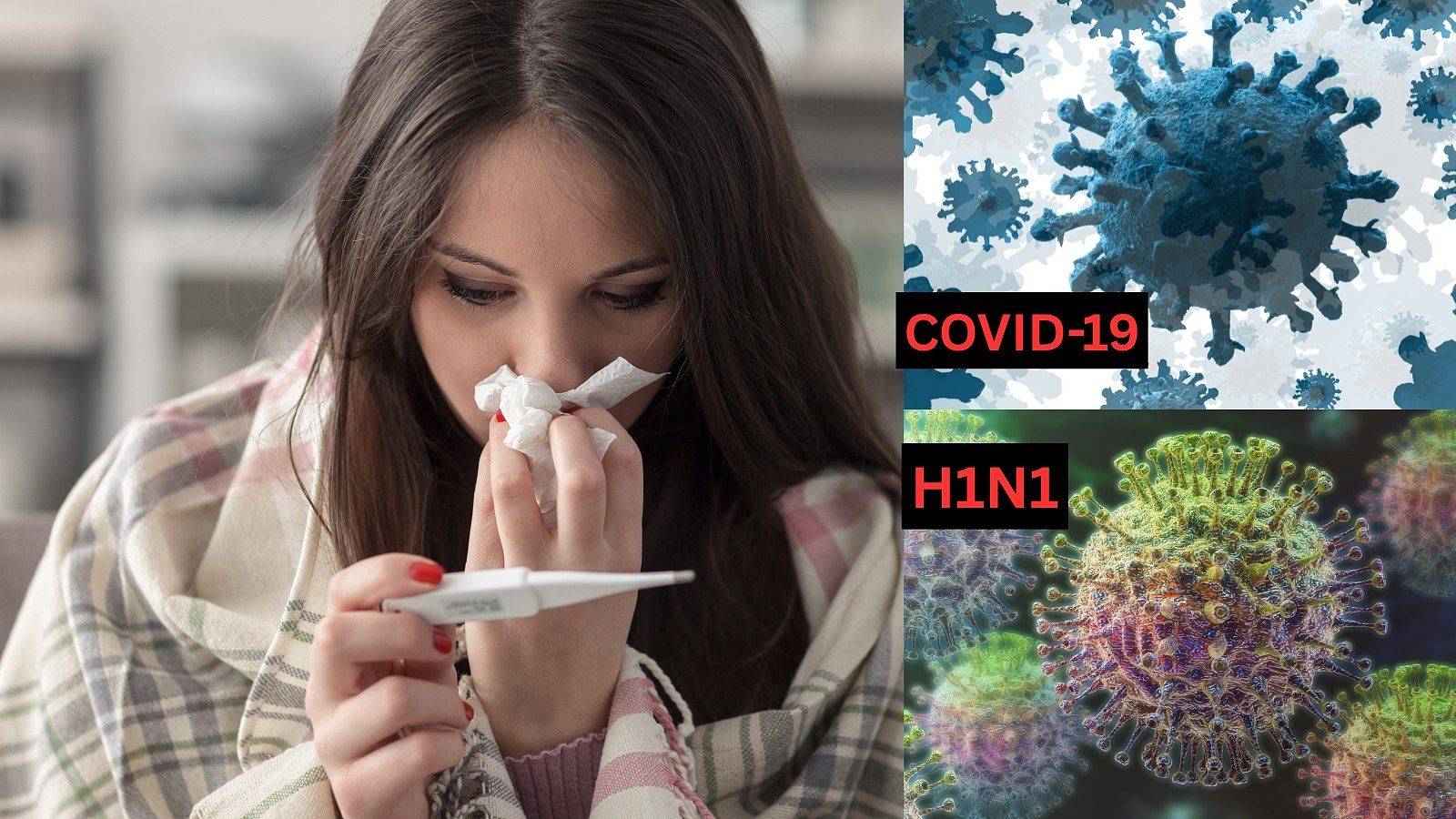
With both respiratory viruses circulating, the rise has raised an important question: Can a person get infected with both H1N1 and COVID-19 at the same time?
Can COVID-19 And H1N1 Infect You At The Same Time?
A person can have a co-infection, meaning they are infected with both SARS-CoV-2, the virus that causes COVID-19, and an influenza virus such as H1N1 simultaneously. Dr Bharath Chhabria, Lead Consultant, Pulmonology and Critical Care, Manipal Hospital Yelahanka, says, “Biologically, co-infection with H1N1 (swine flu) and COVID-19 is possible and has been documented. Both cause similar respiratory symptoms, and co-infection can worsen illness in vulnerable patients. Clinically, when someone is severely ill or not improving, we test for multiple pathogens including influenza and covid because treatments differ and early treatment for both helps prevent progression.”
The two illnesses can cause many similar symptoms, including fever, cough, sore throat, fatigue, body aches, headache, vomiting and diarrhoea. This overlap means symptoms alone may not reliably tell doctors which virus is responsible. Testing is often needed to confirm the diagnosis, particularly when influenza and COVID-19 are circulating at the same time.
Can Having Both Viruses Make Your Health Deteriorate?
Co-infection can be particularly concerning in vulnerable patients because having two respiratory viral infections together may worsen illness. Public health guidance also notes that co-infection can result in severe disease, which is why a positive test for one virus does not automatically rule out the other.
Dr Chhabria adds, “Global COVID-19 prevalence currently remains low compared with earlier times. In practice, during recent upticks of influenza we’ve tested severe cases for both viruses and have not seen a surge in COVID-19 co-infections.”
However, since co-infection is not considered common. Current clinical guidance notes that while it can occur, the actual likelihood depends on how actively both viruses are circulating in a community. This distinction is important- a surge in H1N1 cases does not automatically mean a parallel surge in COVID-19 co-infections.
What Symptoms Should People Watch for During H1N1 Swine Flu Surge?
H1N1 typically presents with:
sudden high fever
cough
sore throat
runny or blocked nose
body aches
headache
fatigue
sometimes vomiting or diarrhoea
These overlap heavily with other seasonal respiratory viruses and with COVID-19, making clinical distinction difficult without testing. Most infections remain mild and self-limiting, but complications such as pneumonia, breathing difficulty or secondary bacterial infection can occur, particularly in young children, older adults, pregnant women and people with chronic heart, lung or metabolic conditions.
Should You Get Tested For Both H1N1 And Covid-19?
A positive influenza test does not exclude COVID-19, and a positive COVID-19 test does not rule out influenza. Multiplex tests can detect and distinguish between influenza A, influenza B and SARS-CoV-2, helping doctors make more informed treatment decisions.
Early treatment can be particularly important for people at higher risk of severe illness, including older adults and those with certain underlying health conditions.
How To Reduce Your Risk Of Infection This Season?
Prevention remains the first line of defence. Dr Chhabria says, “Prevention is key: annual flu vaccination for high-risk groups, masking in crowded places, good hand hygiene, and staying home when sick. Seek prompt medical attention for worsening symptoms so appropriate tests and treatments can be started.”
For anyone developing worsening breathlessness, persistent chest symptoms, confusion, dehydration or other severe symptoms, medical attention should not be delayed.
His observations align with the present epidemiological context: influenza activity is elevated while circulating COVID-19 levels remain comparatively low, so dual infections are not the dominant pattern being encountered in routine severe-case testing.
Annual influenza vaccination remains the most effective tool for high-risk groups and is recommended before or early in the season. Everyday measures— wearing masks in crowded indoor settings, frequent hand hygiene, covering coughs and sneezes, and isolating when symptomatic—continue to limit transmission of both influenza and other respiratory viruses.
The current rise in H1N1 cases is a seasonal phenomenon that demands awareness rather than alarm. By combining vaccination, basic hygiene and timely medical consultation, the population can substantially lower the chance of severe disease and any potential co-infection complications.