Chandra Grahan On Raksha Bandhan: Will It Affect The Puja Muhurat? All You Need To Know
Raksha Bandhan 2026 will coincide with a partial lunar eclipse on Friday, August 28, raising questions about the auspicious time for tying Rakhi and whether Sutak Kaal will apply in India.
مصنف Lifestyle Desk··17K بار پڑھا
Chandra Grahan On Raksha Bandhan: Will It Affect The Puja Muhurat? All You Need To Know
Raksha Bandhan 2026 will coincide with a partial lunar eclipse on Friday, August 28, raising questions about the auspicious time for tying Rakhi and whether Sutak Kaal will apply in India.
The good news is that the eclipse will not be visible from India. Therefore, according to traditional Hindu beliefs, its Sutak period will not be observed in the country. Families can perform the Raksha Bandhan puja during the prescribed morning muhurat.
Raksha Bandhan celebrates the bond between siblings. Sisters traditionally tie a sacred thread on their brothers’ wrists and pray for their health and happiness, while brothers promise to support and protect them.
Will the Lunar Eclipse Affect Raksha Bandhan?
The Chandra Grahan will not alter the Rakhi-tying muhurat in India because the Moon will remain below the horizon throughout the eclipse.
According to NASA, the eclipse will be visible from much of North and South America and parts of Europe and Africa. It will not be visible from India.
As Sutak Kaal is traditionally observed only in places where an eclipse is visible, it will not apply in India. Devotees may continue with their usual prayers and festival rituals.
Raksha Bandhan 2026 Puja Muhurat
Raksha Bandhan will be celebrated on August 28 because the Purnima Tithi will continue that morning and Bhadra will have ended before sunrise. The recommended period for performing the ceremony is:
Rakhi-tying muhurat: 5:57 am to 9:48 am
Purnima Tithi begins: 9:08 am on August 27
Purnima Tithi ends: 9:48 am on August 28
Muhurat duration: 3 hours and 51 minutes
Timings may vary slightly according to the city and the Panchang being followed. Families can consult their local Panchang or priest for location-specific guidance.
Chandra Grahan 2026 Timings
The August 28 event will be a deep partial lunar eclipse, not a total eclipse. Around 93% of the Moon’s diameter will enter Earth’s dark central shadow at its peak, according to NASA’s eclipse data. The global eclipse stages converted into Indian Standard Time are:
Penumbral phase begins: 6:53 am
Partial eclipse begins: 8:03 am
Maximum eclipse: 9:43 am
Partial eclipse ends: 11:22 am
Penumbral phase ends: 12:32 pm
The partial phase will last approximately three hours and 19 minutes, while the entire event—including the faint penumbral stages—will continue for about five hours and 39 minutes.
These IST timings indicate when the eclipse occurs globally. They do not mean it will be visible in India.
Will It Look Like A Blood Moon?
Because this is a partial eclipse, the entire Moon will not turn red as it may during a total lunar eclipse. However, the eclipsed portion could take on a reddish or copper-coloured appearance for observers in regions where the event is visible.
This happens because sunlight passing through Earth’s atmosphere is filtered and bent towards the Moon. Blue light is scattered more strongly, while red and orange wavelengths are more likely to reach the lunar surface.
Will Sutak Kaal Apply in India?
Sutak Kaal is a period of religious observance traditionally followed before an eclipse. For a lunar eclipse, it is generally considered to begin nine hours before the event.
However, since the August 28 eclipse will not be visible from India, Sutak restrictions will generally not be observed here. Normal worship, cooking and Raksha Bandhan ceremonies can continue.
Sutak is a matter of religious tradition rather than an astronomical requirement. People who follow particular family or regional customs may consult their local Panchang.
Is There Bhadra Kaal On Raksha Bandhan?
Bhadra, a period traditionally avoided for tying Rakhi, falls on August 27 and ends before sunrise on August 28. It will therefore not interfere with the recommended morning ceremony.
However, the claim that Rakhi can be tied during the entire day is not entirely accurate from a strict Panchang perspective. The main auspicious window lasts from sunrise at approximately 5:57 am until the Purnima Tithi ends at 9:48 am.
Those unable to perform the ceremony during this period may follow their family customs or seek guidance from a local priest.
Simple Raksha Bandhan Puja Steps
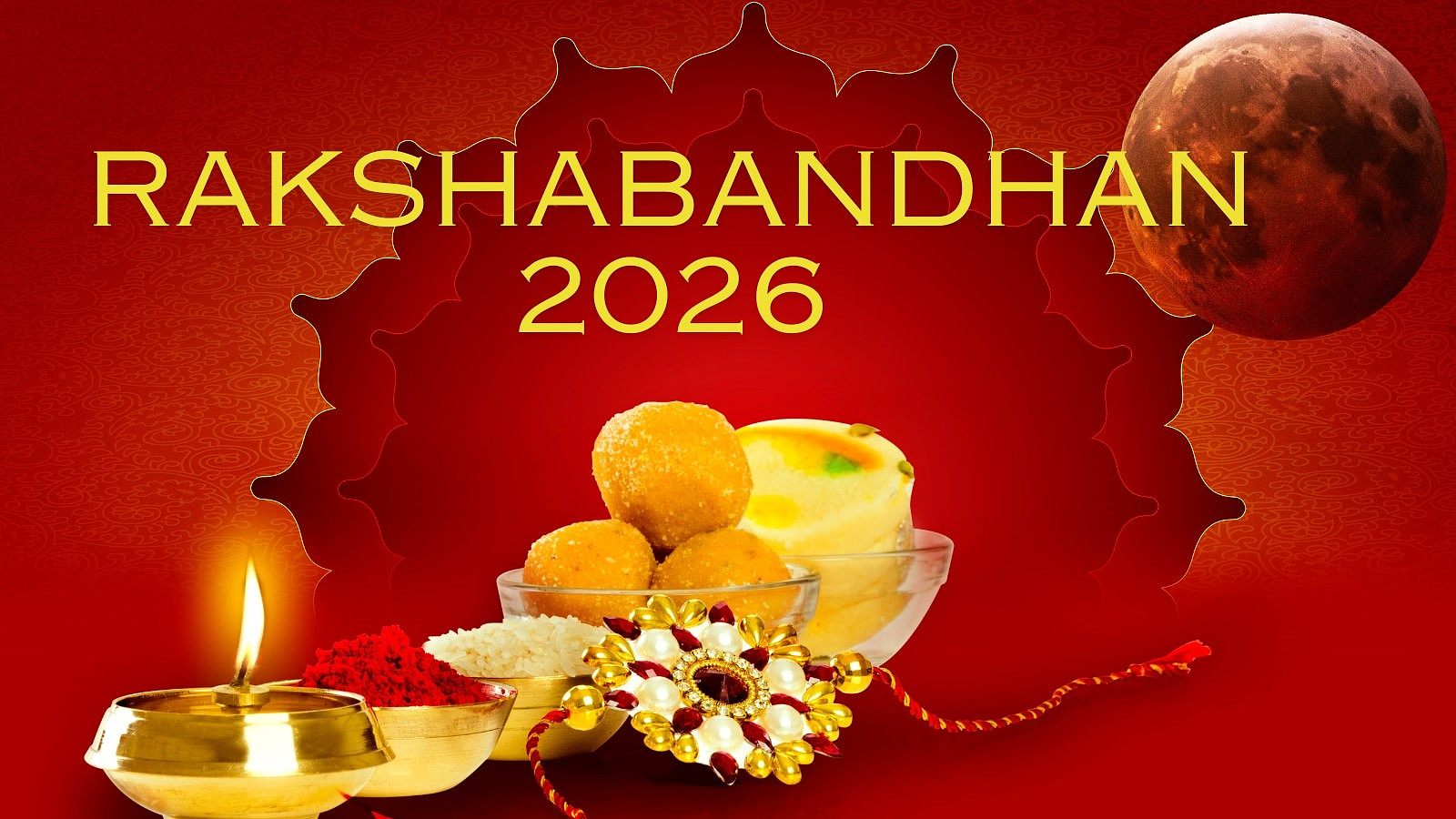
Begin the morning with a bath and prayers. Prepare a puja thali with the Rakhi, roli, rice grains, a diya and sweets.
Apply tilak on your brother’s forehead, perform his aarti and tie the Rakhi on his wrist. Offer sweets and exchange blessings and gifts. Families may also mark the occasion by donating food, clothing or other essentials to people in need.
The lunar eclipse need not cause fear or disrupt the celebration in India. The main point to remember is that the recommended Rakhi ceremony should be completed before 9:48 am, while the eclipse itself will remain out of sight across the country.