West Asia At A Strategic Crossroads: Will The Borders Of The Twentieth Century Survive?
An Energy Based Order Under Stress
Yazan Lt Gen DP Pandey··62K okunma
West Asia At A Strategic Crossroads: Will The Borders Of The Twentieth Century Survive?
An Energy Based Order Under Stress
The twentieth century borders of the West Asia are under stress. The 18 countries in West Asia, except for Armenia, Azerbaijan, Georgia and Cyprus, are joined in an external conflict or internal turmoil, their also stressed economically with their steady supply of basic trade, energy, under attack and many are fractured from within due to irreconcilable divisions of centuries. Bahrain, Iraq, Israel, Jordan, Kuwait, Lebanon, Oman, State of Palestine, Qatar, Saudi Arabia, Syria, Türkiye, United Arab Emirates and Yemen are all involved in conflict within and with outside forces.
The political order of West Asia and security situation is facing a test that extends beyond the wars currently being fought. The region’s modern states emerged through a combination of imperial withdrawal, negotiated settlements, local political struggles and the consolidation of monarchies and republics. Their stability subsequently rested on a combination of national identity, religious legitimacy, energy wealth, external security guarantees that were outsourced to either West or the Soviet Union/Russian or the big corporate giants extracting oil and gas, and the balance of power between competing regional actors.
Today, several of these foundations are under pressure simultaneously. Conflict has exposed the vulnerability of energy infrastructure, the limitations of military deterrence, the reach of non-state armed groups and the difficulty of converting battlefield success into a durable political settlement. The question is no longer simply who will prevail in the present conflicts but it is whether the regional order that has endured for decades can adapt to the changing distribution of power.
Over the next five to ten years, the most significant change may not initially be the redrawing of international borders, but the redistribution of effective sovereignty, political influence and security dependence. But if not managed soon enough, the possibility of redrawing of maps, after a century and half, is quite likely along with the chaos and killings that have been associated with region before.
The Historical Burden of Borders and Identity
The collapse of the Ottoman Empire and the subsequent territorial settlements helped establish the modern political map of much of the Arab world and yet these boundaries did not eliminate older ethnic, tribal, linguistic and religious identities. While those who made these lines on the map and could distinguish between cultures and language separations into political entities in Europe were unable to do so for intermixed tribal entities in West Asia. Kurdish communities remained divided among Türkiye, Iraq, Iran and Syria. Pashtun communities straddled Afghanistan and Pakistan, while Baloch populations extended across Pakistan, Iran and Afghanistan. Azeris became citizens of independent Azerbaijan or remained within Iran. And each one of them were persecuted.
While these identities did not automatically translate into separatism but have been in stress and contest always. They will become politically consequential when central governments lose legitimacy, security deteriorates or external powers support competing local actors.
Iran presents a different historical case. It retained a distinct territorial and state tradition, but its modern political evolution from the nationalisation of oil under Mohammad Mossadegh, through the Shah’s authoritarian rule, and to the Islamic Revolution of 1979 illustrates the enduring contest between nationalism, political legitimacy and religious authority in the region.
The lesson is that borders are not sustained by geography alone. They endure when institutions, political settlements and national identities provide sufficient reasons for populations to accept them. And these are under question due to certain geo political, religious and economic conflict of interest of outside forces.
Oil, Monarchies and the Security Compact
Oil transformed the strategic importance of the Gulf as energy revenues enabled monarchies to finance infrastructure, public services, defence and economic development, while their international investments extended their influence far beyond the region. The initially the British and other European powers and later United States, meanwhile, developed extensive security relationships with Gulf governments, combining military cooperation with an interest in protecting energy supplies and maritime access.
This arrangement created a mutually reinforcing relationship between energy, prosperity and security. It also generated vulnerabilities. Gulf states became dependent on the uninterrupted operation of critical infrastructure and on the ability of external partners to deter or defeat threats.
The present regional confrontation raises an uncomfortable question as to whether the military superiority guarantee the security of dispersed oilfields, refineries, ports, pipelines and shipping routes against sustained missile and drone attacks? The answer is evident. High-cost systems were able to but these are defeated with low technology solutions with far more damaging consequences. Drones have crippled Saudi civil aviation and the refining capacity while squeezing the choke points of Hormuz and Bab al Mandap.
The vulnerability of the Strait of Hormuz illustrates the stakes where disruption to a single strategic chokepoint can affect global energy markets, shipping costs and economic confidence. If such disruptions become prolonged or recurrent, the consequences would extend beyond oil revenues to investment, employment, government expenditure and domestic expectations.
Even though economic pressure should not be confused with inevitable political collapse as Gulf monarchies possess financial reserves, sovereign investment assets and varying degrees of economic diversification. But now they have to innovate and strengthen by deploying these resources effectively to absorb shocks and sustain domestic legitimacy.
Iran Exposed the Limits of Deterrence
Iran’s strategic position rests on more than its religious identity. Its population, territorial depth, industrial and technological capabilities, missile forces and network of regional partners give it means to impose costs on adversaries. Its relationships with Hezbollah, Iraqi armed groups and the Houthis have extended the geographical reach of regional confrontation, although these organisations retain their own interests and degrees of autonomy.
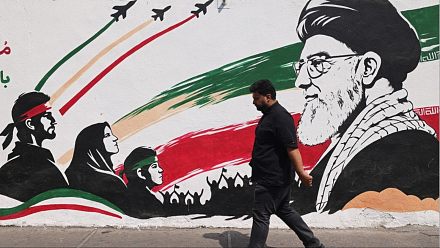
At the same time, Iran faces economic constraints, military vulnerabilities and the consequences of sustained confrontation. Its regional influence cannot be equated with an assured ability to dominate its neighbours but adds an ideological confrontation point for their domestic audiences. Iran is fighting effectively outsiders while rest are allying with the non-believers. The religious angle is important consideration.
The nuclear question adds another layer of uncertainty as a nuclear-capable Iran would alter regional deterrence calculations, even though nuclear latency, weaponisation and an operational nuclear arsenal are different conditions. But that has a symbolic and psychological impact on the Ummah.
As the combined might of US and Israel through distant application of military force may have had a telling effect on Iran but not change the strategic direction, the Gulf monarchies face a strategic choice between strengthening their own defence capabilities, maintaining external security partnerships, pursuing diplomatic accommodation or combining all three. A wider war might temporarily strengthen military cooperation among them, but it could also expose the economic and political costs of preserving the existing balance through force alone.
The Wider Arc: From Afghanistan to Israel
The region’s conflicts cannot be understood in isolation. The Afghan jihad against the Soviet Union demonstrated how external military assistance, financial support and religious mobilisation could combine to produce strategic effects far beyond the original battlefield. Its subsequent history also revealed the unintended consequences of proxy warfare and the difficulty of controlling movements once they acquire independent ambitions.
The Pakistan–Afghanistan frontier continues to illustrate the tension between internationally recognised borders and cross-border political and security networks. Balochistan links this problem to Iran, Pakistan and the Arabian Sea. In Iraq and Syria, competing authorities and Kurdish political aspirations demonstrate how sovereignty can fragment without international borders necessarily changing.
Türkiye is an important counterweight to any simple narrative of regional decline. Its military capabilities, industrial base and independent regional interests allow it to shape developments across the eastern Mediterranean and northern Middle East even though a fragile border with Syria and internal insurgency of Kurds continue unabated. Israel, meanwhile, demonstrates the limits of military power when the political disputes underlying conflict remain unresolved.
Across this wider geography, the critical question is whether existing states can preserve effective authority while accommodating competing identities and resisting external intervention.
Possible Futures
The current regional churnings may lead to four broad outcomes that deserve consideration.
First, adaptation. Gulf monarchies strengthen indigenous defence, diversify their economies and negotiate more stable arrangements with Iran. Existing borders and political systems survive, although the distribution of regional influence changes.
Second, prolonged attrition. Recurring attacks, disrupted energy flows and rising defence expenditure weaken economic confidence. Governments remain in place but face greater difficulty sustaining development, security and public expectations. External powers expand their influence without any one of them replacing the existing order entirely.
Third, fragmented sovereignty. Where central authority weakens, autonomous administrations and armed organisations acquire durable control over territory, revenue or border crossings. The Kurdish regions, parts of Syria, Yemen and the Pakistan–Afghanistan frontier could become particularly important areas to monitor. Formal territorial revision might eventually occur in individual cases, but it would require more than ethnic identity or temporary military advantage.
Fourth, jointly contest Iran. The last possibility is to for the Gulf powers to ally openly with Israel and US to fight the Iranians and their proxies to settle the issue for once. A long-term solution but a difficult one as the same may have different views in the domestic population, and the Gulf armies have not fought any conflict worth mentioning in past five decades.
These scenarios are not mutually exclusive. Different parts of the region could experience adaptation, attrition and fragmentation simultaneously.
The Future of the Regional Order
The next decade may test whether the political order of West Asia can adapt to the interaction of energy vulnerability, competing identities, regional power rivalry and changing external security commitments.
The outcome will not be determined by military capability alone. It will depend on the capacity of states to sustain economic resilience, maintain political legitimacy, protect critical infrastructure and establish workable relationships with their neighbours. Iran may gain influence without achieving regional dominance whereas the Gulf monarchies may adapt without surrendering their sovereignty with external powers losing some leverage without being displaced entirely.
The possibility of border changes should therefore be taken seriously, but not treated as inevitable. The more immediate warning may be that borders can remain unchanged even as effective sovereignty, political authority and strategic dependence are redistributed.
The decisive question is whether the states of West Asia can reform their arrangements faster than conflict erodes their capacity to govern. If they cannot, the coming decade may produce a regional order very different from the one that emerged during the twentieth century.
The first sign of a changing regional order may not be the disappearance of borders, but the weakening of the political, economic and security arrangements that once made those borders sustainable