US Midterms Cheat Sheet: House-Senate Battle, Key Races And What's At Stake For Trump
The United States is gearing up for the November 3 midterm elections, with President Donald Trump’s approval ratings at a record low, rising living costs worrying voters and immigration policies fuelling political tensio
Yazan Karishma Jain··31K okunma
US Midterms Cheat Sheet: House-Senate Battle, Key Races And What's At Stake For Trump
The United States is gearing up for the November 3 midterm elections, with President Donald Trump’s approval ratings at a record low, rising living costs worrying voters and immigration policies fuelling political tensions.
Trump himself will not be on the ballot, but the elections could change the balance of power in Washington. Republicans are fighting to retain control of Congress, while Democrats are seeking to regain a foothold in federal policymaking.
Here’s a cheat sheet explaining how the US midterms work, the key races to watch and why the results matter for Trump’s presidency.
What Are The US Midterm Elections?
Midterm elections are held every four years, halfway through a US president’s four-year term. Americans vote for members of Congress, but not for the president.
Congress has two chambers — the House of Representatives and the Senate. Both play important roles in passing laws, approving federal spending and overseeing the administration.
On November 3, voters will elect all 435 members of the House and approximately one-third of the 100-member Senate. Elections for governors will also take place in 36 states, alongside contests for state legislatures.
Early voting is already underway. According to Reuters, more than 100 million Americans could participate if turnout resembles the 2022 midterms, compared with over 155 million votes cast in the 2024 presidential election.
House Vs Senate: How Many Seats Does Each Party Need?
Republicans currently control both chambers of Congress, but their narrow majorities mean that relatively small electoral gains could change the balance of power.
In the House of Representatives, Republicans hold 218 seats, Democrats 214, and one seat is held by an independent who caucuses with Republicans. Two seats are vacant.
A party ordinarily needs 218 seats to control the 435-member House when all seats are occupied. Democrats need a net gain of four seats to secure a majority.
The Senate has 100 members, with each state represented by two senators serving six-year terms. Unlike the House, only about one-third of Senate seats are contested every two years.
Republicans currently hold a 53-47 majority, with the Democratic total including independents who caucus with the party.
Democrats need a net gain of four seats to reach 51. A 50-50 split would leave Republicans with control because Vice President JD Vance can cast tie-breaking votes.
The two chambers are decided separately, meaning either party could control one or both after November 3.
Which Are The Key Races To Watch?
Although elections are being held nationwide, a relatively small number of competitive contests could determine control of Congress.
According to Reuters, 10 Senate races, including those in Maine, Ohio, North Carolina, Iowa and Georgia, could determine control of the chamber. Contests in Texas and Michigan have also attracted significant campaign attention.
In Ohio, Republican Senator Jon Husted faces Democrat Sherrod Brown, with artificial intelligence, data centres and cryptocurrency among the issues shaping the contest.
Maine’s race pits Republican Senator Susan Collins against Democrat Troy Jackson, who has highlighted her vote to confirm Supreme Court Justice Brett Kavanaugh amid the debate over abortion rights.
In Michigan, Republican Mike Rogers faces Democrat Abdul El-Sayed in a contest where US policy towards Israel has become a campaign issue.
In the House, Republican Representative Mike Lawler is seeking re-election in a New York district that backed Democratic presidential candidate Kamala Harris in 2024.
An open seat in Nebraska is also being closely watched amid rising fuel costs following the US war against Iran. Democrats are additionally targeting two Republican-held seats in Pennsylvania and one in New Jersey.
What Are The Biggest Issues Driving The Midterms?
Three major issues have dominated the campaign: cost of living, immigration and Trump’s performance as president.
Cost Of Living
The cost of living remains the biggest concern for many voters. Half of registered voters surveyed in a Reuters/Ipsos poll identified it as the most important factor influencing their vote.
Petrol prices have risen sharply since the US-Israeli military strikes on Iran in February. According to AAA figures cited by Reuters, petrol averaged $4.28 per gallon, up $1.20 from a year earlier, while diesel reached $6.32 per gallon.
Grocery prices have increased 1.8% over the past year, while house prices have risen 2.1%, according to official US data.
Healthcare spending has also become contentious, particularly after Republican tax legislation reduced spending on Medicaid and other health programmes by roughly $1 trillion.
Immigration
Immigration is another major dividing line. The Trump administration has highlighted a 95% decline in migrant apprehensions at the southwestern border compared with the Biden administration, according to preliminary Department of Homeland Security figures.
However, fatal encounters involving federal immigration agents in Maine, Minnesota and Texas have intensified criticism of enforcement operations.
Republicans have defended stricter border controls, while Democrats have challenged the administration’s tactics and immigration funding priorities.
Donald Trump
Trump’s popularity has also become a central campaign issue. A Reuters/Ipsos poll released on October 19 placed his approval rating at a record-low 31%.
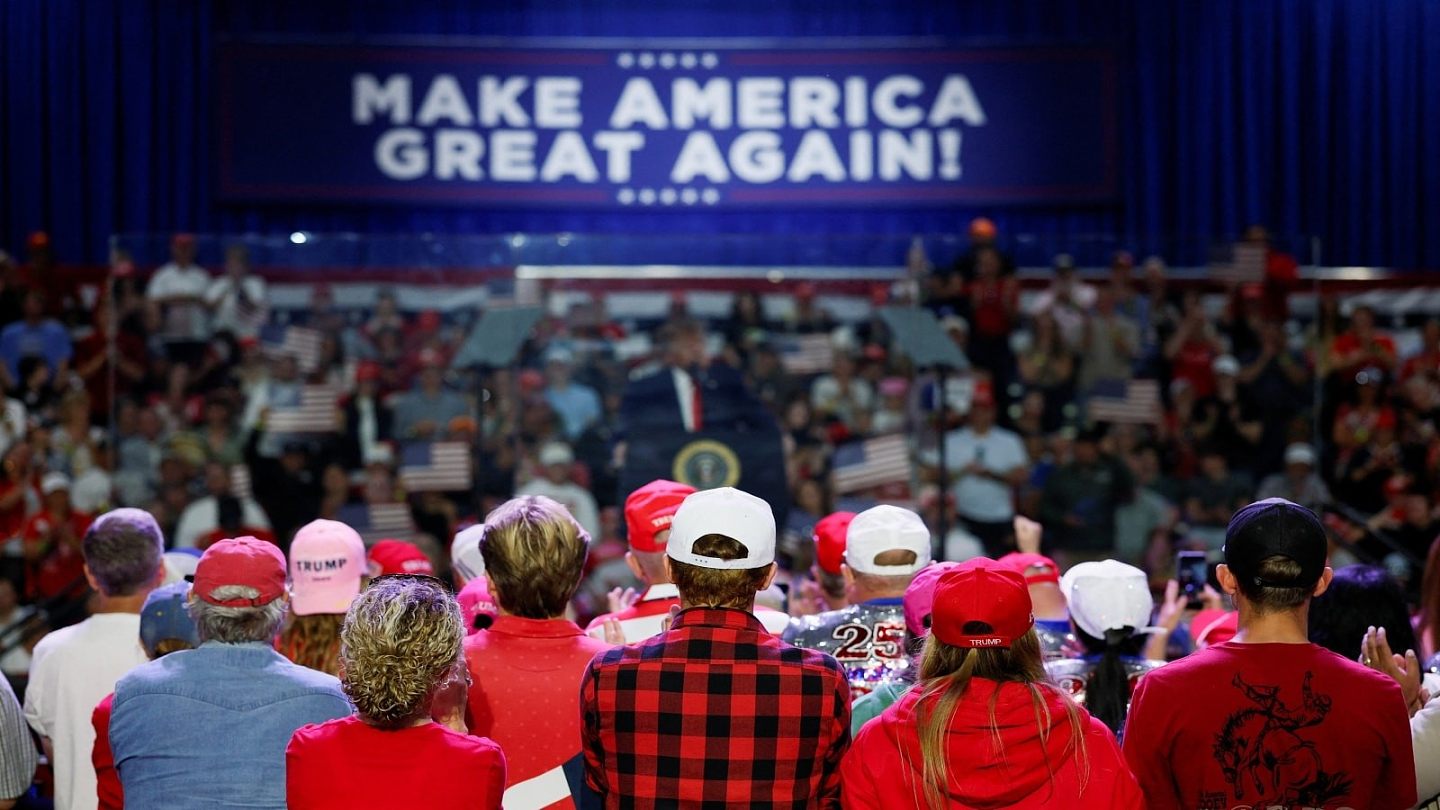
Despite not contesting the election, Trump has urged supporters to vote as though he were on the ballot, with campaign rallies planned in Florida, Iowa, Michigan and Texas.
Democrats have sought to make his record on the economy and immigration a central election issue.
What Would A Democratic Or Republican Victory Mean For Trump?
The results could determine how much freedom Trump has to advance his legislative agenda during the final two years of his presidency.
If Democrats capture the House, they would gain control of its committees and legislative agenda, allowing them to investigate the administration and challenge Republican policy priorities.
House Democratic leader Hakeem Jeffries could become speaker, replacing Republican Mike Johnson. Jeffries has said Democrats would investigate what he calls “unprecedented levels of corruption” during Trump’s presidency, including business dealings involving the president and his associates.
If Democrats also win the Senate, they would gain greater influence over legislation and presidential appointments requiring Senate confirmation.
However, controlling only one chamber would not allow Democrats to pass legislation independently. Most bills require approval from both chambers and the president’s signature, unless Congress overrides a veto.
If Republicans retain control of both chambers, they would be better positioned to pursue additional tax cuts, higher defence spending and reductions in social welfare programmes, building on Trump’s 2025 tax and spending legislation.
Have Midterms Changed The Course Of Previous Presidencies?
History shows that midterm elections can significantly weaken the party occupying the White House.
In 2010, during Barack Obama’s presidency, Republicans gained 63 House seats and took control of the chamber. Democrats also lost six Senate seats but retained their majority.
Eight years later, during Trump’s first term, Democrats gained 40 House seats and captured control of the chamber, although Republicans increased their Senate majority by two seats.
The 2026 elections will determine the composition of Congress when newly elected lawmakers take office in January 2027, potentially changing the legislative and political constraints facing Trump’s administration.
The results could also offer both parties clues about voter priorities ahead of the 2028 presidential election.