US Midterms: Can Vivek Ramaswamy Become Governor Of A Major Midwestern State?
Vivek Ramaswamy entered the 2026 Ohio governor’s race with a major political advantage: the backing of President Donald Trump and a strong profile among Republican voters. But as the November 3 election approaches, the c
Yazan Anushka Vats··54K okunma
US Midterms: Can Vivek Ramaswamy Become Governor Of A Major Midwestern State?
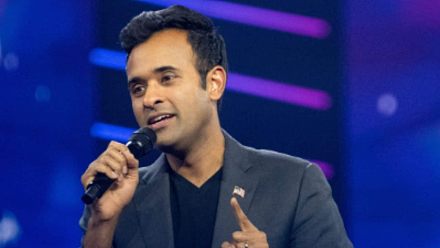
Vivek Ramaswamy entered the 2026 Ohio governor’s race with a major political advantage: the backing of President Donald Trump and a strong profile among Republican voters. But as the November 3 election approaches, the contest has turned into a much tighter battle than many Republicans may have expected. Recent polling shows Democrat Amy Acton either leading or running virtually level with Ramaswamy.
Ramaswamy, a Cincinnati-born entrepreneur and former Republican presidential candidate, secured the GOP nomination in May after winning more than 82% of the vote in the Republican primary. His campaign has presented the election as a chance to bring lower costs, stronger economic growth and changes to Ohio’s education system.
He is now facing Acton, a physician and former director of the Ohio Department of Health who became widely known in Ohio during the Covid-19 pandemic. Unlike Ramaswamy, Acton is running for public office for the first time. Her campaign is centred on affordability, healthcare, education, jobs and consumer issues.
A Republican State, But A Competitive Race
Ohio has become increasingly Republican at the presidential level. Donald Trump carried the state in each of his three presidential campaigns, while Republicans have held the governor’s office for two decades. The current Republican governor, Mike DeWine, is term-limited and cannot seek another term.
That political backdrop gives Ramaswamy an important base to work from. However, the governor’s race has developed into a genuine contest. RealClearPolling’s latest average, covering polls conducted between September 22 and October 19, puts Acton at 48.5% and Ramaswamy at 44.9%, giving the Democrat a 3.6-point advantage.
The individual polls tell a more complicated story. Fox News had Acton ahead 50%-48%, while Marist put her lead at seven points, 50%-43%. A Big Data Poll, however, showed Ramaswamy ahead 48%-47%, while a co-efficient survey had him ahead 45%-43%.
The newest VoteHub/Verasight survey, conducted from October 1 to October 20, found Acton at 46% and Ramaswamy at 45% among likely voters. The one-point gap was within the poll’s margin of error, reinforcing the picture of a highly competitive race.
Ramaswamy’s Message: Costs, Education And Conservative Change
Ramaswamy’s campaign has focused on an economic and conservative agenda. He has promised lower costs and bigger paycheques while also making education reform a central part of his platform.
Education is one of the clearest areas of difference between the two candidates. Ramaswamy supports school choice and vouchers and has called for higher academic standards, including a focus on third-grade literacy, eighth-grade numeracy and 12th-grade civics. He has also said he wants to reward high-performing teachers with better pay.
His earlier proposal to consolidate Ohio’s colleges and universities also became controversial. Ramaswamy later clarified that he was not proposing to close colleges but was talking about eliminating or consolidating programmes. DeWine has criticised the idea and said such a plan would not happen in Ohio.
Ramaswamy’s political identity is also important to his campaign. He rose to national prominence during the 2024 Republican presidential primary, where he built a reputation as an outspoken conservative and critic of what he described as “woke” politics. He ended his presidential campaign after finishing fourth in the Iowa caucuses and subsequently endorsed Trump.
Trump Remains A Major Part Of The Campaign
Trump’s support has been central to Ramaswamy’s political rise in Ohio. The President backed him early in the gubernatorial contest, helping him secure the Republican establishment’s support before the primary. Ramaswamy subsequently won the Republican nomination by a wide margin.
Vice President JD Vance, another prominent Ohio Republican, has also defended Ramaswamy during the campaign. The two have appeared together as Republicans seek to hold the governor’s office.
But Trump’s backing has also connected the Ohio contest to the increasingly aggressive tone of national Republican politics.
The latest controversy involves a Ramaswamy campaign advertisement featuring Amy Acton’s estranged mother, Donna Arthur. The advertisement challenges Acton’s account of her childhood and urges Ohio voters not to support her. Acton has said she experienced abuse as a child, while her campaign has condemned the advertisement.
The advertisement has created an unusual split within the Republican camp. DeWine, a fellow Republican, called on Ramaswamy to remove it, while Trump defended the advertisement and urged Ramaswamy to continue running it.
Haley Turns Critic Of Ramaswamy
Ramaswamy’s latest campaign controversy has also revived an old Republican rivalry. Former South Carolina governor and former Republican presidential candidate Nikki Haley, who clashed repeatedly with Ramaswamy during the 2024 Republican presidential primary, criticised him over the advertisement featuring Acton’s estranged mother.
Haley called Ramaswamy “a bad guy” and wrote that “it’s a shame he continues to get away with it.” Her criticism is notable given their bitter exchanges during the 2024 Republican primary, when Haley had accused Ramaswamy of being unnecessarily personal in his attacks. AP News
The advertisement has divided Republicans. Ohio Governor Mike DeWine, who has endorsed Ramaswamy, called the ad wrong and urged the campaign to take it down. “It’s wrong to run this ad,” DeWine said, adding that family members had historically been considered off limits in political campaigns. AP News
Vice President JD Vance, however, has defended Ramaswamy. Calling himself “disgusted” by Republicans criticising the advertisement, Vance said Ramaswamy had faced what he described as “every dirty trick in the political book” from Democrats. He argued that Republicans should be more concerned about Democratic policies than about the advertisement. AP News
President Donald Trump has also backed Ramaswamy. Trump said Acton’s mother was “fair game” and described the advertisement as “hitting pay dirt”, urging Ramaswamy to keep running it. Ramaswamy’s campaign has said it plans to spend $4 million airing the advertisement on television and online.
Acton’s Campaign Takes A Different Route
Acton is attempting to make the election about the economic pressures facing Ohio families rather than national political battles.
Her campaign lists reducing household costs, healthcare, education, jobs, energy bills and workers’ rights among its priorities. She has also proposed a working-families tax cut, including an earned-income credit and child tax credit, as part of her affordability agenda.
Healthcare is another major part of her pitch. Acton has proposed measures aimed at reducing prescription drug prices, lowering healthcare premiums, addressing medical debt and protecting consumers from surprise medical bills.
On education, Acton has positioned herself as a defender of Ohio’s public schools. She has received endorsements from the Ohio Federation of Teachers and the Ohio Education Association and has opposed the expansion of what she describes as Ohio’s school voucher system.
Why The Indian-American Angle Matters?
Ramaswamy’s campaign also carries significance beyond Ohio because of his Indian-American background.
He would not be the first Indian-American to become a US governor. Republican Bobby Jindal became the first when he won the Louisiana governor’s race in 2007. Republican Nikki Haley followed in 2010, becoming the second Indian-American governor in the country and the first woman of Indian descent to serve as a state governor.
Ramaswamy’s potential victory would therefore add another prominent Indian-American Republican to that political history. It would also be notable because Ohio is a major Midwestern state and has become an important part of the Republican political map.
His background, however, is not the central issue driving the campaign. The contest is primarily being fought over taxes, education, healthcare, jobs, government policy and the direction of Ohio’s state government.
Can Ramaswamy Win?
For Vivek Ramaswamy, whose Hindu faith became a subject of discussion during his 2024 presidential run, the challenge is now closer to home. He is running for governor of Ohio, a Midwestern state with strong conservative Christian constituencies, against Democrat Amy Acton, a physician and former state health director whose campaign has focused on affordability, healthcare and public education.
A Cincinnati native, Ramaswamy is promising to restore Ohio’s economic promise through lower taxes, cheaper energy and a more business-friendly environment. But the state he hopes to lead is a study in uneven transition.
Cincinnati has evolved from its industrial roots into a diversified metropolitan economy, with major employers and strengths in finance, logistics and advanced manufacturing.
Elsewhere, the story has been harsher: communities such as Youngstown have lost a far greater share of their manufacturing jobs, while parts of rural and Appalachian Ohio continue to confront the challenge of creating durable economic opportunities.
The challenge for Ramaswamy is to bridge these different Ohios: the metropolitan centres attracting new investment and the communities still living with the consequences of industrial decline.
His campaign’s promise to make the state more affordable and opportunity-rich speaks to that divide; whether tax cuts, deregulation and new investment can translate into broadly shared prosperity is a central question hanging over his bid.