Serbia's 'Youthquake': Student Movement Shakes Vucic's 12-Year Grip On Power In High-Turnout Poll
Serbia’s long-time leader Aleksandar Vucic conceded defeat in the country’s parliamentary election on Sunday, acknowledging a victory for a student-led movement that emerged from nearly two years of anti-corruption prote
Yazan Apoorva Misra··47K okunma
Serbia's 'Youthquake': Student Movement Shakes Vucic's 12-Year Grip On Power In High-Turnout Poll
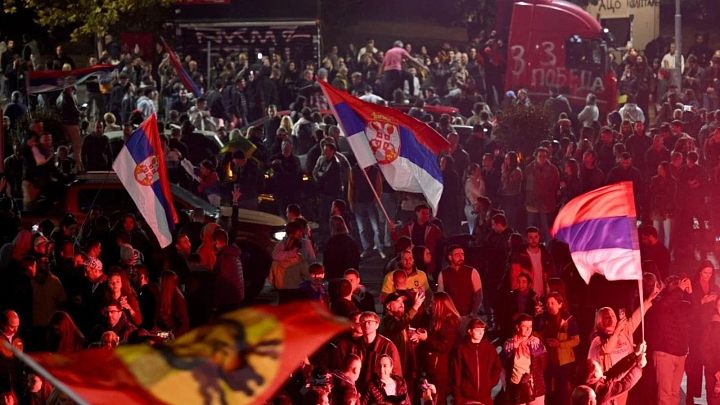
Serbia’s long-time leader Aleksandar Vucic conceded defeat in the country’s parliamentary election on Sunday, acknowledging a victory for a student-led movement that emerged from nearly two years of anti-corruption protests and mounted the most significant challenge to his party’s dominance.
Preliminary projections cited by Vucic indicated that the student-backed Student List would secure between 135 and 140 seats in the 250-member parliament, compared with around 105 for his Serbian Progressive Party (SNS). The projections suggested that the movement would have a parliamentary majority, although official results were still awaited.
“It is clear that we have lost these elections. The Student List has won,” Vucic told supporters at his party headquarters in Belgrade.
The concession marks a major political setback for Vucic, whose party has governed Serbia since 2012. He stepped down as president in September to contest the snap parliamentary election as the SNS candidate for prime minister, betting that an early vote would help him secure a fresh mandate amid mounting public pressure.
The result followed an election marked by exceptionally high participation. Turnout reached 67.6 per cent by 7pm local time, according to pollsters and election monitors CeSID and Ipsos, the highest level since the breakup of Yugoslavia in 1992, The Guardian reported. The election commission had earlier put turnout at 64.9 per cent by 5pm GMT, according to Al Jazeera.
How The Student Movement Challenged Vucic
The Student List emerged from a nationwide protest movement triggered by the collapse of a concrete canopy at the railway station in Novi Sad on November 1, 2024, which killed 16 people.
The tragedy prompted public anger over alleged corruption, construction irregularities and a lack of accountability. Demonstrations initially led by students gradually expanded into a broader campaign against the government, with protesters demanding transparency, institutional accountability and changes to Serbia’s political system.
The government has denied allegations of corruption and wrongdoing.
Over nearly two years, the movement grew into a formidable opposition force, organising rallies across the country and taking its campaign beyond university campuses. Its final pre-election rally in Belgrade reportedly drew around 1,50,000 people, reflecting the scale of mobilisation ahead of the vote.
Rather than aligning itself with a conventional political party, the movement put forward a list of 250 candidates for the 250-seat parliament. The candidates included academics, professionals, athletes and farmers, many without previous electoral experience.
The campaign focused on tackling corruption, strengthening public institutions, improving education and restoring accountability. Its slogan, “Serbia or Mafia?”, underscored its challenge to what protesters described as a political system compromised by corruption.
The movement has rejected Vucic’s accusations that it is backed by foreign powers.
Record Turnout Amid Allegations Of Irregularities
The election witnessed long queues outside polling stations, with some voters reportedly waiting for up to two hours to cast their ballots.
The high turnout was seen as a significant development in a contest where the student movement sought to mobilise voters beyond its core supporters, including people who do not routinely participate in elections. However, voting was also accompanied by allegations of intimidation and procedural irregularities.
Serbia’s independent election watchdog, the Centre for Research, Transparency and Accountability (CRTA), reported instances of pressure on voters and election workers at polling stations it monitored. Other monitoring groups flagged concerns involving ballot photography, group voting and identification checks, according to Al Jazeera.
Election observers had also raised concerns about the fairness of the electoral environment in the run-up to voting, including unequal media access and the use of state resources.
Vucic and his party have rejected accusations of electoral misconduct and attempts to undermine democratic institutions.
Vucic Blames Media, Foreign Interference
While conceding defeat, Vucic blamed Serbia’s independent media and alleged interference by foreign actors for his party’s loss, according to BBC.
The Serbian leader had repeatedly accused the student movement of being supported by foreign powers seeking to destabilise the country. The movement has dismissed those claims.
Vucic’s supporters credit his government with economic development and investment in infrastructure, including highways, railways, schools and hospitals. During his time in power, he also sought to maintain Serbia’s relationships with Russia and China, while keeping the country’s bid for European Union membership alive.
However, critics have accused his administration of weakening democratic institutions, exerting influence over the media and failing to ensure accountability over the Novi Sad railway disaster. Vucic and his party have denied accusations of repression and corruption.
The election result raises questions about the future of the political system built around the SNS and the extent to which the student-backed movement can translate its protest campaign into a functioning government.
What Lies Ahead
The Student List’s projected majority would give it a path to forming the next government, provided the preliminary figures are confirmed by the official results.
However, the movement faces the challenge of turning a broad protest coalition into a governing administration. Its candidates come from varied professional backgrounds, and the movement has sought to distinguish itself from established political parties through a more collective approach to leadership.
The next government is likely to face demands for reforms involving public institutions, the rule of law, education and anti-corruption measures.
Foreign policy will also remain a significant challenge. Serbia is an EU candidate country with close historical and economic ties to Russia and growing economic links with China. Any new administration will have to navigate these relationships while responding to domestic demands for political accountability.
For now, Vucic’s concession signals a potentially historic shift in Serbian politics. A movement that began with demands for accountability after a deadly infrastructure disaster has moved from the streets to the ballot box, challenging a ruling party that has dominated the country’s political landscape for more than a decade.