Raghubir Yadav Recalls Son Telling Him, ‘I’ll Never Treat My Children The Way You Treated Me’ | Exclusive
Panchayat star Raghubir Yadav has seen two very different generations of parenting up close. While the actor grew up in a time when parents often took out their anger and frustrations on their children, he has consciousl
Yazan Grace Cyril··80K okunma
Raghubir Yadav Recalls Son Telling Him, ‘I’ll Never Treat My Children The Way You Treated Me’ | Exclusive
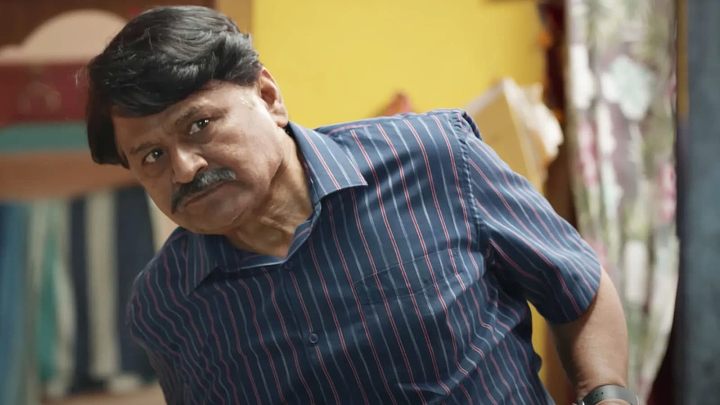
Panchayat star Raghubir Yadav has seen two very different generations of parenting up close. While the actor grew up in a time when parents often took out their anger and frustrations on their children, he has consciously tried not to repeat that cycle with his own kids. But recently, one small incident with his son made him stop and think about how even a moment of anger can affect a child.
Talking about how parenting has changed over the years, Raghubir recalled seeing fathers take out everything on their children. He told CNN News18 Showsha exclusively, “Maine toh woh zamaana bhi dekha hai, pehla wala, ki saara kuch bachchon pe nikalta tha. Father ka sab kuch—bahar se kisi wajah se koi jhagda hua ya kuch hua, toh aage bachchon ko peetenge. Kaam nahi kar paaya toh bachchon pe, paise nahi aaye toh bachchon pe, sab bachchon pe nikalta tha.”
(I have seen that earlier generation too, where everything used to be taken out on the children. Whatever happened with the father—if he had a fight with someone outside, or something went wrong, he would come home and hit the children. If he couldn’t get his work done, it was taken out on the children. If the money didn’t come in, it was taken out on the children. Everything was taken out on the children.)
According to him, that slowly started changing with time. But even after seeing a more gentle approach to parenting emerge, Raghubir recently found himself getting a little stern with his own son. “Abhi zamaane mein dheere-dheere maine dekha ki ye kam bhi hua. Lekin abhi ye hai ki kuch bhi kiya ho aapne. Jaise abhi kuch din pehle maine apne bete ko daant diya kisi baat par. Maine pehli baar, ek hi baar daanta, jaise koi baat nahi.”
(Over time, I have seen that slowly reduce. But today, there is something else. A few days ago, for instance, I scolded my son over something. I had never really scolded him before; it was just that one time, and it wasn’t even anything major.)
What caught Raghubir’s attention was his son’s expression immediately afterwards. “Mujhse kuch aisa chehra aata hai ki main ye karun? Toh maine kaha, ‘Nahi beta, sirf thoda sa jhunjhuna tha, bahut zyada nahi.’ Maara-peeta toh door ki baat hai, woh kar nahi sakta main. Maine thoda sa jhunjhuna gaya.”
(I saw the expression on his face, and I thought, ‘Am I really doing this?’ So I told him, ‘No, son, I was only being a little stern. It wasn’t anything serious.’ As for hitting him, that is out of the question. I simply cannot do that. I was just a little stern with him.)
But what his son said next stayed with him. “Toh chala gaya, kehne laga, ‘Baba, main apne bachchon ke saath kabhi aisa nahi karunga jaise aapne mere saath kiya.’” (Then he went away and said, ‘Baba, I will never treat my children the way you treated me.’)
The remark left Raghubir deeply embarrassed and forced him to confront something he had perhaps always known but hadn’t expected to hear from his son. “Main toh sharm se doob gaya. Maine kaha, ‘Yaar, ye humne toh…’ Ye usne keh diya, uske baad toh mujhe…” (I was so ashamed. I thought, ‘Oh God, what have we done?’ After he said that, I just…)
For Raghubir, the reaction also comes from his own childhood. He says he was physically punished by his father and that experience shaped the kind of parent he wanted to become. “Ek toh main bachchon ko daant nahi pata, bahut… Main toh kyunki maine mere father se badi maar khaayi hai, bahut woh sab, toh bachchon se meri badi mohabbat hai.”
(I can’t bring myself to scold my children. I was beaten a lot by my father, I went through all of that, and perhaps that is why I have so much love for my children.)
He had always made a conscious decision that whatever he went through as a child, he would not pass it on to his own children. “Main khud hi yehi chahta tha, wahi ki jaise mere father mere saath kar rahe hain, main apne bachchon ke saath woh nahi karunga.” (I had always wanted exactly this—that whatever my father had done to me, I would never do the same to my children.)
In a way, Raghubir feels he did exactly that. He learnt from his own childhood and tried to raise his children differently. Yet, his son’s one sentence made him realise that the past can still find its way into the present.
“Aur bilkul theek wahi abhi repeat hua ki maine utna seekha, utna seekh ke maine apne bachche ko paala, apne bachche ko kis tarah… Lekin ek zara si baat toh usne keh di mujhse.” (And now, exactly the same thing has happened again. I learned from what I experienced and raised my child based on those lessons, thinking about how I should raise him. But then he said that one little thing to me.)
Raghubir also believes children today are growing up in a very different world. Things that his generation had to wait for or search for are available to children much more easily now.
“Kyunki ye baat sahi hai ki bachchon ko aaj bahut kuch bahut jaldi-jaldi mil raha hai. Un dino hum khojte rehte the.” (Because it is true that children today are getting so much, so quickly. In those days, we were always searching and waiting for things.)
Interestingly, the idea of complicated parent-child relationships also connects closely with Raghubir’s upcoming film Om Ka Hari. The film follows Hari Prasad, a small-town astrologer who, after surviving a heart attack, believes he has only six days left to live. He sets off for Varanasi with his estranged son Om, and the journey forces the father and son to confront years of buried resentment and unspoken love.
Om Ka Hari, directed by Harish Vyas and also starring Anshuman Jha, Soni Razdan, Ayesha Kapur and Samta Sudiksha, is scheduled to release in theatres on September 18, 2026.