Bittersweet success for Rafael Manuel and his 'Filipiñana' Oscar journey
Rafael Manuel, the smart and humble 36-year-old filmmaker, is making history as one of the youngest Filipino filmmakers to have his debut feature film, “Filipiñana,” chosen as the Philippines’ entry to the Best Internati
Yazan JANET SUSAN R. NEPALES··120K okunma
Bittersweet success for Rafael Manuel and his 'Filipiñana' Oscar journey
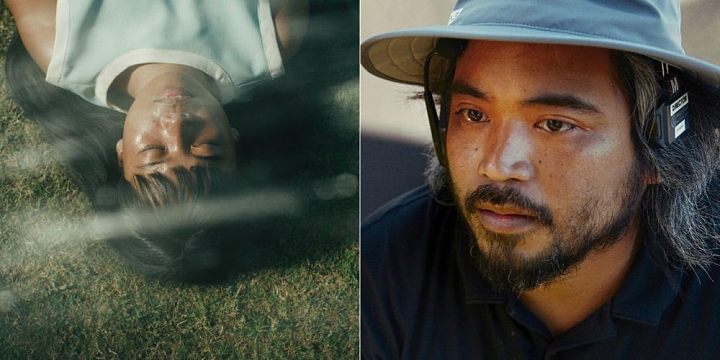
Rafael Manuel, the smart and humble 36-year-old filmmaker, is making history as one of the youngest Filipino filmmakers to have his debut feature film, “Filipiñana,” chosen as the Philippines’ entry to the Best International Feature Film category at the 99th Academy Awards, scheduled for March 14, 2027.
“Filipiñana,” a black comedy drama written and directed by Manuel, examines post-colonial class disparities through 17-year-old Isabel (Jorrybell Agoto) as she works as a “tee-girl” on a sweltering day at a posh golf course in the Philippines. The movie, which expands on his 2020 Silver Bear-winning thesis short film, also stars Carmen Castellanos as Clara.
The Manila-born young auteur, who has a background in visual communication and philosophy from Ateneo de Manila University and a master’s degree in filmmaking from the London Film School, is making waves with his film, which has caught the attention of no less than award-winning filmmaker Sean Baker.
Baker is the first person to individually win four Oscars for the same film, “Anora,” in a single ceremony (Best Picture, Best Director, Best Original Screenplay, Best Film Editing at the 97th Academy Awards). “Anora” also won the Palme d’Or at Cannes.
A big fan of Lino Brocka movies, Baker said his first impression of “Filipiñana” came from the first opening sequence, where he "was so blown away."
"You see the streets of Manila through the inside of a tour bus. And the images that we've seen before - the bustling, very busy, chaotic city and there's this rationing of water going on. Then the camera flips around to see that actually this is all being seen by pretty affluent tourists. Then the next moment, you are on the golf course, and you see all these sprinklers," he recalled.
"It says so much because you've just seen people having to stand in line for the rationing of water, and suddenly you just see water being sprayed everywhere and such a different environment an environment that we haven't seen that much portrayed and represented in cinema," Baker continued, saying the juxtaposition had him hooked.
When he started reading into “Filipiñana," he learned it was the first feature film of Manuel. "I'm just incredibly impressed as a filmmaker. I'm in awe of his command of craft already where he is in his career. It's so impressive.”
Manuel, who is in Los Angeles for the Oscar campaign of “Filipiñana" could not believe the support he is getting from filmmaker Baker, whom he just met through Instagram.
“He was very nice. He just reached out after Kino Lorber, our distributor, sent him a link. And he just messaged me saying, 'Hey, I think you made an amazing film.’ And then we just started messaging, and he is a very sweet and genuine person, and we got along very well," Manuel said.
Baker, in fact, even moderated his Los Angeles screening at the Four Seasons Hotel.
Manuel added, “I have nothing but deep gratitude for Sean. What really inspires me is how, as a successful filmmaker, he's trying to open as many doors and keep the door open as much as possible for other filmmakers to go through it. I feel like we, as an industry- the Filipino filmmaker industry- really need to learn something about that. Not being selfish with opportunities, but really championing each other, and knowing that there's enough room for everyone.”
What makes this a bittersweet journey for Manuel is his lead actress, Jorrybell Agoto, is fighting for her life as she is suffering from lymphoma. As of press time, she is at the Intensive Care Unit at St. Luke’s Hospital in the Philippines.
In our exclusive interview Manuel said “Jorrybell and I worked together ever since the short film, and I think she was still very green. It was one of the first short films she's ever made. And so, it was really a pleasure to grow with her over the seven years and really to grow the character with her over the seven years.
“I just like also to ask everyone to have our thoughts and prayers with her because she's really sick now and she's in the ICU in St. Luke's. And as of this recording, she's fighting for her life. And I send all my love to her.”
In fact, Agoto’s family is appealing for financial assistance to the public to help cover her mounting medical expenses in a post on social media: “Jorrybell is bravely fighting through a difficult chapter in her battle against cancer.
"At present, her lungs are filling with fluids in the pleural area, making it difficult for her to breathe. She currently has a Blake drain to help manage the fluid and support her condition," they said.
"This is a heartbreaking and challenging time for Jorrybell. Her treatment, hospital stay, procedures, medications, and other medical needs continue to bring significant expenses," they added.
"Every donation, every share, and every prayer gives Jorrybell and our family hope and strength to keep going. Please help us give Jorrybell the chance to continue her fight," they said, thanking everyone for their prayers and support.
As for Clara, who's played by Carmen Castellanos, Manuel said that “she is a non-actor. We found her. My partner actually found her on Instagram. She was a model. So, it was her very first time acting in anything. I think she did an amazing job.”
Currently based in between London, Amsterdam and Manila, Manuel was chosen by Chinese filmmaker Jia Zhang-ke to be his protegee at the Rolex Arts Institute.
He disclosed about Jia Zhang-ke being involved in his debut feature as an executive producer: “Director Jia needs no introduction. He's one of the biggest auteurs from the Chinese seventh or sixth generation. He was my mentor through the Rolex program, the Rolex Arts Initiative. I got to spend a lot of time with him in China for about two years. I was lucky enough to be on set with him as well for his last film and in the editing room. I learned a lot from my time spent with him. When we shot ‘Filipiñana,’ he came over and spent a week with us in the first shoot week. So, it was also very generous of him to do that.”
Manuel confessed that he also had so many challenges in the making of the movie.
He revealed, “I think number one is because it took so long to make like six to seven years, it's really having the patience and really having the patience to say and the courage to say no to making the film faster, but in a way that you wouldn't want to make it. And really, it remains true to the film that we all wanted to make, because it's not just me who made this film, but my entire team that made this film. It takes a village to make a film. And so, just collective patience and collective love.”
The collective love, in fact, is an international co-production involving several countries – Philippines, Singapore, United Kingdom, France and Netherlands. This diverse collaboration highlights the film’s appeal and the blending of various cinematic influences.
Set on a golf course, Manuel explained, “I know how to play golf, but I wouldn't call myself a golf player, but it's a world that I know very well because my family's business revolves around golf, like golf apparel. And so, from about four years old, I had the golf club in my hand. It was only as I grew older and started moving further away from my family home that I started to see with more nuance what it is.
“I found that world absurd. But I also hope it comes across that this isn't just like an angry critique, but it's really a critique of that world that comes from a place of love. Because I feel like to really successfully critique something, you have to love that thing that you're critiquing because you want something better for that world. You want something better for that person. You don't want to destroy that world. You don't want to destroy that person.”
Also, a musician, Manuel admitted that his musicality helped him in editing the film.
He revealed, “I think because this film isn't so concerned with traditional narrative constructions like narrative dramaturgy. The main concern with constructing this film was rhythm. Rhythm, rhythmic clarity, and emotional clarity. And music, more than any other medium, has that clarity.
“You don't need to understand music. You just need to feel music to understand it. When you're trying to structure something that's a bit alternative in terms of narrative structure. Like, for me, I wasn't thinking more in terms of acts or scenes of a five-act structure and the scenes that go in this structure, but really more in terms of verses, choruses, and interludes.”
Manuel admitted that he was influenced by Lav Diaz, the so-called Father of Slow Cinema in the Philippines. “From the Philippines, definitely Lav Diaz for sure. Slow cinema is a form of resistance. It is something I take to heart. But also, Lino Brocka, Ishmael Bernal, and John Torres. And one of my favorite Filipino films also is ‘Perfumed Nightmare’ by Kidlat Tahimik. I love that film so much.”
Asked what made him expand his short film into a full-length feature film, Manuel stressed that he doesn’t want to be seen “as one of those filmmakers who treat short films as a steppingstone to feature film. I think both mediums have their space and place in our industry.
“It's just that, obviously, with short form, there's very limited audience accessibility because they're not widely distributed. And so, for me, feature films are a very exciting space because you have to play around with commercial elements because you want as many people as possible to see your film.
“But what I find interesting is, for me, I see it as sort of a game: being able to play with these structures, these stereotypes of what a feature film is supposed to be but being able to do it your own way and seeing if your own way will pass. Seeing if your own way will work and if a lot of people can connect to an alternative way of making a feature film.”
As for the political or social messages that he wants the audiences to get from his film, the talented filmmaker said, “I think the biggest one is about the banality of evil. That you don't need to be actively doing something evil to be a participant, to be participating in perpetuating evil. That's enough: not to do something, and to live silently and to live passively in an objectively violent system, to be culpable in violence and evil. — LA GMA News