Seiko vs Citizen vs Casio: Learn The Basic... — VeyraNews (2026)
Tech
Seiko vs Citizen vs Casio: Learn The Basic Differences And Which Japanese Watch Brand To Buy In 2026
Seiko vs Citizen vs Casio: The question is asked constantly and answered badly, usually with a list of models and a shrug. The problem is that these three brands are not really competing with each other. They are selling
·29K reads
Seiko vs Citizen vs Casio: Learn The Basic Differences And Which Japanese Watch Brand To Buy In 2026
Seiko vs Citizen vs Casio: The question is asked constantly and answered badly, usually with a list of models and a shrug. The problem is that these three brands are not really competing with each other. They are selling three different answers to the question of how a watch should be powered.
Seiko sells mechanical watchmaking at prices Switzerland cannot match. Citizen sells the promise that you will never change a battery. Casio sells watches you cannot break. Once you decide which of those three things you want, the choice mostly makes itself.
Seiko vs Citizen vs Casio: Highlights
If you want
Buy
Because
A mechanical watch you will keep for decades
Seiko
In-house automatic calibers at prices nothing else touches
To never think about the watch again
Citizen
Eco-Drive runs on light and needs no battery changes
Something that survives everything
Casio
G-Shock durability and functions no dress watch offers
Your first proper watch under ₹15,000
Casio or Seiko 5
Casio for reliability, Seiko 5 for genuine mechanics
A watch for a suit
Seiko Presage
Dial finishing that outclasses its price bracket
A travel watch
Citizen or Seiko Astron
Radio sync and GPS time correction respectively
Seiko vs Citizen vs Casio: The Tech Compared
Seiko
Citizen
Casio
Signature technology
In-house 4R, 6R and 8L automatic calibers
Eco-Drive light-powered movement
Tough Solar and G-Shock shock resistance
Power source
Your wrist movement, or battery on quartz models
Any light source, natural or artificial
Solar, or battery on entry models
Battery changes
Every few years on quartz, never on automatic
Effectively never
Never on solar, years on entry models
Accuracy
Automatic runs seconds per day, quartz seconds per month
Radio-controlled models sync to atomic time
Multiband 6 syncs to atomic time
Crystal
Hardlex, sapphire on higher models
Mineral, sapphire on higher models
Resin or mineral, sapphire on premium
Proprietary material
Titanium on premium models
Super Titanium, five times harder than steel
Carbon Core Guard, resin composites
India price range
About ₹10,500 to ₹5,00,000 plus
About ₹7,000 to ₹1,20,000 plus
About ₹1,500 to ₹80,000 plus
Seiko: Mechanical Watchmaking
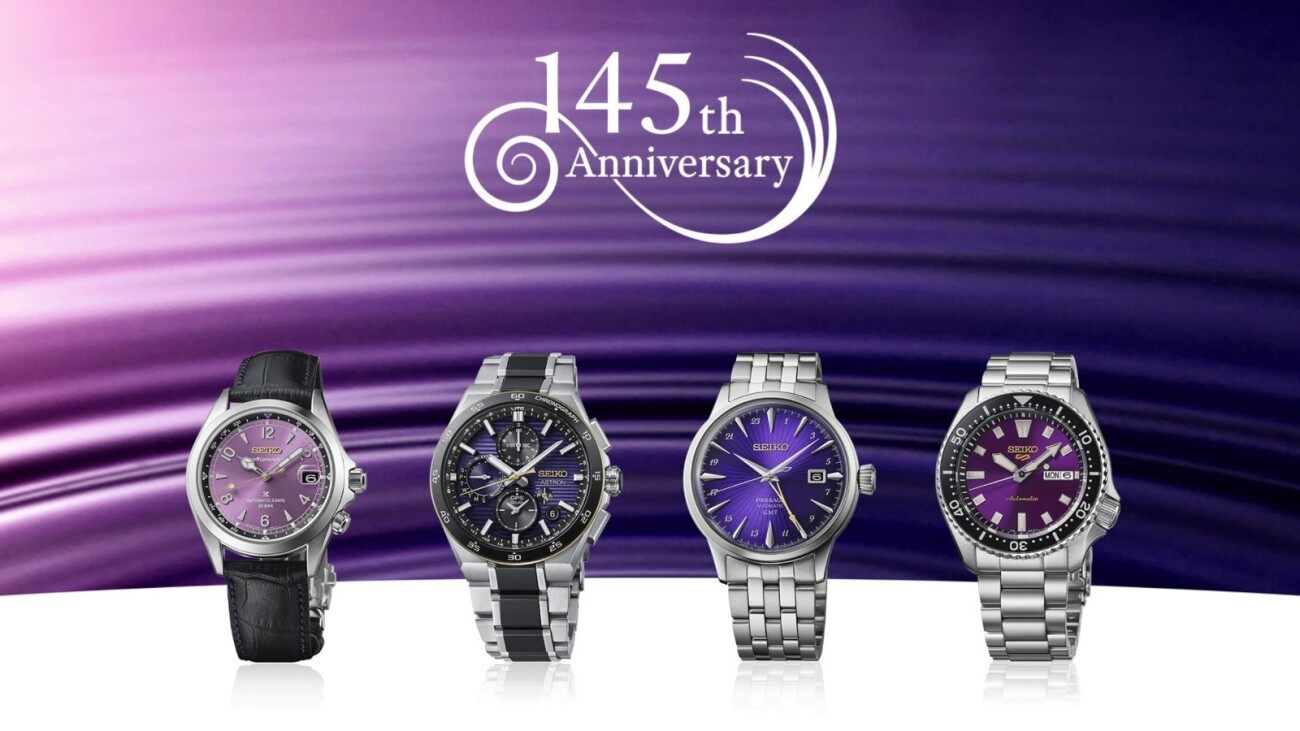
Seiko turns 145 this year, and its defining characteristic is vertical integration. It designs and manufactures almost every component in-house, from the movement to the dial, hands, crystal and case. That is why it can produce watches at wildly different prices without collapsing quality control at the bottom.
It is also one of the few brands with genuine claim to having changed the industry twice, inventing the quartz wristwatch in 1969 with the Astron 35SQ and then continuing to build mechanical movements when much of the world abandoned them.
The collections
Collection
What it is
India price guide
Seiko 5 Sports
Entry automatic, day-date, 100m
From about ₹10,500
Presage
Dress watches with artisanal dials
₹25,000 to ₹1,50,000
Prospex
Divers and sports, 200m to 600m
₹40,000 to ₹2,00,000
Astron
GPS solar, 40 time zones
₹1,50,000 plus
King Seiko
Revived heritage line
₹1,50,000 plus
Grand Seiko
Separate luxury brand, Spring Drive
₹2,50,000 to ₹5,00,000 plus
Seiko’s 2026 launches
The 145th anniversary has produced an unusually busy year.
Prospex 145th Anniversary Diver HBB001K, a 200m diver limited to 9,999 pieces worldwide.
Presage Cocktail Time GMT SSK049J, running Caliber 4R34 with an independent 24-hour GMT hand in a 40.5mm case, which makes it a dress watch and a travel watch at once.
Seiko 5 Sports Field, an entirely new line arriving in four colourways simultaneously, with GMT versions also announced.
Prospex Speedtimer Youngtimer, a solar chronograph on the in-house V192 movement, keeping the panda dial layout and referencing Seiko’s 1969 Speedtimer, one of the world’s earliest automatic chronographs.
Prospex 1965 Heritage Diver on Caliber 6R55, with 300m water resistance and roughly 72 hours of power reserve.
Prospex HBB003 and HBB004 in yellow and orange, Asia-Pacific exclusives limited to 2,500 pieces each, running the 4R35 in a Samurai-style case at 200m. Seiko India has listed these as coming soon.
Edo purple anniversary editions arriving from October, including a new Alpinist that reinterprets the 1959 original’s logotype.
Citizen: Hassle-free
Citizen’s argument is simpler than Seiko’s and, for a lot of people, more persuasive.
Eco-Drive converts any light source into stored electrical energy. Not sunlight specifically, any light, including the bulb in your office. A fully charged movement runs for months in complete darkness. You do not open the case, you do not visit a service centre, you do not replace a cell.
For a watch worn daily and never thought about, that is a genuine advantage over both a mechanical Seiko, which needs servicing every several years, and a battery quartz watch that will die at an inconvenient moment.
The technologies
Technology
What it does
Eco-Drive
Light-powered, no battery replacement
Super Titanium
Proprietary alloy, five times harder than stainless steel, hypoallergenic
Radio-controlled sync
Corrects to atomic time signals automatically
Satellite Wave
GPS time correction on premium models
Promaster
Professional dive, pilot and land collections
Citizen’s 2026 launches
World Chronograph A.T. AT8260-85X, a green-dialled 43mm chronograph on the H800 Eco-Drive movement with radio-controlled timekeeping and world time across 26 cities. Priced at £499 and currently UK-exclusive.
Citizen has also released a trio of more affordable radio-controlled Eco-Drive models with Direct Flight and a UTC bezel, and five moonphase watches that use atomic timekeeping to sync their moonphase displays.
The caveat Indian buyers should know
Citizen’s radio-controlled models receive atomic time signals in four regions only: North America, Europe, Japan and China. India is not covered.
Outside signal range these watches run as ordinary solar quartz, typically at plus or minus 15 seconds a month, which is perfectly good. But the marquee feature does nothing on an Indian wrist, and paying a premium for it makes little sense unless you travel to those regions often.
Eco-Drive itself works everywhere. It is only the radio sync that is geographically limited.
Casio: Function Over Everything
Casio is the outlier here, and the only one of the three that most people encounter before they care about watches at all.
Its range runs from the ₹1,500 F-91W, in production since 1989 with well over 100 million sold, to G-Shock models costing more than a mid-tier Seiko. What connects them is a design philosophy that treats a watch as a tool rather than jewellery.
Casio’s 2026 launches
G-Shock GravityMaster GWR-B3000, launched in India at ₹65,995 for the GWR-B3000-1A, ₹72,995 for the GWR-B3000A-2A and ₹79,995 for the GWR-B3000B-8A.
This is the first watch with Casio’s new TOUGH MVT.2 movement, which does something no competitor offers: it detects a heavy impact and automatically realigns its own hands to the correct position. It also halts hand movement when it detects strong magnetic interference and resumes once clear. Add Tough Solar, Multi-Band 6, Bluetooth, sapphire crystal and a dual hollow case using Triple G Resist.
Casio F-B100W, released in Japan at ¥8,800, roughly ₹5,000. It takes the F-91W’s design and adds a step counter, Bluetooth phone sync, five alarms and 200 stopwatch records. Casio’s online store sold out within hours of general sale on 7 August.
The trade-off there is worth noting: battery life drops from about seven years on the F-91W to about two on the F-B100W, and water resistance is described only as suitable for everyday use with no metre rating.
GMW-BZ5000 Full Metal series, launched in Japan across three colourways with Bluetooth sync and Multiband 6.
Head To Head
Criterion
Winner
Why
Mechanical movements
Seiko
No competitor offers in-house automatics at these prices
Never needing maintenance
Citizen
Eco-Drive removes battery changes entirely
Durability
Casio
G-Shock remains the benchmark for shock resistance
Dial craftsmanship
Seiko
Presage enamel and urushi work is exceptional for the money
Value under ₹5,000
Casio
Nothing else is credible at that price
Value ₹10,000 to ₹20,000
Seiko 5
A genuine automatic at fashion-watch prices
Resale value
Seiko
Mechanical models hold value better than solar quartz
Accuracy without thought
Citizen or Casio
Radio sync beats any mechanical movement
Features and functions
Casio
Nothing else offers this range of tools
India service network
All three adequate
Casio widest, Seiko and Citizen well covered in metros
Which One Is Actually Right For You
Buy a Seiko if you want to own a mechanical watch. That is the whole argument and it is a strong one. A Seiko 5 Sports at ₹10,500 to ₹15,000 gives you a self-winding movement, day-date and 100m water resistance for the price of a fashion quartz. Step up to Presage and you get dial finishing that embarrasses Swiss watches at twice the money.
The trade-off is upkeep. Automatics run seconds fast or slow per day, need winding if unworn, and want servicing every several years.
Buy a Citizen if the watch is a tool you want to forget about. Eco-Drive is the most practical technology of the three for daily wear. Super Titanium is genuinely superior to steel for anyone with sensitive skin or a habit of scratching things.
Just do not pay extra for radio-controlled sync in India, where the signal does not reach.
Buy a Casio if you want function, durability or both. Nothing else survives what a G-Shock survives. And at the bottom of the range, the F-91W remains one of the most rational purchases in consumer electronics.
The trade-off is presentation. Casio does not compete on elegance and does not pretend to.
Buying In India
All three brands have authorised retail presence in India, and all three are heavily counterfeited or grey-imported.
Warranty is the practical difference. Buying through an authorised dealer gets you a valid Indian warranty. Grey market imports, often cheaper, generally do not, and service on a mechanical Seiko or a proprietary Casio movement is not something to improvise.
Prices vary considerably by variant. Two Seiko 5 Sports models can differ substantially in price depending on bracelet material, dial complexity and whether GMT functionality is included. Ranges quoted here are indicative rather than fixed.
Japanese domestic models often cost less but come without international warranty and sometimes with Japanese-language manuals and different reference numbers. Worth knowing before ordering from a Japanese seller.
FAQs
Which Japanese watch brand is the most reliable?
All three are reliable. Casio is hardest to physically damage, Citizen requires the least maintenance, and Seiko’s automatics will run for decades with periodic servicing.
Is a Seiko 5 worth it over a Casio at the same price?
It depends what you value. The Seiko 5 gives you a genuine mechanical movement, which is a different kind of object. The Casio will be more accurate and more durable. Neither is wrong.
Does Eco-Drive really never need a battery?
The rechargeable cell inside does degrade eventually, typically after well over a decade, and can be replaced. For practical purposes it removes battery changes from the ownership experience.
Do Citizen radio-controlled watches work in India?
The radio sync does not, since the movement receives signals only in North America, Europe, Japan and China. The watch functions normally as a solar quartz, and world time functions work everywhere.
Which holds resale value best?
Seiko, particularly mechanical Prospex and limited editions. Solar quartz models from any brand depreciate faster.
Is Grand Seiko a different brand?
Yes. Grand Seiko separated from Seiko as a standalone luxury brand and competes with Swiss watchmakers rather than with Citizen or Casio.
Which is best for a first serious watch?
A Seiko 5 Sports if you want mechanics, a Citizen Eco-Drive if you want practicality, a G-Shock if you want durability. All three are defensible at around ₹10,000 to ₹15,000.