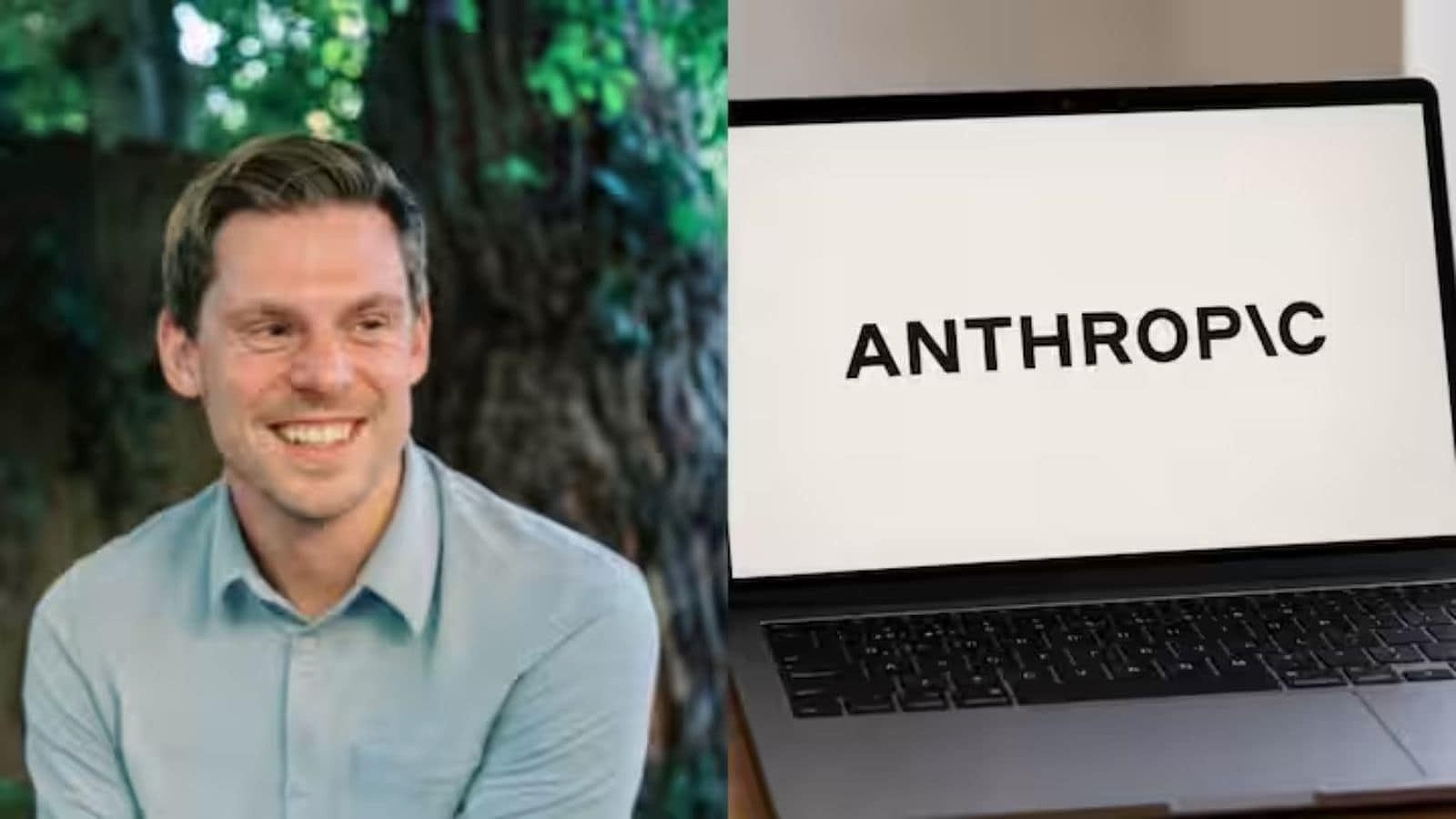
Anthropic Engineering Manager Has Advice for Young Engineers Worried About AI Taking Their Jobs: 'Nobody Cares What You Think'
Anthropic engineering manager Felix Rieseberg has offered an unusual perspective for young software developers concerned about artificial intelligence replacing entry-level technology jobs. According to him, junior engin
By Ayush Mukherjee··18K reads
Anthropic Engineering Manager Has Advice for Young Engineers Worried About AI Taking Their Jobs: 'Nobody Cares What You Think'
Anthropic engineering manager Felix Rieseberg has offered an unusual perspective for young software developers concerned about artificial intelligence replacing entry-level technology jobs. According to him, junior engineers should stop competing with experienced developers on traditional coding skills and instead focus on building products that deliver meaningful results.
In a blog post published on October 27, Rieseberg revealed that he has stopped using conventional coding challenges during recruitment because AI tools such as Claude have become better at solving many of these assignments.
His advice comes at a time when companies are increasingly pointing to artificial intelligence when announcing workforce reductions, creating uncertainty among fresh graduates and early-career professionals.
Rieseberg, who has led engineering work across Claude.ai, Cowork and Claude Code Desktop, believes newcomers still have an important advantage: they are not constrained by established ways of thinking.
However, he also highlighted a problem faced by inexperienced employees.
“The only problem with all that ignorant power: Nobody cares what you think,” he wrote.
His argument is that junior employees may have valuable ideas but often lack the influence or professional standing needed to convince organisations to act on them. AI, however, has made it significantly cheaper and faster to turn those ideas into working products.
Why Anthropic is moving away from traditional coding interviews
Rieseberg explained that small programming assignments were once a useful way to assess whether candidates could perform engineering work. However, he believes such exercises have lost much of their relevance as AI coding tools become more capable.
Asking applicants to complete a basic React assignment, he argued, is increasingly pointless when Claude can solve the same problem more effectively.
He also observed that some relatively inexperienced engineers are beginning to outperform colleagues with longer careers, even when the latter may have stronger traditional programming skills.
He describes this approach as “hunger beats tenure”, arguing that curiosity, initiative and the willingness to experiment can matter more than years spent in the industry.
Rieseberg also drew on an experience from his earlier career at Notion. During one interview, he was asked to design an offline mode for the product, something the company believed was practically impossible.
One reason was the assumption that Notion CEO Ivan Zhao would never approve such an experience. Rieseberg said that nobody had actually checked whether that assumption was correct.
Five pieces of advice for young engineers navigating AI
Rieseberg’s recommendations revolve around building things rather than waiting for instructions.
First, he suggests understanding the larger business objectives instead of concentrating exclusively on assigned tasks. Young engineers should identify what their department and senior management are trying to accomplish.
Second, they should look for ambitious ideas that could significantly improve the chances of achieving those objectives.
Third, rather than preparing lengthy presentations or waiting for approval from multiple departments, they should build a functional prototype over a weekend.
He also advises keeping the prototype focused. According to him, junior employees sometimes dilute promising concepts by combining too many ideas into one project.
Finally, he encourages newcomers to use their outsider perspective. People who have recently joined an organisation may be more aware of customer frustrations and less influenced by internal assumptions about what can or cannot be built.
Anthropic’s own experience with Claude Code offers an example. Employees had become accustomed to using the product primarily through a command-line interface. Two relatively new engineers, Anthony Morris and Alice Zhao, reportedly built a graphical version over a single weekend. The first public release followed approximately eight days later.
AI-driven layoffs are adding to anxiety among fresh graduates
Rieseberg’s comments arrive as entry-level technology jobs face increasing uncertainty.
According to outplacement firm Challenger, Gray & Christmas, artificial intelligence was the most frequently cited reason for announced US job cuts in September, accounting for 21% of the total. The technology sector represented 29% of the announced reductions.
Microsoft has offered buyouts to 60,000 employees, while Oracle has reportedly eliminated 21,000 positions.
Goldman Sachs has estimated that AI could displace as many as 9% of US workers, equivalent to approximately 15 million people, over the coming years.
Anthropic has also acknowledged changes in its recruitment patterns. The company said the proportion of entry-level technical hires had fallen from nearly 30% to 9% since March 2025. Its IPO filing also indicated that Claude was responsible for more than 90% of contributions to its codebase in September.
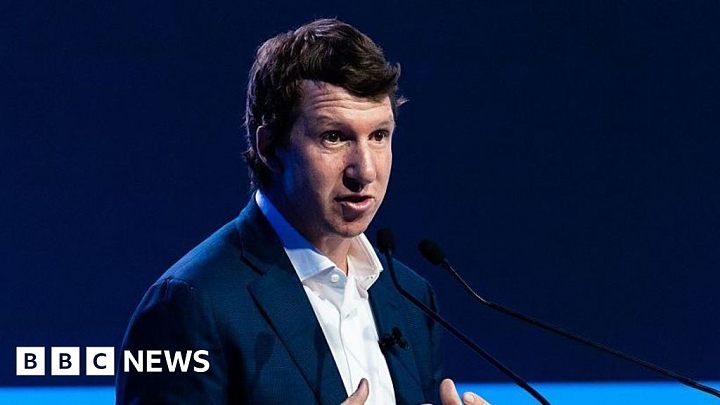
CEO Dario Amodei previously warned that AI could eliminate half of entry-level white-collar jobs within one to five years.
However, some economists argue that companies may be using AI as justification for workforce reductions they were already planning. US unemployment has also remained relatively stable at around 4.1%.
Rieseberg admitted that he has not yet found a definitive way to interview candidates who are particularly good at working alongside AI. For now, he looks at resumes and portfolios for small projects that demonstrate creativity, empathy and thoughtful decision-making.
His broader message is that young engineers should not wait for companies to recognise their potential. They should demonstrate it by building something useful.