Odd News
GK: Why Does The Dollar Sign Have An ‘S’ In It?
The $ symbol is among the world’s most recognisable signs, instantly associated with money and wealth. But its unusual shape has a fascinating history, with its roots tracing back beyond American currency. (Image-AI)
17K reads
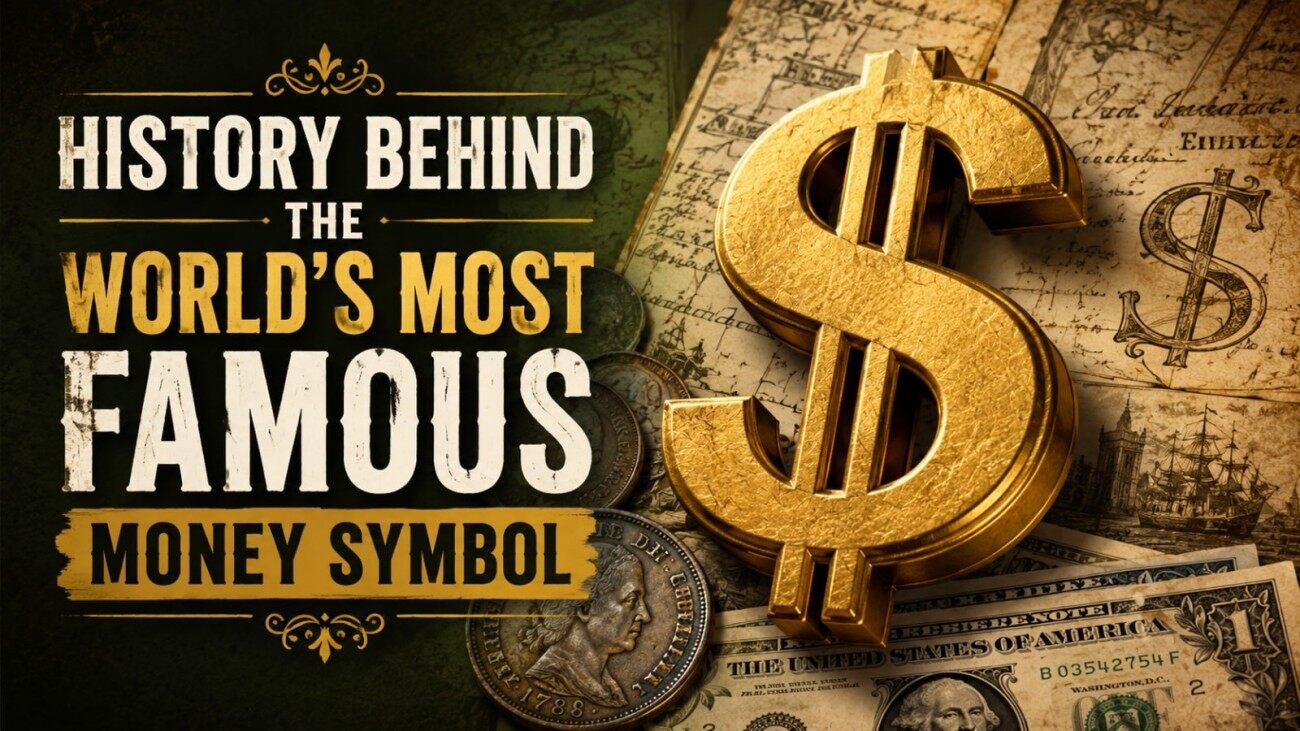
The $ symbol is among the world’s most recognisable signs, instantly associated with money and wealth. But its unusual shape has a fascinating history, with its roots tracing back beyond American currency. (Image-AI)
Before the U.S. established its own monetary system, American colonies used British pounds, shillings and pence. Continental currency introduced dollars in 1775, while Congress officially adopted the dollar in 1785. (Image: Canva)
The Spanish peso was widely used across international trade and became particularly important in America. Known as the “peso de ocho reales”, it continued as legal tender in the U.S. until 1857. (Image: Canva)
One leading explanation links the symbol to merchants abbreviating “Spanish peso”. They wrote a lowercase “p” over an “S”. Over time, repeated use simplified the combination into today’s familiar dollar sign. (Image: Canva)
Another theory connects the symbol to Spain’s coat of arms and the Pillars of Hercules. A different claim says it combines “U” and “S”, but historians have found little evidence supporting it. (Image: Canva)
The symbol appeared in American printing by the late 1790s, reportedly through Philadelphia printer Archibald Binny. It was initially used in ledgers and print, before appearing on banknotes in 1869. (Image: Canva)
The $ sign is now used for currencies including the Canadian and Australian dollar, along with several pesos. Its presence on early keyboards also helped make it useful across programming languages. (Image: Canva)
Share
Tags