Odd News
Does Milk Have A Veg Or Non-Veg Category? Here’s The Real Answer
Milk is widely regarded as an important part of a healthy diet and is often recommended for its nutritional benefits. However, have you ever wondered whether milk can also be classified as vegetarian or non-vegetarian? (
25K reads
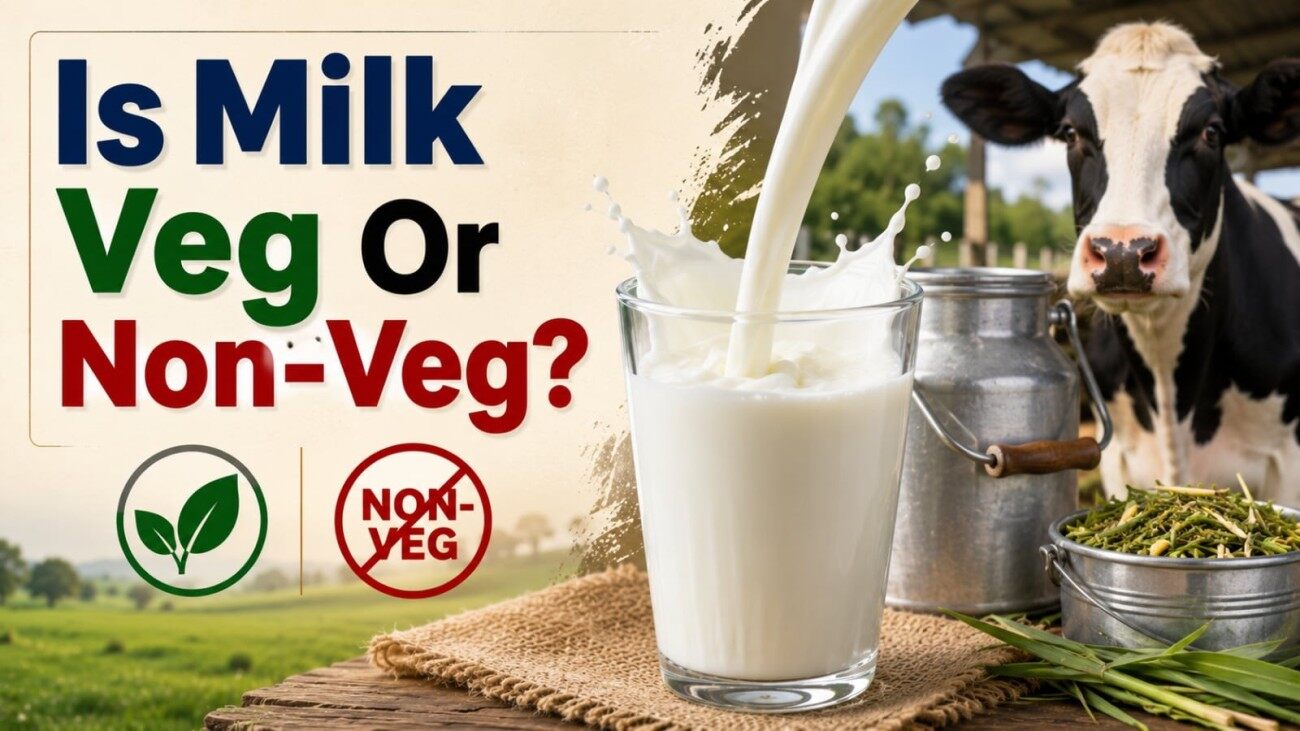
Milk is widely regarded as an important part of a healthy diet and is often recommended for its nutritional benefits. However, have you ever wondered whether milk can also be classified as vegetarian or non-vegetarian? (Image-AI)
Milk from animals such as cows, buffaloes and goats is generally considered vegetarian in India. These animals primarily consume grass, fodder and grains, and the milk they produce is consumed widely across Indian households. Cow and buffalo milk are also known for their nutritional value. They contain essential nutrients such as calcium, protein, vitamin D and vitamin B12, which can support bone and dental health, muscle function and energy levels.
The classification of milk can become a matter of debate when the feed given to dairy animals is taken into consideration. There is a belief that in some countries, including the US, cattle raised on certain commercial dairy farms may be given animal-derived ingredients such as fish meal or other processed animal by-products as part of their feed. Based on this, some people argue that milk produced by such animals should be considered non-vegetarian.
However, the vegetarian or non-vegetarian classification of milk is not determined simply by what an animal eats. In India, milk is traditionally regarded as a vegetarian food.
In India, cattle and buffaloes are commonly fed a combination of green fodder, dry hay, maize, wheat-based feed and oilseed cakes, depending on the animal and farming practice. Under Indian food-labelling conventions, milk is generally classified as a vegetarian food and packaged milk carries the green vegetarian symbol.
Milk production is a natural biological process. Nutrients from the animal’s feed and water are digested and absorbed into the bloodstream. These nutrients are then transported throughout the body, including to the mammary glands.
Specialised cells in the mammary glands use these nutrients to produce milk, which is stored in the udder. The milk is then collected through milking and eventually reaches consumers. So, while questions about animal feed can lead to debates over whether milk should be called vegetarian or non-vegetarian, milk itself is traditionally classified as vegetarian in India.
Share
Tags