'You Are Not Gen Z': Delhi HC To CJP Leaders Saurav Das, Ashutosh Ranka On Plea Against Judicial Custody
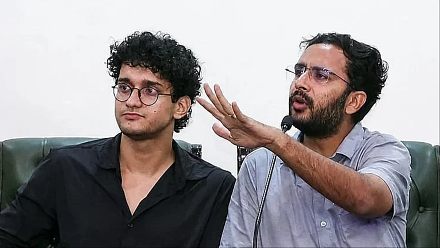
The Delhi High Court on Wednesday made a pointed remark about the age of Cockroach Janta Party (CJP) leaders Saurav Das and Ashutosh Ranka during a hearing on their challenge to the extension of their judicial custody in
By Vani Mehrotra··142K reads
'You Are Not Gen Z': Delhi HC To CJP Leaders Saurav Das, Ashutosh Ranka On Plea Against Judicial Custody
The Delhi High Court on Wednesday made a pointed remark about the age of Cockroach Janta Party (CJP) leaders Saurav Das and Ashutosh Ranka during a hearing on their challenge to the extension of their judicial custody in connection with their attempt to unfurl the national flag at Jantar Mantar in violation of prohibitory orders.
When advocate Abhik Chimni, appearing for the two petitioners, informed the court that Das was 27 years old and Ranka was 32, the court remarked, “Then you are not Gen Z. What is Gen Z?” Bar and Bench reported the exchange.
After being informed that people born after 1997 are considered Gen Z, the court reiterated, “Then you are not Gen Z.”
The matter was being heard by Justice Subramonium Prasad, who also questioned the petitioners’ decision to approach the High Court under Article 226 when an alternative remedy of revision could be available against the impugned order.
Additional Solicitor General Chetan Sharma, along with advocate Ashish Dixit, appeared for the Delhi Police, while Chimni represented Saurav Das, Ashutosh Ranka and the other petitioners.
HC Questions Petitioners’ Decision To Approach High Court
The hearing concerned a petition challenging the Special Executive Magistrate’s (SEM) October 19 order extending the two activists’ judicial custody until October 21 in preventive proceedings under Sections 126 and 170 of the Bharatiya Nagarik Suraksha Sanhita (BNSS).
According to news agency ANI, the petitioners sought the quashing of the order, their immediate release and a stay on the extension of their custody. They contended that their continued detention was illegal and violated their right to personal liberty.
During the hearing, Chimni argued that the custody order was not sustainable. However, the court questioned whether the order was revisable and whether the petitioners should first pursue the alternative remedy.
“Your second incident. You are a person who has actually broken a bond. Your remedy actually lies in revision,” the court observed, according to Bar and Bench.
The court also drew a distinction between the maintainability of the petition and whether it should be entertained at that stage. It questioned why the petitioners had approached the High Court when the matter was also scheduled to come up before the SEM later in the day.
“Is it a revisable order?” the court asked during the proceedings.
Justice Prasad suggested that the petitioners consider withdrawing the plea, await the outcome of the proceedings before the SEM and then assess the remedies available to them.
“What if you are released today? This is not the final hearing today. I will have to ask the State to file a response,” the court said, according to Bar and Bench.
Court Questions Need For Relaxed Approach After Second Incident
The court also questioned whether the authorities were entitled to insist on stricter surety conditions after the petitioners allegedly breached the peace for a second time.
“Once you have broken peace for the second time, are the authorities not entitled to insist upon everything?” the court asked, as reported by Bar and Bench.
The judge further observed that the petitioners had furnished bonds earlier but had allegedly returned to the protest site after it had been denotified as a designated venue for demonstrations.
The court noted that the challenge to the denotification was pending before the Supreme Court and that the notification had not been stayed.
It also expressed concern about the possibility of other people joining a protest and violating prohibitory orders.
“The two petitioners here are at the forefront. When you go and break a barricade, the chances of 10 or 20 more people in violation of 163 are very high,” the court observed.
The judge referred to incidents in other countries where demonstrations that began peacefully had escalated into violence, including arson. The court also noted the importance of police permission in preventing unwanted elements from joining a gathering and disrupting it.
Activists Challenge Custody Extension
Das and Ranka approached the Delhi High Court after the SEM extended their custody until October 21. Their legal team sought an urgent hearing, following which the High Court agreed to take up the matter on Wednesday.
The petitioners argued that they had remained in custody since October 13 despite repeatedly furnishing sureties for their release. They further claimed that additional sureties, along with executed bonds and fixed deposit receipts, were available on October 19 but were not allowed to be presented.
The plea also contended that Section 135(3) of the BNSS did not grant an independent power to extend custody for a fixed period on the basis of a police application.
According to the petitioners, detention under the provision was linked to a failure to execute a bond.
The case stems from the activists’ protest at Jantar Mantar on October 13, after the site was denotified as a designated protest venue.
The petitioners maintained that the allegations relied upon by the police related to events that had already taken place and did not establish an imminent threat warranting their continued detention.