Wolf At The Door? 85% of Rajasthan's Wolves Live Outside Sanctuaries, Next To Villages
There’s a phrase for it in English: Catch-22, a bind where every way out leads to a new problem. That’s where Rajasthan’s forest department finds itself with wolves. The leopard was saved with great difficulty, and now t
By Himanshu Mittal··123K reads
Wolf At The Door? 85% of Rajasthan's Wolves Live Outside Sanctuaries, Next To Villages
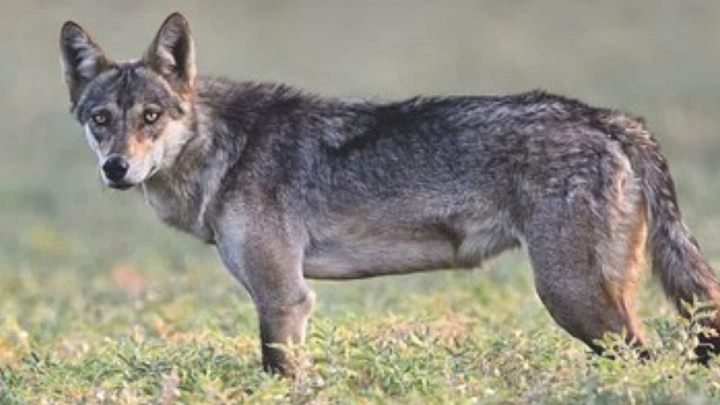
There’s a phrase for it in English: Catch-22, a bind where every way out leads to a new problem. That’s where Rajasthan’s forest department finds itself with wolves. The leopard was saved with great difficulty, and now the wolf is in trouble.
Yet focusing on the wolf makes it hard to avoid conflict between nature and people.
HOME IS THE GRASSLAND, NOT THE SANCTUARY
The 2026 census recorded 467 wolves in selected forest and protected areas. Only 71 were inside protected areas. The other 396, about 85%, were outside them.
In other words, the wolf isn’t an animal that stays inside sanctuary walls. It thrives in open grasslands, scrub, rocky terrain and semi-arid land. Rajasthan’s gochar (village grazing commons), orans (sacred groves) and pastures are vital for its food, breeding and safe movement.
SHERGARH LEADS
Of the 71 wolves recorded inside protected areas, 39 were in Shergarh Sanctuary alone, more than half the total. Dholpur had 12, Bhainsrorgarh 8, Bandh Baretha 6 and Van Vihar 2. The remaining protected areas recorded one wolf each.
JHUNJHUNU TOPS THE LIST OUTSIDE
Outside protected areas, Jhunjhunu recorded the most wolves (74), followed by Baran (59), Jhalawar (50), Jaipur North (42) and Dausa (38).
The rest: Pali 22, the Jodhpur DCA Wildlife area 19, Sikar 16, Jaipur Rural 14, Kota 11, Chittorgarh 10, Nagaur 9, Dholpur 8, Jodhpur 7 and Sawai Madhopur 3.
STUDIES SHOW THE HABITAT STILL EXISTS
A 2017-19 study in Bhavad and seven nearby villages in Jodhpur recorded 14 wolves across 64 sq km. It found 21 dens, 7 of them active, with packs of 2 to 6 members.
A 2021 study in Karauli’s Kailadevi Wildlife Sanctuary estimated 19 to 45 wolves across 672.82 sq km, with the highest presence in the Nainiki range.
Jaipur’s Nahargarh Biological Park is also trying to breed wolves. But more wolves in a zoo doesn’t guarantee a safer population in the wild.
THE NUMBERS OVER THE YEARS
Wolves recorded in Rajasthan:
2007: 1,596
2013: 1,385
2015: 1,044
2016: 892
2017: 888
2018: 774
2019: 867
2020: 682
2026: 467 (selected areas)
A caveat: there’s no confirmation that these counts covered the same areas or used the same method, so they can’t be read as a definite statewide decline. Still, they call for a serious look at how the wolf is being protected.
SHRINKING LAND, BROKEN PATHS
The wolf’s biggest challenge is space. Expanding farms, mining, industry and roads are cutting into its land and its old routes. Gochar and orans are shrinking too, and they aren’t just grazing grounds but homes for many wild animals.
Attacks on livestock also cause conflict. When wolves take goats or sheep, herders lose money, and that sometimes leads to wolves being killed or poisoned.
“Wolves need a plan like the Great Indian Bustard’s”
Environmentalist Babulal Jaju has worked for wildlife and environmental protection for 40 years and has fought environmental cases in the Rajasthan High Court, the Supreme Court and the National Green Tribunal.
Jaju told News18 that the government and the forest department haven’t taken wolf conservation seriously enough. The biggest obstacle, he said, is the steady loss of natural habitat: grazing land is shrinking and the natural corridors between forests and settlements are breaking. “Where will the wolf live safely, and how will its numbers grow?” he asked.
He wants a strong, effective plan for the wolf, like the one for the godawan (Great Indian Bustard). Without timely action, he fears the animal could vanish from Rajasthan before our eyes. That is Jaju’s warning, not any official declaration that the wolf is going extinct in the state.
THE WAY FORWARD
The first step is a statewide survey using one consistent scientific method. Camera traps, genetic sampling and local monitoring can show where wolves actually live and what habitat they use.
Gochar and oran land needs protecting, natural corridors need saving, prey species need to be maintained, and herders need timely compensation for their losses. Poisoning of wildlife needs strict action too.
If wolves from Nahargarh are ever released into the wild, their genetic diversity, natural behaviour, health screening, prey availability and safe habitat must be ensured first, followed by continuous monitoring.
The question today isn’t just how many wolves are left in Rajasthan. It’s how much safe land is left for them. Otherwise, for the next generation, the wolf may be a creature of books and pictures, not of Rajasthan’s open plains.