What went before: The dropping of impeachment articles against CJ Corona
While many found the House prosecution panel’s decision to drop three out of the four Articles of Impeachment against Vice President Sara Duterte surprising, the move was not unprecedented; something similar already happ
By JEAN MANGALUZ,GMA News··171K reads
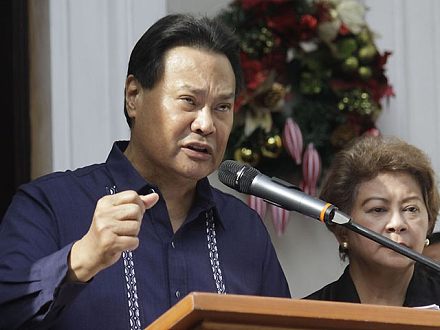
What went before: The dropping of impeachment articles against CJ Corona
While many found the House prosecution panel’s decision to drop three out of the four Articles of Impeachment against Vice President Sara Duterte surprising, the move was not unprecedented; something similar already happened during a trial 14 years ago.
However, there was one major difference: the prosecution against then Chief Justice Renato Corona had not yet presented its evidence before the impeachment court on the charges before they were dropped.
What happened on February 28, 2012, in the impeachment tribunal that had then Sen. Miriam Defensor Santiago go 'Waah!'?
During Corona's impeachment trial in 2012, the House prosecution panel announced on February 28 that they would drop five out of the eight articles of impeachment against him, according to GMA News Research.
It was a move that had
Then chief prosecutor Representative Niel Tupas announced on the 25th day of the trial, after the panel presented 25 witnesses and 397 pieces of documentary evidence for three articles against the Supreme Court (SC) chief justice.
The three articles that the prosecution presented were as follows: Article II (for failure to disclose his Statement of Assets, Liabilities, and Net Worth; Article III (for allowing the Supreme Court to flip-flop on final decisions); and Article VII (for granting former president Gloria Macapagal-Arroyo and her husband Jose Miguel Arroyo a temporary restraining order and allowing them to escape prosecution).
"We have already presented a strong case and the evidence that we have laid down suffices for the removal from office of Chief Justice Renato Corona for betrayal of public trust. With the presentation of Articles III, VII and especially Article II," Tupas said.
The House prosecution dropped the following articles against Corona:
Article I: Partiality to the Arroyo administration in SC decisions
Article IV: Disregarding the separation of powers by issuing a status quo ante order enjoining the proceedings of the House of Representatives during the impeachment of Ombudsman Merceditas Gutierrez
Article V: Disregarding the principle of res judicata in the cases involving 16 newly created cities and the promotion of Dinagat Island into a province
Article VI: Arrogating authority to investigate and absolve a fellow SC justice
Article VII: Failure and refusal to account for the Judiciary Development Fund and Special Allowances for Judiciary
The impeachment court presiding officer, Juan Ponce Enrile, asked the prosecution if they were going to withdraw the articles.
"I want to clarify. Are you telling this court you are now saying you will stand or fall on Article II, Article III, and Article VII?" Enrile asked.
“That is correct, Mr. President,” Tupas replied.
Tupas said that they will no longer present evidence for the articles of impeachment they dropped.
Miriam goes 'Waah'
The day after, then Senator-judge Miriam Defensor Santiago raised serious concern over the dropping of the articles.
“When you file an Article of Impeachment or a cause of action, it is not only your right to present evidence; it is also your duty. It is not a privilege that you can just waive at will. That is not what the law means. The suppression is an exercise of a privilege. You have no such privilege to bother the Court,” Santiago said.
“I request the Secretariat should record in our Journal that I have said, ‘Waah!’” she added.
On the day before the Senate impeachment court handed a verdict against Corona, Tupas maintained that the House prosecution’s evidence against Corona remained strong.
“Sa walong articles of impeachment na inihain ng Kamara dito sa Senado, hindi na po namin kinailangang i-present ang lima. Dahil sa tatlong articles pa lang po, kumbinsido na kami, at alam naming kumbinsido na ang taumbayan: hindi na karapat-dapat manatili sa puwesto si Renato Corona bilang Punong Mahistrado ng ating bansa,” Tupas said on May 28, 2012.
(In the eight articles that the House filed in the Senate, we do not need to present the five. Because just from the three articles we presented, we are convinced and we know that the people are convinced: Renato Corona should not remain as the Chief Justice of our country.)
Evidence already presented
While both Corona and Duterte had a number of their impeachment articles withdrawn during their respective trials, there is a key difference.
Defense lead counsel Sheila Sison told the impeachment court that in the Corona case, the prosecution withdrew the articles of impeachment before they presented the evidence.
In the trial of the vice president, the House prosecution panel withdrew the articles on alleged misuse of confidential funds and grave threats after it had presented its evidence.
“The court allowed them time, gave them opportunity, gave them a platform. But now, since they withdrew, your vice president can no longer speak or defend herself from those allegations," Duterte's lead defense counsel Sheila Sison said.
"May we just put on record that, just for the record, Your Honor, we find that not only a bit unfair. I would say it's completely unfair,” she added.
Two House leaders at that time of the Corona impeachment trial confirmed, on condition of anonymity. The withdrawn articles of impeachment were dropped before any evidence was presented to support them.
Impeachment court presiding officer Senator-Judge Francis Escudero said that there was an earlier motion for the prosecution and defense to alternate their presentation of evidence. If the defense had agreed to this, they could have been able to present their case.
Corona cleared by Sandiganbayan
On May 29, 2012, the Senate, sitting as the impeachment court, convicted Chief Justice Renato Corona for betrayal of public trust and culpable violation of the Philippine Constitution. The vote was 20-3.
The court ruled that Corona was guilty of Article II of the impeachment complaint: the chief magistrate did not fully disclose his assets in his SALN.
On November 3, 2022, or six years after his death, the Sandiganbayan dismissed the P134 million forfeiture case against Corona, his widow Cristina, and their children due to lack of evidence.
In a 48-page decision, the court said Corona’s at least P134 million worth of peso and dollar bank deposits, as well as his real estate properties worth P17.5 million, were all legally acquired, and that non-declaration of them in his SALN was later rectified. —LDF GMA News