UP MLC Polls Today: Can BJP Beat Rebel Blues As Samajwadi Party Targets Key Constituencies?
Voting for 11 Uttar Pradesh Legislative Council seats was underway on Friday, with 14.81 lakh registered graduate and teacher voters set to decide the fate of 152 candidates across 2,697 polling stations.
By Oliver Fredrick··130K reads
UP MLC Polls Today: Can BJP Beat Rebel Blues As Samajwadi Party Targets Key Constituencies?
Voting for 11 Uttar Pradesh Legislative Council seats was underway on Friday, with 14.81 lakh registered graduate and teacher voters set to decide the fate of 152 candidates across 2,697 polling stations.
The contest between the ruling Bharatiya Janata Party (BJP) and the Samajwadi Party (SP) is being closely watched ahead of the 2027 assembly elections, with the BJP facing challenges from rebel candidates and the SP seeking to consolidate its influence in traditional strongholds.
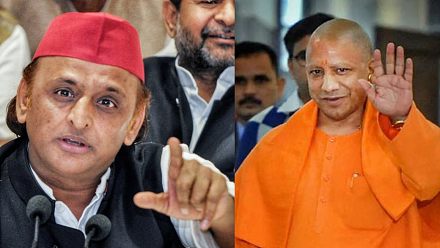
Chief minister Yogi Adityanath has led the BJP’s campaign, addressing five public meetings, while SP president Akhilesh Yadav’s prominent political intervention has been in Ayodhya. The contrasting approaches have brought the spotlight on the BJP’s leadership-driven campaign and the SP’s efforts to retain its foothold in key constituencies.
Polling will take place from 8am to 4pm, while counting is scheduled for October 27. The 11 constituencies comprise five graduates’ seats and six teachers’ seats, covering large parts of the state.
The BJP has deployed its senior leadership to retain its existing seats and make inroads into constituencies where the SP and independent candidates have traditionally performed well. Adityanath has campaigned across regions, including Gorakhpur, Bareilly, Varanasi, Prayagraj and Agra, while other senior leaders have held meetings with teachers, graduates and professional groups.
The BJP won six of the 11 seats in the previous election and is aiming to improve its tally. The party views the polls as an important organisational test following its setback in the 2024 Lok Sabha elections and ahead of the 2027 assembly contest.
The electorate is smaller and more specialised than in a general election, making personal outreach, candidate credibility and local grievances particularly important. The BJP has highlighted recruitment reforms, teacher-related issues and governance, seeking to strengthen its support among educated voters.
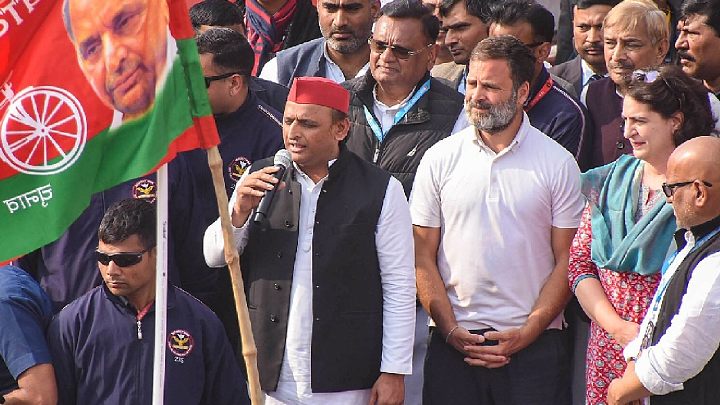
On the other hand, Akhilesh Yadav has not matched Adityanath’s series of public meetings during the MLC campaign. His Ayodhya visit, however, carries political significance beyond the immediate elections.
On October 8, the SP chief attended a Shrimad Bhagwat Katha at the residence of party leader Pawan Pandey and challenged the chief minister to contest the 2027 assembly election from Ayodhya. The exchange has renewed attention on the politically significant constituency, where the BJP suffered a setback in the 2024 Lok Sabha election.
For the SP, Ayodhya offers an opportunity to challenge the BJP on its political home ground and reinforce its claim that the ruling party’s electoral dominance is not unassailable. However, the impact of Yadav’s limited direct campaigning on the MLC results will depend on the party’s local organisation and the ability of its candidates to mobilise eligible voters.
Among all, the Gorakhpur-Faizabad teachers’ constituency is among the most closely watched contests, with BJP rebel Sanjayan Tripathi contesting on an SP ticket against the BJP’s Dhruv Tripathi.
The candidature of a former BJP leader has added an internal challenge for the ruling party. The SP is seeking to benefit from dissatisfaction over ticket distribution, while the BJP will be keen to prevent rebellion from eating into its support base.
The constituency carries additional political significance because Gorakhpur is Adityanath’s stronghold. A strong showing by the SP-backed rebel could provide the Opposition with an opportunity to claim that the BJP is facing discontent even in areas where it has traditionally enjoyed an advantage.
Yet, the outcome will also depend on the candidates’ personal networks and their ability to secure votes among teachers across the constituency. An MLC result cannot be directly equated with the electoral mood in the assembly constituencies covered by the region.
Similarly, Varanasi presents another important test for the BJP, particularly in the teachers’ constituency, where SP candidate Lal Bihari Yadav faces BJP nominee Dr Pramod Mishra.
In the Varanasi graduates’ constituency, BJP candidate Kedarnath Singh is contesting against SP nominee Ashutosh Sinha. The BJP is looking to make gains in a region where the SP has maintained a strong presence among sections of the teachers’ electorate. For the SP, retaining its influence would reinforce its claim that local support networks and candidate-specific appeal can counter the BJP’s wider organisational strength.
Political analysts say these polls are particularly sensitive to local issues, including teachers’ concerns, recruitment, service conditions and the relationship candidates maintain with voters. Unlike assembly elections, where broader political narratives and caste combinations play a major role, MLC contests often depend heavily on direct engagement with the electorate.
Though the MLC elections are not a direct referendum on the state government, given the limited electorate and the specific nature of the constituencies. Nevertheless, the results could offer both parties an early indication of their organisational preparedness before the 2027 assembly elections.
For the BJP, retaining its seats and overcoming rebel challenges would strengthen its claim of organisational cohesion. For the SP, gains in Gorakhpur, Varanasi and other contested constituencies would provide an opportunity to demonstrate that the ruling party remains vulnerable despite its extensive campaign.
The final outcome will depend on turnout, candidate credibility, local equations and the extent to which internal dissent affects the contest. With voting taking place today, the immediate battle is for 11 seats in the Legislative Council, but the political messaging from the results is likely to extend to the larger contest for Uttar Pradesh in 2027.