Shiva Sharma Death: 11-Day Manhunt Over; What's Next For Investigators After Shraddha Dubey's Arrest?
The arrival of model and social media influencer Shraddha Dubey in Lucknow marks a significant stage in the investigation into the death of cafe owner Shiva Sharma. After an 11-day search spanning multiple locations, inc
By Oliver Fredrick··57K reads
Shiva Sharma Death: 11-Day Manhunt Over; What's Next For Investigators After Shraddha Dubey's Arrest?
The arrival of model and social media influencer Shraddha Dubey in Lucknow marks a significant stage in the investigation into the death of cafe owner Shiva Sharma. After an 11-day search spanning multiple locations, including Nepal and Maharashtra, police arrested Dubey and two other accused in Nagpur. The investigation must now focus on establishing what happened inside the apartment before Sharma fell to his death on October 9.
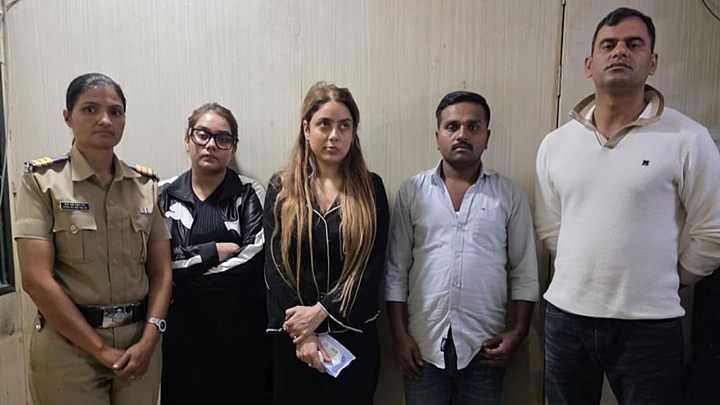
Dubey, her sister Rashmi Dubey and their driver Tanveer Ali, alias Danish, were brought back to Uttar Pradesh following their arrest by a joint team of the Lucknow Police and the Uttar Pradesh Special Task Force (STF), with assistance from Nagpur Police. Dubey was seen covering her face as she entered the police station amid media attention. Police were expected to seek 14 days of police custody remand for questioning.
The arrests have shifted the focus from tracking the accused to reconstructing the events surrounding Sharma’s death. The crucial question is whether investigators can establish a corroborated timeline and determine the individual roles, if any, of those accused.
Sharma, 28, died after falling from the fourth floor of Awadh Green Apartments near Balu Adda in Lucknow’s Hazratganj area. The incident was initially treated as an accidental fall. His mother, Ranjana Sharma, subsequently lodged a complaint alleging that her son had been assaulted and tortured before being thrown from the building. Police registered a murder case following the complaint.
Sources said investigators would first reconstruct Sharma’s final hours by examining the sequence of events leading up to the fall, physical and forensic evidence, witness accounts and digital records. The precise circumstances of his death remain to be established through the investigation.
However, the challenge is not merely to determine who was present at the apartment, but also to establish what each person allegedly did or knew, and whether the evidence supports the allegations made by the victim’s family.
How the accused allegedly evaded arrest
The 11-day manhunt has also raised questions about how the accused managed to remain beyond the reach of investigators while moving between locations.
Uttar Pradesh Additional Director General of Police (Law and Order) Amitabh Yash attributed the delay in Dubey’s arrest partly to her familiarity with police procedures and tracking methods.
“She was familiar with police procedures, working methods, and technical aspects, which is why it took time to arrest her,” Yash said.
According to police, Dubey allegedly changed locations, wore a burqa to conceal her identity, minimised mobile phone usage and stayed in small hotels with limited surveillance. The group is also suspected to have travelled to Nepal before returning to India and eventually reaching Nagpur.
These details offer important leads for the investigation, but the alleged escape route raises questions beyond the logistics of the manhunt. Police will also need to establish the timeline: when the accused left Lucknow, who assisted them, how their travel was arranged, and whether any evidence was destroyed, concealed or transferred during the journey.
Investigators are also expected to examine whether anyone provided accommodation, transport or other assistance to the accused while they were absconding.
However, evading arrest does not, by itself, establish guilt in the alleged murder. The significance of these movements will depend on the surrounding evidence and the explanations provided by the accused.
What was the role of the other accused?
The arrest of Dubey’s sister and driver requires investigators to assess each person’s role independently.
Sources said police would determine whether either person was involved in the events preceding Sharma’s death, assisted the accused in evading arrest or possessed information relevant to the case. Communications, travel records, CCTV footage and other material could help investigators verify their accounts.
The presence of multiple people during subsequent movements does not, by itself, establish that each participated in the alleged offence. Establishing individual responsibility will be essential to the case.
Dubey has denied involvement in Sharma’s death and claimed that he died by suicide. She has reportedly alleged that he was under financial stress and owed money to lenders. Sharma’s family, meanwhile, has alleged foul play.
The competing accounts make forensic findings, corroborated witness testimony and a verified timeline central to the investigation. Police will need to assess these claims against the available evidence rather than treat either version as conclusively established.
Sharma’s mother has welcomed the arrests while maintaining that the family wants justice. She has also claimed that videos relating to the alleged harassment exist.
“I have full faith that justice will be served,” Ranjana Sharma said, describing the arrests as the first step towards justice for her son.
The proposed 14-day police custody remand could provide investigators with an opportunity to question the accused, verify their movements and examine their responses against the evidence collected so far. The court will decide on the remand request in accordance with the law.
The investigation will need to connect three strands: the circumstances of Sharma’s death, the alleged roles of the accused and their movements after the incident. Establishing a reliable sequence of events could help investigators test the competing claims and determine whether additional people were involved.
The arrests mark progress in locating the accused, but they do not, by themselves, resolve the central questions surrounding Sharma’s death.
The manhunt may have ended in Nagpur, but the most consequential part of the investigation remains in Lucknow. Police must now move beyond tracing the accused to establish what happened on October 9, distinguish individual responsibility from mere association, and build an evidence-based case that can withstand judicial scrutiny.