Shiv Sena's Dussehra Rally: Bal Thackeray's 60-Year-Old Legacy Is Now A Battle For Identity
The Dussehra rally was once Bal Thackeray’s stage to demonstrate the Shiv Sena’s political dominance, rally its cadre and set the agenda for Maharashtra politics. Six decades later, the annual gathering tells a very diff
By Apoorva Misra··117K reads
Shiv Sena's Dussehra Rally: Bal Thackeray's 60-Year-Old Legacy Is Now A Battle For Identity
The Dussehra rally was once Bal Thackeray’s stage to demonstrate the Shiv Sena’s political dominance, rally its cadre and set the agenda for Maharashtra politics. Six decades later, the annual gathering tells a very different story. With the party split between Uddhav Thackeray and Eknath Shinde, what was once a singular display of strength has become a contest over political identity, legacy and survival.
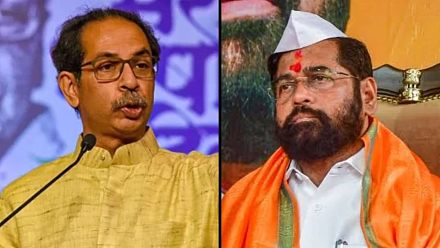
On October 20, as the Shiv Sena marks the 60th anniversary of its first Dussehra rally, Mumbai will host two gatherings instead of one. Uddhav Thackeray’s Shiv Sena (UBT) will return to Shivaji Park in Dadar, the historic venue associated with his father, while Eknath Shinde’s faction will hold its rally at the NESCO grounds in Goregaon. Both claim the legacy of the party founded by Bal Thackeray, but their separate stages reflect the divisions that now define it.
HOW THE DUSSEHRA RALLY BECAME A SHIV SENA TRADITION
The story began on October 30, 1966, barely four months after Bal Thackeray founded the Shiv Sena. The organisation was still untested, and Thackeray was better known as a cartoonist and editor of the Marathi weekly Marmik. He had been advised to choose a smaller venue for the first public meeting, but went ahead with Shivaji Park.
The decision paid off. The ground filled with a crowd that surprised even the organisers. Volunteers helped manage the gathering, and a steel tiffin box was passed around to collect donations. The rally gave Thackeray a platform beyond the readership of Marmik and helped turn the party’s campaign for the rights of Marathi-speaking people in Bombay into a mass political movement.
At the time, anxieties over jobs, language and influence in the city provided fertile ground for the Sena’s sons-of-the-soil politics. The party argued that Marathi-speaking residents needed to organise to secure their place in Bombay, with South Indians becoming prominent targets of its early mobilisation.
The first rally also helped establish a format that would endure: a major annual address in which the party leadership could communicate its political position, mobilise supporters and demonstrate its organisational strength. Shivaji Park, known to Sena supporters as Shivteerth, became inseparable from that tradition.
FROM A SHOW OF STRENGTH TO A POLITICAL RITUAL
For Bal Thackeray, the Dussehra rally was not simply an annual meeting. It was a chance to speak directly to Shiv Sainiks, signal the party’s direction and reinforce his authority over the organisation.
The gathering became one of the most recognisable fixtures of Maharashtra politics. It helped consolidate the party’s relationship with its cadre and gave Thackeray a recurring platform to address supporters on issues central to the Sena’s politics.
He continued to address the rally until his death in 2012. Uddhav took over the tradition the following year, preserving the link between the Thackeray family and Shivaji Park.
But the rally’s meaning has changed alongside the party. What once represented a movement speaking with one voice now exposes a struggle over who has the authority to speak in its name.
THE 2022 SPLIT CHANGED EVERYTHING
The turning point came in 2022, when Eknath Shinde led a rebellion that split the Shiv Sena and brought down Uddhav Thackeray’s government. The division created two factions, each claiming to represent the party founded by Bal Thackeray.
The dispute was about more than leadership. It raised questions over the party’s name, election symbol, organisational machinery and political inheritance. The Election Commission of India recognised the Shinde faction as the official Shiv Sena, giving it a crucial institutional advantage.
The Dussehra rally soon became a visible expression of that conflict. In 2022, both factions sought to hold their gatherings at Shivaji Park. The dispute went to court, and the Bombay High Court allowed Uddhav’s faction to hold its rally at the ground, while Shinde’s group shifted to the MMRDA grounds in Bandra-Kurla Complex.
SHIVAJI PARK: THE POWER OF LEGACY
For Uddhav Thackeray, returning to Shivaji Park is about preserving a connection that goes beyond a venue. It is where Bal Thackeray launched the party’s annual political address, where generations of Shiv Sainiks gathered to hear him, and where the Thackeray name became closely associated with the party’s identity.
Holding the rally there allows Uddhav’s faction to draw on that history even as it faces the challenge of rebuilding its political base. The ground becomes a symbol of continuity: a claim that the party’s founding legacy cannot be separated from the family that shaped it.
But symbolism alone cannot settle the question of political strength. The size and energy of the crowd, the party’s ability to mobilise workers and its capacity to retain supporters will also be closely watched. For the UBT, the rally is an opportunity to show that it remains a force in Maharashtra politics despite its reduced legislative numbers.
SHINDE’S ADVANTAGE
Shinde’s position is different. His faction has the Election Commission’s recognition as the official Shiv Sena, and it has a stronger presence in the Maharashtra Assembly. In the 2024 state election, the Shinde-led party won 57 seats, compared with 20 for Shiv Sena (UBT).
Shinde is also Maharashtra’s deputy chief minister in the Mahayuti government. These advantages give his faction institutional power that Uddhav’s party does not possess.
Yet, the Dussehra rally remains an opportunity for Shinde to demonstrate that official recognition and legislative strength can translate into a broader political connection with the Sena’s traditional supporters. His decision to hold the gathering at NESCO rather than compete for Shivaji Park does not erase the historic ground’s significance; it reflects a contest being fought on more than one front.
The two factions have also chosen different emphases for their rallies this year. Uddhav’s faction has framed its mobilisation around the protection of the Constitution and linked it to opposition protests over alleged electoral irregularities. Shinde’s rally has been dedicated to drought-affected farmers and their families, with the faction announcing relief measures including ration kits and assistance for rural households.
WHAT IS AT STAKE NOW?
The two rallies will test different kinds of political strength. For Uddhav, the question is whether the emotional pull of Shivaji Park and the Thackeray legacy can help his faction retain its traditional support base and regain lost ground. For Shinde, the challenge is to consolidate the advantages of official recognition, legislative numbers and access to government.
The larger question is whether either faction can claim the Shiv Sena’s inheritance in a way that goes beyond the party name, election symbol or venue. Bal Thackeray’s rally was built around a singular leadership and a unified organisation. Today, the same tradition is being used by two rival factions to establish competing claims to that history.
Sixty years after the first gathering, the Dussehra rally remains a powerful political ritual. But its significance has shifted. It is no longer simply about demonstrating the dominance of one party under one leader. It is about whether two competing Senas can turn the legacy they share into distinct, durable political identities.