Rajasthan Panchayat Elections: BJP’s Rural Test, Congress’s Fight For Revival Ahead Of 2028 Polls
Rajasthan’s panchayat elections have put the state’s two principal political rivals, the Bharatiya Janata Party (BJP) and the Congress, to an important test. With the first phase of polling held on Thursday, the contest
By Pragati Ratti··183K reads
Rajasthan Panchayat Elections: BJP’s Rural Test, Congress’s Fight For Revival Ahead Of 2028 Polls
Rajasthan’s panchayat elections have put the state’s two principal political rivals, the Bharatiya Janata Party (BJP) and the Congress, to an important test. With the first phase of polling held on Thursday, the contest is about more than electing representatives to local bodies. It is also a measure of the BJP government’s rural outreach under Chief Minister Bhajan Lal Sharma and the Congress’s ability to rebuild its political strength beyond the state’s urban centres.
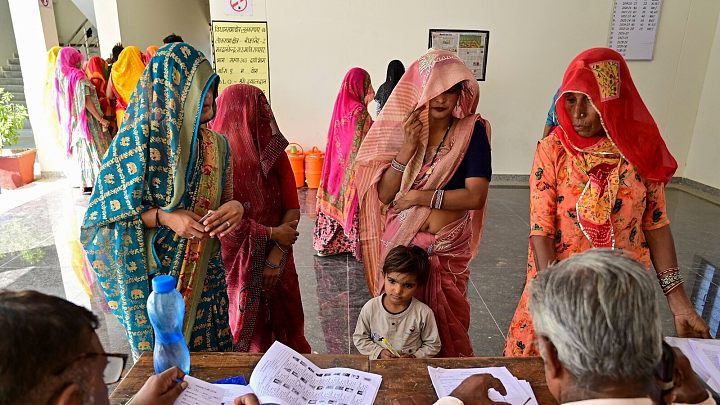
The first phase covered 16 zila parishads and 104 panchayat samitis across 16 districts, with more than 85 lakh registered voters eligible to participate. A total of 6,976 candidates contested 2,081 seats, comprising 293 zila parishad wards and 1,788 panchayat samiti wards. Voter turnout stood at around 63%, according to reports following the polling. The remaining phases will provide further indications of the political mood across Rajasthan’s rural belt.
BJP’s ‘Triple-Engine’ Pitch Faces A Rural Test
For the BJP, the elections are an opportunity to extend its political presence from the Centre and the state government to grassroots institutions. The party has projected coordinated governance across all three levels as a means of accelerating development in villages.
Sharma has repeatedly advocated the idea of a “triple-engine government”, arguing that BJP-led panchayats, working alongside the governments at the Centre and in Rajasthan, would help deliver development more efficiently.
“After the double-engine government at the Centre and in the state, a triple-engine government through urban local bodies and panchayats is necessary for a developed Rajasthan,” Sharma said during a September campaign rally.
The pitch makes the rural elections particularly significant for the chief minister. Victories at the panchayat level would give the BJP an opportunity to demonstrate that its development narrative resonates beyond major cities and urban local bodies.
The party has also outlined a village-development vision, including better educational, healthcare and recreational facilities. Its challenge is to translate these promises into a message that connects with voters dealing with everyday concerns such as roads, drinking water, electricity, healthcare access, agricultural livelihoods and employment.
The first phase, however, also highlighted local grievances. Some communities reportedly boycotted polling over disputes concerning Other Backward Classes (OBC) reservation and constituency delimitation. Such protests underline that local electoral outcomes can be shaped by specific administrative decisions and community concerns, rather than by state-level political messaging alone.
Congress Looks To Prove Rural Support Base Remains Intact
For the Congress, the elections provide an opportunity to challenge the BJP’s development claims and demonstrate that it continues to have a substantial organisational presence in rural Rajasthan.
Former chief minister Ashok Gehlot has been vocal about the party’s prospects. Ahead of the polls, he called for unity among Congress leaders and workers, arguing that a coordinated campaign would be essential to take on the BJP.
“If we are not united at such a time, how can we fight to save democracy in the country?” Gehlot had said while stressing the need for cohesion within the party. He also expressed confidence that Congress would win the panchayat elections with a “heavy majority”.
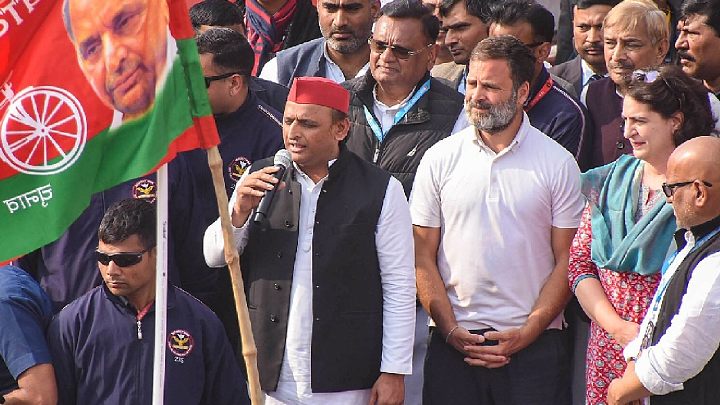
The Congress leadership has sought to project a united front, with Gehlot, state Congress president Govind Singh Dotasra, Sachin Pilot and Leader of Opposition Tikaram Jully participating in organisational discussions ahead of the rural polls. The party has also focused on candidate selection, local issues and coordination between district-level leaders.
Dotasra has attacked the BJP government over its handling of the elections and sought to mobilise party workers around local concerns. For Congress, the crucial question is whether its campaign and organisational efforts can convert into seats across a geographically diverse state.
The party also faces the challenge of keeping internal differences from affecting candidate selection and local alliances. In panchayat elections, where candidates often depend on personal networks and community relationships, organisational unity can matter as much as the broader party narrative.
All Eyes On Verdict Ahead Of 2028 Assembly Polls
The rural polls are being watched for what they might reveal about political organisation and voter sentiment ahead of Rajasthan’s next Assembly election, scheduled for 2028.
For Sharma, the elections are an opportunity to build on the BJP’s governing position and strengthen its grassroots network. For Congress, they offer a chance to demonstrate organisational resilience and challenge the ruling party’s claim that coordinated BJP governance is the most effective route to rural development.
Ultimately, the test for both parties will be whether their political promises find traction in villages. The first phase has set the stage; the remaining polling and final results will show how far each party’s message has travelled across Rajasthan.