PM2.5 Vs PM10: How The Two Pollutants Are Different And Why Delhi Residents Must Worry
Delhi’s air pollution crisis is back with a vengeance, and this time, the numbers offer a worrying insight into what residents are actually breathing. After a brief spell of cleaner air following heavy rain last week, th
By Pragati Ratti··36K reads
PM2.5 Vs PM10: How The Two Pollutants Are Different And Why Delhi Residents Must Worry
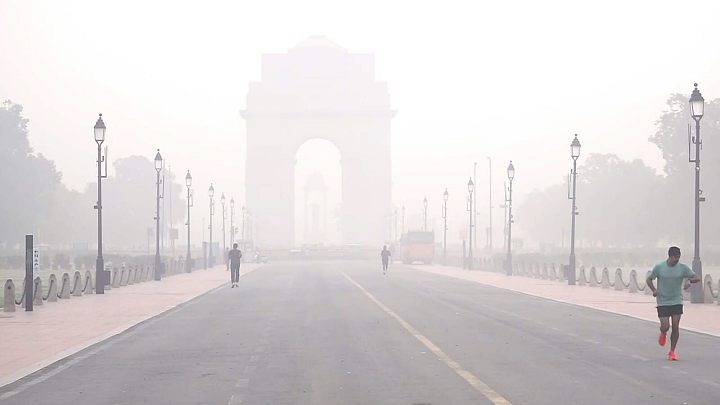
Delhi’s air pollution crisis is back with a vengeance, and this time, the numbers offer a worrying insight into what residents are actually breathing. After a brief spell of cleaner air following heavy rain last week, the national capital’s air quality deteriorated sharply on Monday, November 2, with the Air Quality Index (AQI) crossing the 300 mark and entering the ‘very poor’ category for the first time this season.
According to the Central Pollution Control Board (CPCB), Delhi’s AQI stood at 307 at 7.05 am on Monday, while the city’s 24-hour average on Sunday was 261. The deterioration was particularly significant given that Delhi had recorded an AQI of just 60 on Friday, following heavy rainfall that helped wash pollutants out of the atmosphere.
Read More: Diwali Week Begins With Delhi’s Air Turning ‘Very Poor’, AQI Hits 349
But beyond the AQI number, there is another detail that deserves attention. PM2.5, the finer and more dangerous category of particulate matter, has emerged as the dominant pollutant across most of Delhi’s monitoring stations.
At 6 am on November 2, PM2.5 was identified as the primary pollutant at 51 of the 58 monitoring stations reporting data. PM10 was the primary pollutant at the remaining seven. A day earlier, PM2.5 had been the dominant pollutant at 46 of 57 stations.
The distinction between PM2.5 and PM10 is not merely scientific jargon. It could determine how deeply the pollution penetrates the human body and the extent of damage it can cause.
PM2.5 Vs PM10: What Is The Difference?
Particulate matter, commonly referred to as PM, consists of a mixture of extremely small solid particles and liquid droplets suspended in the air. These particles can include dust, soot, smoke, metals and other chemical compounds.
PM10 refers to inhalable particles with a diameter of 10 micrometres or less. These are generally coarser particles originating from sources such as road dust, construction activity, industrial operations and soil.
PM2.5, on the other hand, refers to fine particulate matter measuring 2.5 micrometres or less in diameter. To put that into perspective, a human hair is approximately 70 micrometres thick, making PM2.5 particles nearly 30 times smaller.
Their microscopic size is precisely what makes PM2.5 particularly concerning. While both categories can enter the respiratory system, the finer PM2.5 particles can travel much deeper into the lungs, reach the alveoli (the tiny air sacs where oxygen enters the bloodstream) and, in some cases, cross into the bloodstream.
The World Health Organization (WHO) identifies PM2.5 as a pollutant of particular public health concern because of its association with respiratory and cardiovascular effects.
Why Is PM2.5 Considered More Dangerous?
The health risks associated with PM2.5 go beyond coughing, sneezing or irritation in the throat. Since these particles can penetrate deep into the lungs and enter the bloodstream, prolonged exposure has been linked to a range of health complications.
These include aggravated asthma, reduced lung function, respiratory infections, chronic obstructive pulmonary disease (COPD), cardiovascular diseases and an increased risk of premature death.
The WHO has also classified outdoor air pollution and particulate matter as carcinogenic to humans. Its findings underline that the impact of air pollution is not restricted to people who already suffer from respiratory illnesses. Even otherwise healthy individuals can face health risks with sustained exposure.
World Health Organization
PM10, meanwhile, is not harmless. Larger particles can irritate the eyes, nose and throat, aggravate existing respiratory conditions and cause breathing discomfort. However, their ability to penetrate deep into the lungs is comparatively limited.
This is why the distinction matters for a city such as Delhi, where pollution levels remain elevated for extended periods during winter.
Congress leader and former Environment Minister Jairam Ramesh has questioned the emphasis of the National Clean Air Programme (NCAP), arguing that its focus on PM10 does not adequately address the more serious public health threat posed by PM2.5. “The National Clean Air Programme focusses heavily on PM10 but it is the finer particulate matter PM2.5 that is the real killer as far as public health is concerned,” Ramesh has said.
Earlier this year too, Ramesh had cited an analysis of air quality across 238 Indian cities to argue that the programme needed a sharper focus on reducing PM2.5 concentrations. He had said 204 of these cities had PM2.5 levels exceeding India’s National Ambient Air Quality Standards (NAAQS), while none met the WHO’s recommended safe guidelines.
The government, however, has pointed to improvements under NCAP. In a written reply in Parliament in July 2026, the Environment Ministry said 108 of the 130 cities covered under the programme recorded a reduction in annual PM10 concentrations in 2025-26 compared with 2017-18.
The government also said 65 of these 130 cities met the national PM2.5 standard in 2025-26. Delhi’s annual average PM2.5 concentration, however, stood at 102 micrograms per cubic metre, considerably higher than the prescribed national annual standard of 40 micrograms per cubic metre.
What Does Delhi’s AQI Mean For Residents?
The CPCB classifies an AQI between 301 and 400 as ‘very poor’. Prolonged exposure to air in this category can increase the risk of respiratory illness, including breathing discomfort.
On November 2, 36 of Delhi’s 58 monitoring stations reporting data recorded very poor air quality, while Jahangirpuri registered an AQI of 417, entering the severe category.
Children, senior citizens and people with pre-existing respiratory or cardiovascular conditions are particularly vulnerable. However, the risks are not limited to these groups.
The concern is amplified during winter, when lower temperatures, slower wind speeds and atmospheric conditions can trap pollutants closer to the ground. Vehicular emissions, construction dust, industrial activity, biomass burning and seasonal agricultural fires add to the pollution burden.
With Diwali approaching, firecracker emissions could further increase particulate matter concentrations, particularly if unfavourable weather conditions persist.
For residents, reducing prolonged outdoor exertion during high-pollution episodes, following official health advisories and using appropriately fitted particulate-filtering masks when outdoor exposure is unavoidable can help limit exposure.
Delhi’s AQI may be the number that dominates the headlines, but PM2.5 and PM10 tell a more detailed story about the air people breathe. And as the latest readings indicate, the finer particles are a particularly pressing concern.