PhD Scholar Develops Low-Power Microchip At NIT Warangal, Eyes Commercialisation
A young researcher from Telangana is making strides in semiconductor research with the development of a power management integrated circuit (IC) that could help improve energy efficiency in smartwatches, Internet of Thin
By Mastan Vali··72K reads
PhD Scholar Develops Low-Power Microchip At NIT Warangal, Eyes Commercialisation
A young researcher from Telangana is making strides in semiconductor research with the development of a power management integrated circuit (IC) that could help improve energy efficiency in smartwatches, Internet of Things (IoT) devices and other low-power electronic applications.
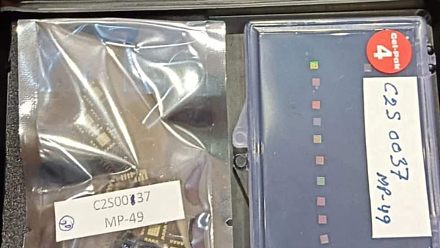
Kaira Anupama, who hails from Nukalamarri village in Vemulawada Rural, Rajanna Sircilla district, developed the chip as part of her PhD research at the National Institute of Technology (NIT) Warangal. A research scholar in the Semiconductor and Very Large Scale Integration (VLSI) domain of the institute’s Electronics and Communication Engineering department, she has spent around three years working on the project, with an estimated expenditure of ₹4 lakh.
The chip is designed to provide power management for sensor-based applications while consuming very little energy. Such technology could have applications in wearable devices, smartwatches, healthcare monitoring equipment and other compact electronics where power efficiency is essential.
In an interview with News18, Anupama shared details about the chip’s design, its development stage, potential applications, patent plans and estimated cost.
What Is The Power Management IC Developed By Kaira Anupama?
The chip, called a Power Management IC, is designed to provide a power management solution for sensor interface applications and internal integrated circuit systems.
According to Anupama, its low-power operation could make it useful in IoT devices and other battery-powered electronics. Such applications require components that can operate efficiently while minimising unnecessary energy consumption.
The chip integrates two blocks: a Low Drop-Out (LDO) Regulator and a temperature sensor. Anupama designed the LDO regulator block, while her senior researcher, Jayaram Chilaka, designed the temperature sensor block.
The built-in temperature sensor monitors the chip’s internal temperature, helping the system respond to temperature variations. The design is also intended to maintain efficient
How Could The Chip Help Save Battery?
Power consumption is a key consideration in devices such as smartwatches, healthcare monitoring equipment and other IoT-enabled electronics, many of which rely on small batteries.
Anupama’s chip is designed to improve power management in sensor-based applications, potentially helping such devices operate more efficiently and extending their battery life, depending on how the chip is integrated into a device.
Its potential applications include wearable technology, hospital monitoring equipment and other electronic systems that require reliable sensor operation with low power consumption.
However, the chip is currently at the research and development stage. Its broader commercial applications and real-world battery-life improvements will depend on further development, integration and testing.
Government Funding Supported Chip Fabrication
The chip’s fabrication received financial support from the Government of India under the Ministry of Electronics and Information Technology’s (MeitY) Chips to Startup (C2S) programme.
Anupama developed the design as part of her doctoral research under the guidance of Professor Srihari Rao Patri at NIT Warangal.
According to Anupama, the chip has successfully demonstrated its functionality during experiments. The project is now at the research and development stage, and efforts are underway to explore commercialisation opportunities.
The research team is looking for angel investors interested in taking the design forward, either directly or with modifications to meet specific requirements.
Is The Microchip Patented?
Anupama said the team is in the process of applying for a patent for the Power Management IC.
The research will also form part of her PhD thesis. After completing her doctoral degree, she hopes to establish a startup with the support of investors or explore the possibility of presenting the design to India’s defence sector for potential future applications.
Any commercial deployment will depend on further development, investment and the requirements of prospective users.
What Could Be The Price Of The Chip?
The eventual price of the chip will depend on the scale of manufacturing, according to Anupama.
She estimates that the cost could be around ₹50-60 per chip if it is manufactured in large quantities. The design uses indigenous technology, and domestic production at scale could help determine its commercial viability.
The estimate is indicative, however, and the final price will depend on production volumes, manufacturing arrangements and any modifications required for specific applications.
As the project progresses beyond the research stage, the next steps will involve attracting investment, assessing commercial requirements and exploring potential applications across wearable devices, healthcare monitoring systems and other low-power electronics.