National
Next NavIC Satellite Ready For Launch, Says Govt; No Lift-off Date Announced Yet
As India’s indigenous regional navigation satellite system grapples with reduced capability following the failure of NVS-02 last year, the government has told Parliament that its next NavIC satellite is ready for launch.
54K reads
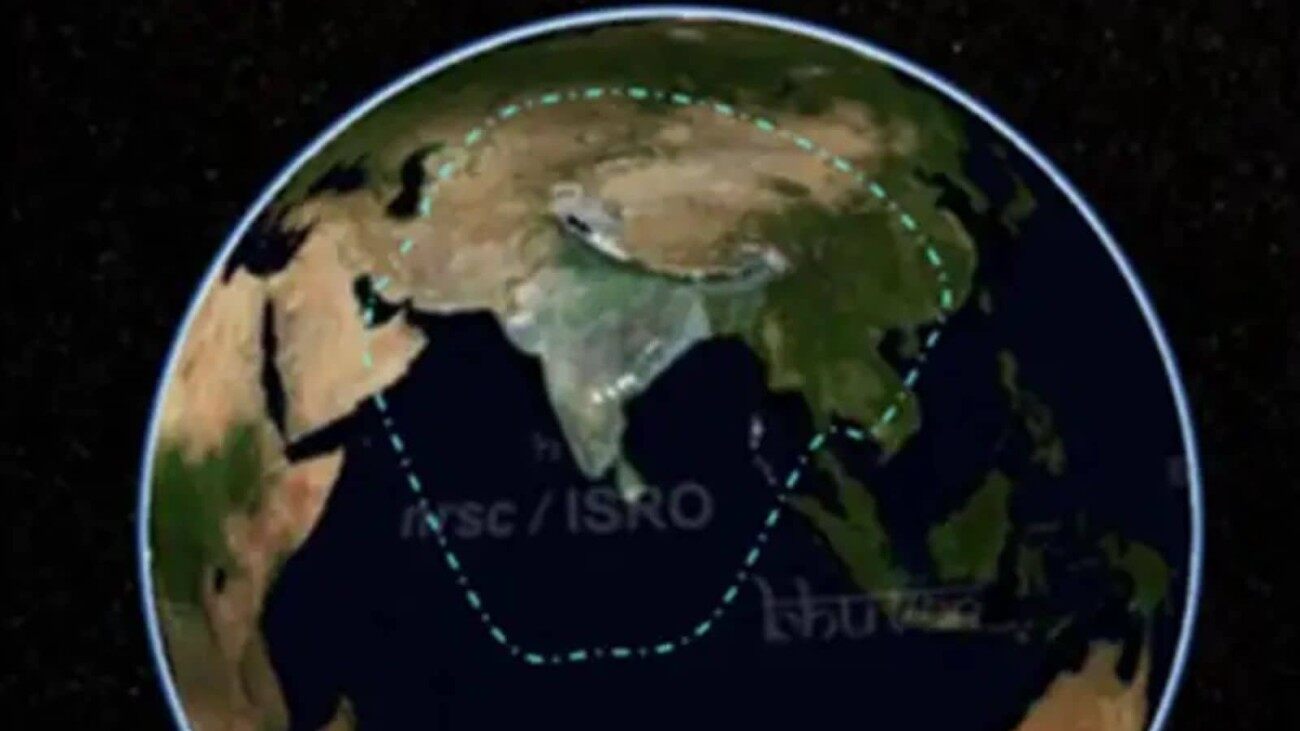
As India’s indigenous regional navigation satellite system grapples with reduced capability following the failure of NVS-02 last year, the government has told Parliament that its next NavIC satellite is ready for launch. This comes as ISRO’s launch programmes remain on hold since January.
The Navigation with Indian Constellation (NavIC) system was designed as a constellation of seven satellites and a network of ground stations operating 24X7 to provide accurate real-time positioning and timing services over India and a region extending approximately 1500 kms around the Indian mainland. The system was an upgradation to the Indian Regional Navigation Satellite System (IRNSS) developed post the 1999 Kargil War.
NVS-01 – the first of the second-generation satellites with indigenously-developed Rubidium atomic clock was successfully launched on GSLV in May, 2023, but the second in series – NVS-02 launched in January, 2025 failed after it could not be injected into the correct orbit. There has been no NVS launch since then.
“NVS-03 is ready for launch after incorporation of all corrective measures arising from the NVS-02 anomaly. It will be followed by the launch of NVS-04, and NVS-05. One more satellite is planned thereafter to complete the seven-satellite NavIC base layer constellation,” Union Minister of State for Space, Dr Jitendra Singh told Parliament, adding that the same measures will be followed in subsequent satellites including NavIC series of satellites carrying bi-propellant systems. However, the statement did not mention any timeline on when the launch is scheduled to take place.
NaVIC: ONLY THREE SATELLITES FUNCTIONAL
NaVIC is designed with a constellation of seven satellites and a network of ground stations operating 24X7. While three satellites of the constellation are placed in geostationary orbit, four are placed in an inclined geosynchronous orbit with equatorial crossing. The ground network consists of control centre, precise timing facility, range and integrity monitoring stations and two-way ranging stations.
According to experts, a minimum of four operational navigation satellites are required in orbit to provide basic positioning, navigation and timing (PNT) service using longitude, latitude, altitude and time. Since the previous IRNSS-1F has already completed its mission life of ten years, it left the current NavIC constellation with just three functional satellites – IRNSS-1B, IRNSS-1I and NVS-01. Hence, the NavIC constellation cannot provide standalone positioning service, but timing service is functional.
The Union Minister confirmed this earlier in Parliament, adding that the Armed Force are not just relying on NaVIC but also using the multi-constellation Global Navigation Satellite Systems (GNSS) to support their operations, so “there is no vulnerability for the users.”
ISRO YET TO RETURN TO LAUNCH-PAD
While the government has confirmed that the satellite is ready, there is no clarity yet on when the launch could place from Sriharikota. This comes at a time when the Indian Space Research Organization (ISRO) has not conducted any rocket launches since the PSLV failure in January early this year.
“There is a strategic necessity for these satellites to be deployed on timely basis in orbit, so that they can continue to provide precise navigation services. ISRO should implement and test the corrective measures, and conduct the launch at the earliest,” said Ajay Lele, Retd, Deputy DG, MP-IDSA.
Meanwhile, the Apex Committee constituted to review the failure of NVS-02 had already identified the reasons for orbit-raising failures, and provided a set of recommendations to enhance the redundancy and reliability of pyro system operations for future missions. “In line with these recommendations, all the corrective actions were successfully implemented in CMS-03 spacecraft launched in November, 2025 by LVM-3 M5, and the pyro-systems performed satisfactorily placing the satellite in the intended orbit. Further, these set of recommendations will be followed for all future missions, as applicable,” ISRO had said in its statement.
Share
Tags