'NC Is A Sinking Ship': BJP's Sat Sharma Targets Farooq Abdullah As Party Moves To Contain Dissent
As the National Conference leadership attempts to contain growing resentment within its ranks following the recent Cabinet reshuffle, Jammu and Kashmir BJP president Sat Sharma has launched a scathing attack on the rulin
By Tejinder Singh Sodhi··70K reads
'NC Is A Sinking Ship': BJP's Sat Sharma Targets Farooq Abdullah As Party Moves To Contain Dissent
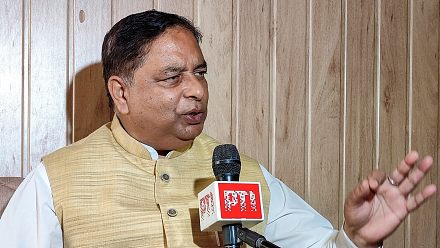
As the National Conference leadership attempts to contain growing resentment within its ranks following the recent Cabinet reshuffle, Jammu and Kashmir BJP president Sat Sharma has launched a scathing attack on the ruling party, describing it as a “sinking ship” and accusing its leadership of indulging in political drama through a series of meetings.
Sharma’s remarks come on the day National Conference president Dr Farooq Abdullah and Chief Minister Omar Abdullah held an important meeting with dissatisfied party legislators in Srinagar, seeking to address the growing discontent over the functioning of the government, the recent Cabinet expansion and the role of elected representatives in decision-making.
The meeting at Farooq Abdullah’s Gupkar residence assumes significance as a group of NC legislators had been holding repeated consultations over the past week, expressing dissatisfaction with the party leadership and demanding corrective measures.
Following Friday’s meeting, Farooq Abdullah acknowledged that the grievances raised by the legislators were genuine and assured them that the leadership would take steps to address their concerns. He indicated that some issues would be resolved immediately, while others would be taken up gradually.
The party president also dismissed speculation about a possible split in the National Conference, asserting that the party remained united and that differences could be resolved through dialogue.
However, reacting to the developments, Sat Sharma termed the National Conference a sinking ship and alleged that the repeated meetings between Farooq Abdullah and party legislators reflected the leadership’s inability to manage its own organisation.
He said the people of Jammu and Kashmir had rejected the National Conference and were fed up with what he described as corruption and a transfer industry during its previous tenures in government.
Sharma claimed that voters had already taught the party a lesson in the last two elections and would continue to do so in the future.
Taking a direct swipe at Dr Farooq Abdullah, the BJP president questioned his ability to manage his own party, arguing that repeated meetings with legislators demonstrated that the senior leader was struggling to address internal differences as well as the concerns of the people.
Farooq Abdullah Admits Legislators’ Grievances Are Genuine
The BJP’s attack comes against the backdrop of an important political development within the National Conference, where a section of legislators has been expressing dissatisfaction following the recent expansion of the Omar Abdullah-led Cabinet.
On Friday, around 15-16 National Conference legislators met party president Farooq Abdullah and Chief Minister Omar Abdullah in Srinagar to place their concerns before the top leadership.
The delegation, led by senior NC legislator Nazir Ahmad Gurezi, discussed several issues relating to the functioning of the government, the Cabinet reshuffle, the role of party legislators and the need for greater coordination between elected representatives and the leadership.
Speaking after the meeting, Farooq Abdullah said the concerns raised by the legislators had been heard and acknowledged that their grievances were genuine.
He assured the legislators that the leadership would take steps to address their concerns, with some matters being resolved immediately and others in a phased manner.
Farooq Abdullah also rejected reports suggesting that the National Conference was heading towards a split, maintaining that there was no question of a breakaway faction emerging within the party.
He said efforts would be made to strengthen both the party organisation and the government so that public grievances could be addressed more effectively.
Senior NC legislator Nazir Ahmad Gurezi, who led the delegation, also rejected speculation about the emergence of a rebel group, saying the legislators had only come together to raise their concerns before the party leadership.
Gurezi said the leadership had assured them that their grievances would be addressed and that some issues would be resolved immediately, while others would be taken up in phases.
He maintained that the legislators remained part of the National Conference and that their meetings should not be interpreted as an attempt to form a separate political group.
What Triggered The Dissent Within NC?
The current developments follow the Cabinet expansion carried out by Chief Minister Omar Abdullah last month, which triggered resentment among a section of senior National Conference legislators.
The induction of four new ministers – Ali Mohammad Sagar, Mir Saifullah, Shamima Firdous and Altaf Ahmad Kaloo – and the dropping of Independent MLA Satish Sharma from the Council of Ministers reportedly left several senior party legislators disappointed.
A section of legislators felt that their seniority, political experience and contribution to the party had not been adequately recognised during the exercise.
What initially appeared to be individual grievances gradually developed into a collective expression of dissatisfaction, with several legislators holding meetings to discuss the situation and prepare their demands before the party leadership.
The group has raised concerns over the composition of the Cabinet, the functioning of the government, the role of the Chief Minister’s advisers and the need to give elected representatives greater authority in addressing public grievances.
The legislators have also called for greater accountability within the government, better coordination with the party organisation and fulfilment of promises made to the electorate during the 2024 Assembly elections.
Among the demands discussed by the dissatisfied legislators were a review of the Cabinet’s composition, changes concerning the Chief Minister’s advisers, greater consultation with senior party leaders and a more assertive approach towards the restoration of statehood and the issue of Article 370.
The legislators have maintained that their concerns are not merely about ministerial positions but also about the functioning of the government and the need to ensure that elected representatives are able to deliver on the promises made to the people.
Aga Ruhullah’s Resignation Adds To Leadership’s Challenges
The internal developments have also coincided with the resignation of Srinagar Lok Sabha MP Aga Syed Ruhullah Mehdi from the National Conference as well as his parliamentary seat.
Ruhullah announced his decision on November 3, adding another dimension to the challenges facing the party leadership.
His departure came amid differences with the party leadership over the fulfilment of electoral promises and other political issues.
The resignation has brought additional attention to questions concerning the party’s internal functioning, leadership accountability and its commitments to the people of Jammu and Kashmir.
The developments involving Ruhullah and the dissatisfied legislators have together placed the National Conference leadership under considerable political scrutiny.
BJP Sees An Opportunity To Target The Ruling Party
The BJP has been seeking to corner the National Conference-led government over governance, the fulfilment of election promises and its political positions on issues concerning Jammu and Kashmir.
Sat Sharma’s latest remarks are part of that political offensive, with the BJP attempting to project the repeated meetings within the NC as evidence of organisational instability.
By describing the National Conference as a sinking ship, Sharma has sought to question Farooq Abdullah’s leadership and the ability of the ruling party to manage its internal affairs.
His allegations of corruption and a transfer industry also revive the BJP’s criticism of the National Conference’s earlier tenures in government.
The latest meeting, however, has given the NC leadership an opportunity to publicly address the grievances and deny the possibility of a split.
While Farooq Abdullah has promised corrective steps and assured legislators that their concerns will be addressed in phases, the effectiveness of these assurances will depend on their implementation in the coming days.
For the BJP, the internal developments within the ruling party have opened another political front against the Omar Abdullah government.
For the National Conference, the immediate challenge is to translate the assurances given by its top leadership into concrete action, restore confidence among dissatisfied legislators and prevent internal differences from affecting the functioning of the government.
The political battle, therefore, is no longer confined to the BJP’s allegations against the NC. It also revolves around whether the National Conference leadership can successfully manage the discontent within its own ranks while continuing to govern Jammu and Kashmir.