Moosa Was More Than Just LeT Commander: The SSG-BAT Connection Along The LoC
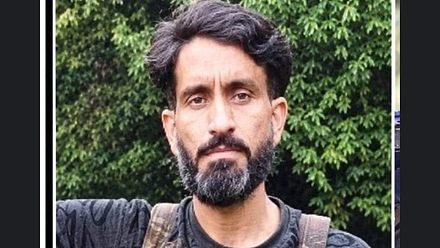
The killing of Lashkar-e-Taiba (LeT) commander Mohammad Asif alias Hashim Moosa in Budgam has brought into focus another dimension of Pakistan’s long-running proxy war against India — the role of its elite military speci
By Tejinder Singh Sodhi··180K reads
Moosa Was More Than Just LeT Commander: The SSG-BAT Connection Along The LoC
The killing of Lashkar-e-Taiba (LeT) commander Mohammad Asif alias Hashim Moosa in Budgam has brought into focus another dimension of Pakistan’s long-running proxy war against India — the role of its elite military special forces and their reported links to Border Action Teams operating along the Line of Control.
Moosa was not an ordinary terrorist.
Security agencies identified him as a Pakistan-based LeT commander with a Special Service Group (SSG) background. Reports have described him as a former Pakistani SSG para-commando who later became part of the LeT network and infiltrated Jammu and Kashmir.
His reported military background is significant because the SSG is Pakistan Army’s elite special-operations force, and former or serving SSG personnel have repeatedly figured in Indian accounts of Border Action Team operations along the LoC.
WHAT IS PAKISTAN’S SSG?
The Special Service Group, commonly known as the SSG, is Pakistan Army’s elite commando force.
Its personnel undergo specialised training for operations in difficult terrain, reconnaissance, small-team combat, raids and other special operations.
That training makes SSG personnel particularly suited to the kind of missions associated with BAT operations — small teams operating covertly across the LoC, striking Indian positions or patrols and attempting to withdraw before a conventional response can be mounted.
And over the years, Indian security agencies have repeatedly identified SSG commandos or former SSG personnel among those involved in BAT operations.
BAT: PAKISTAN’S SHADOW WARRIORS ON THE LOC
The term Border Action Team, or BAT, is used for specialised cross-LoC assault teams. These teams have been described by Indian security officials as comprising Pakistani military personnel, particularly personnel with special-forces training, along with armed terrorists.
In practical terms, this gives Pakistan a combination of military expertise and militant networks.
The military component brings specialised training. The militant component brings familiarity with infiltration routes, terrain and local networks. The result is a force designed not to capture territory, but to cross the LoC, hit a specific target and get back.
This is what has made BAT operations particularly notorious among Indian troops deployed along the LoC.
THE KRISHNA GHATI ATTACK
One of the most infamous BAT attacks took place in the Krishna Ghati sector of Poonch on May 1, 2017.
According to the Indian Army, a BAT team crossed the LoC under covering fire and attacked an Indian patrol. Two Indian soldiers — Naib Subedar Paramjit Singh and BSF Head Constable Prem Sagar — were killed and their bodies mutilated.
The incident triggered widespread outrage and became one of the most stark examples of the brutality associated with BAT operations.
THE KERI ATTACK
In December 2017, another deadly incident took place in the Keri sector of Rajouri.
Four Indian Army personnel, including a Major, were killed in an attack that Indian authorities subsequently attributed to a BAT-style operation.
The incident again highlighted the vulnerability of isolated patrols and forward positions to small, heavily trained assault teams operating under the cover of firing from across the LoC.
NAUGAM: ANOTHER BAT ATTEMPT FOILED
On New Year’s Eve in 2018, Indian forces detected and foiled another suspected BAT operation in the Naugam sector of Kupwara.
Two suspected Pakistani personnel were killed in the operation, according to Indian military officials.
The incident demonstrated another feature of the BAT model: small teams attempting to exploit darkness, difficult terrain and gaps in the surveillance grid to reach Indian positions.
KERAN, 2019
In August 2019, the Indian Army reported foiling another BAT attempt in the Keran sector.
The Army said several Pakistani soldiers and militants were killed during the operation. Indian officials subsequently said the dead included personnel belonging to Pakistan’s SSG.
The episode again demonstrated the danger posed by specially trained Pakistani personnel operating close to the LoC.
WHY THE SSG CONNECTION MATTERS IN MOOSA’S CASE
This brings the story back to Hashim Moosa. Moosa’s significance was not simply that he was a senior LeT commander.
He represented something far more troubling for Indian security agencies: a militant commander with formal training from Pakistan’s elite special-forces establishment.
Moosa subsequently operated inside Jammu and Kashmir as part of the LeT network.
Security agencies linked his group to a series of attacks across the Pir Panjal and Kashmir Valley. His ability to operate for years in some of the most difficult terrain in the region made him one of the most elusive targets for security forces.
He was finally tracked down and killed in the Yousmarg area of Budgam.
SSG, BAT AND LET — THREE PIECES OF THE SAME SECURITY PICTURE
The three terms should not be confused. SSG is Pakistan Army’s elite special-forces formation. BAT refers to cross-LoC assault teams in which Indian security agencies have repeatedly identified Pakistani military personnel and militants, with SSG-trained personnel forming a prominent component in reported operations. LeT is a Pakistan-based terrorist organisation whose cadres have carried out attacks in Jammu and Kashmir.
But the lines between military special forces, cross-LoC operations and Pakistan-based militant networks have repeatedly come under scrutiny.
Moosa’s reported journey — from Pakistan’s military special-forces environment to the LeT network and eventually to the Kashmir battlefield — is a particularly stark example of why Indian security agencies remain concerned about the movement of trained Pakistani personnel into terrorist organisations.
THE SHADOW WAR CONTINUES
The LoC has witnessed conventional exchanges of fire, infiltration attempts and covert raids for decades.
BAT operations represent the most dangerous end of that spectrum.
A small group of trained personnel does not need to occupy territory to inflict damage. It needs only to cross the line, reach a vulnerable target, strike and disappear.
That is why BAT teams have acquired such a notorious reputation among Indian troops.
And that is why Moosa’s reported SSG background adds another layer to his significance.
His killing has eliminated a senior LeT commander, but it also highlights a larger security challenge — the possibility of Pakistan’s military-trained personnel and expertise finding their way into terrorist networks operating against India.
For Indian security forces, the lesson is clear: the threat does not end with the elimination of an individual commander. The larger ecosystem — the handlers across the LoC, infiltration networks, militant organisations and the specialised training that sustains them — remains the challenge.