Jammu Wall Collapse: 2 Mothers & Their One Shattered Dream Of Daughter's Wedding
For most people in Jammu, the first Sunday of Navratri brought the sound of drums, prayers and hope. For two mothers living on two different edges of the city, it brought a sound they will never forget — one of a wall co
By Samer Bhat··79K reads
Jammu Wall Collapse: 2 Mothers & Their One Shattered Dream Of Daughter's Wedding
For most people in Jammu, the first Sunday of Navratri brought the sound of drums, prayers and hope. For two mothers living on two different edges of the city, it brought a sound they will never forget — one of a wall collapsing and the other of water gushing into their homes.
And with that sound, the dream of their daughters’ weddings, just two months away, collapsed too.
This is not just a story of flood. This is a story of Mamta and Sunita — two mothers who were saving every rupee for the most important day of their daughters’ lives, and lost everything in one night.
THE WALL THAT CRUSHED HER KITCHEN AND HER HOPE
In the narrow lanes of Rajeev Basti, Bakshi Nagar, Mamta Devi lives in a one-room tenement that is smaller than most people’s bathrooms. Her husband is a painter, a daily wage labourer. On days he gets work, the family eats. On days he doesn’t, they still smile.
For the last one year, that smile had a reason. Her elder daughter’s marriage had been fixed. In two months, she was to become a bride.
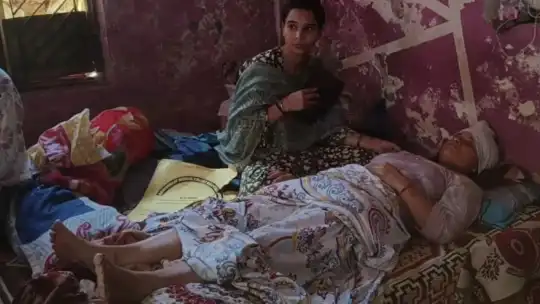
“I had been collecting things little by little,” Mamta says from her bed, her head bandaged, her leg injured. “A steel almirah, some utensils, a suit for my daughter, Rs 15,000 cash kept in a steel dabba in the kitchen. It was not much for others, but for us, it was our whole world.”
On Sunday afternoon, when the heavy rain lashed Jammu, the old boundary wall of the Chest Disease Hospital, Bakshi Nagar, which stands just behind Mamta’s jhuggi, could not hold any longer. With a deafening thud, a large portion of the wall collapsed directly on Mamta’s house.
Her small kitchen was completely flattened. The single room where the family of four lived developed huge cracks. The tin roof caved in.
Mamta was in the room along with daughter Komal at that time. They were preparing for Navratra pooja. But she was buried under the debris. Her younger daughter Komal, who tried to pull her out, was also injured. Neighbours rushed and pulled them out.
“The doctors said I am lucky to be alive,” Mamta whispers, tears rolling down. “But what is this luck? My kitchen is gone, my house is dangerous to live in, my daughter’s wedding clothes are buried under the malba, the money is gone. How will I marry my daughter now?”
Her husband, whose hands are used to painting other people’s big houses, is now sitting outside his own broken house, helpless. He cannot go for work as he has to look after his injured wife and he has no money to repair the house. The family has received no compensation or help so far. They spent the Navratri night under an open sky, covered by a tarpaulin given by a neighbour.
“Administration says it will see. But who will see my daughter’s wedding? It is in December,” he asks.
WHEN THE NULLAH ENTERED THE DRAWING ROOM
About 12 kilometres away, in Dream City, Muthi, the story is different but the pain is exactly the same.
Sunita Kumar also has a daughter whose wedding is fixed after two-and-a-half months. Her house is in Lane No. 2, just behind the Hare Krishna Hare Rama Temple. Right next to her locality flows a big nullah which has been encroached and never cleaned.
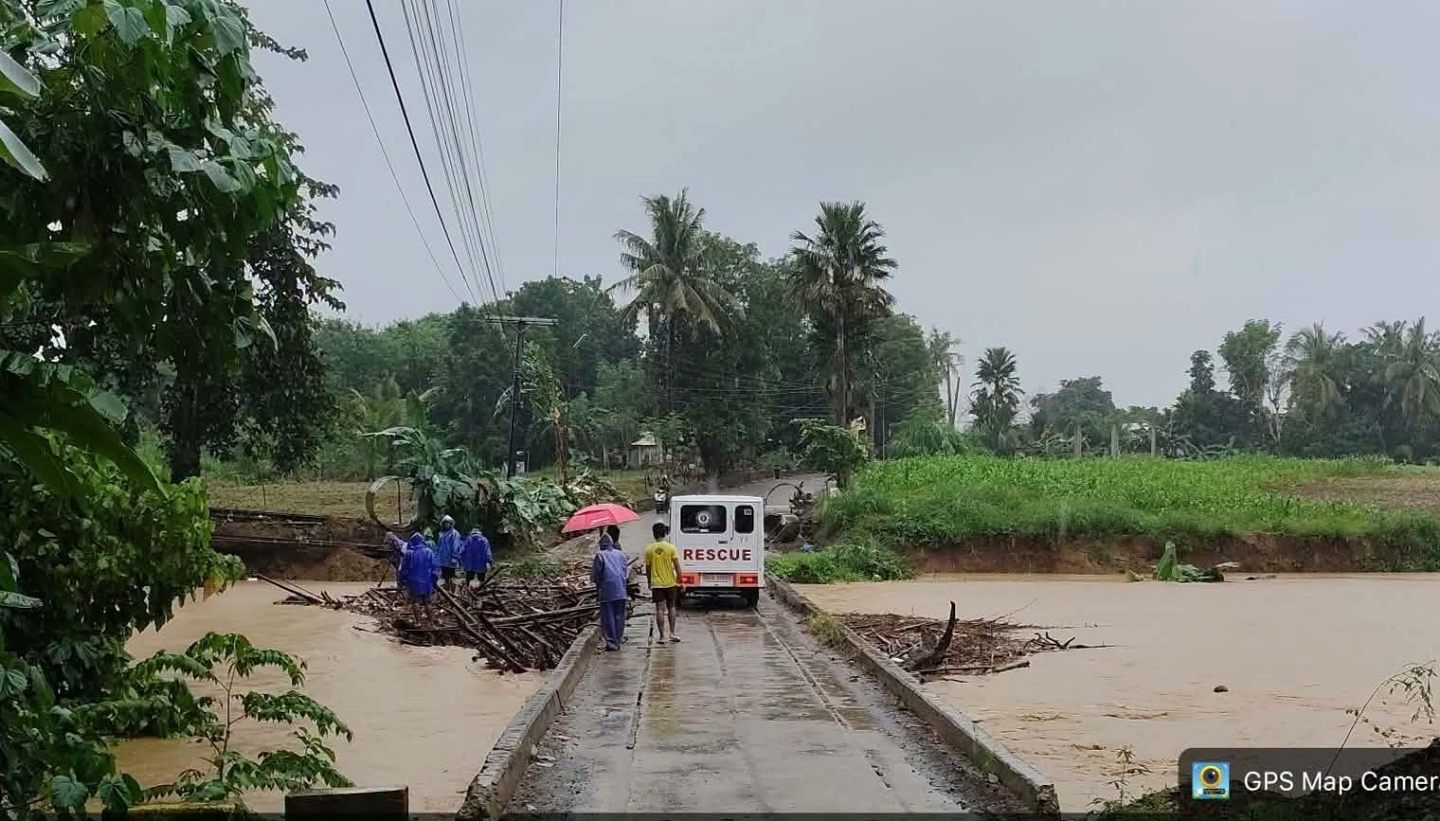
On Sunday, the nullah overflowed. Within minutes, the black, stinking water entered not just Sunita’s house but more than 20 houses in the locality.
“Water was up to four feet inside our house,” says Sunita, wiping her floor which is still full of mud. “We shouted for help but no one could come. The current was so fast.”
By the time the water receded, there was nothing left. The fridge, cooler, beds, clothes, ration — everything was floating. The worst loss was the corner where Sunita had kept her daughter’s wedding collection.
Sunita’s problems are doubled. Her husband is ill for the last six months and cannot work. She works as a domestic help in three houses.
“My daughter says, ‘Mamma, postpone my wedding’. But how long? We have already fixed everything. The groom’s family is good, they are not demanding dowry, but as a mother, how can I send my daughter empty-handed?” she asks.
Like Mamta, Sunita has not received any official visit or relief. The residents of Dream City say they have been complaining about the nullah for two years, but no one listened.
TWO CITIES, ONE REALITY
Mamta and Sunita have never met each other. One lives in a basti in the heart of Jammu, the other in a newly developed colony on the outskirts. One lost her home to a falling government hospital wall, the other to a choked government nullah.
But their story is one — the story of the urban poor of Jammu who suffer the most during every flood, every rain. They build their lives with small bricks of savings, and one wall, one nullah is enough to wash it all away.
As Navratri begins, while the city prays to Goddess Durga for prosperity, these two mothers are praying for just a little help — not charity, but support to rebuild their homes and to be able to marry their daughters with dignity.